



| IN A NUTSHELL |
|
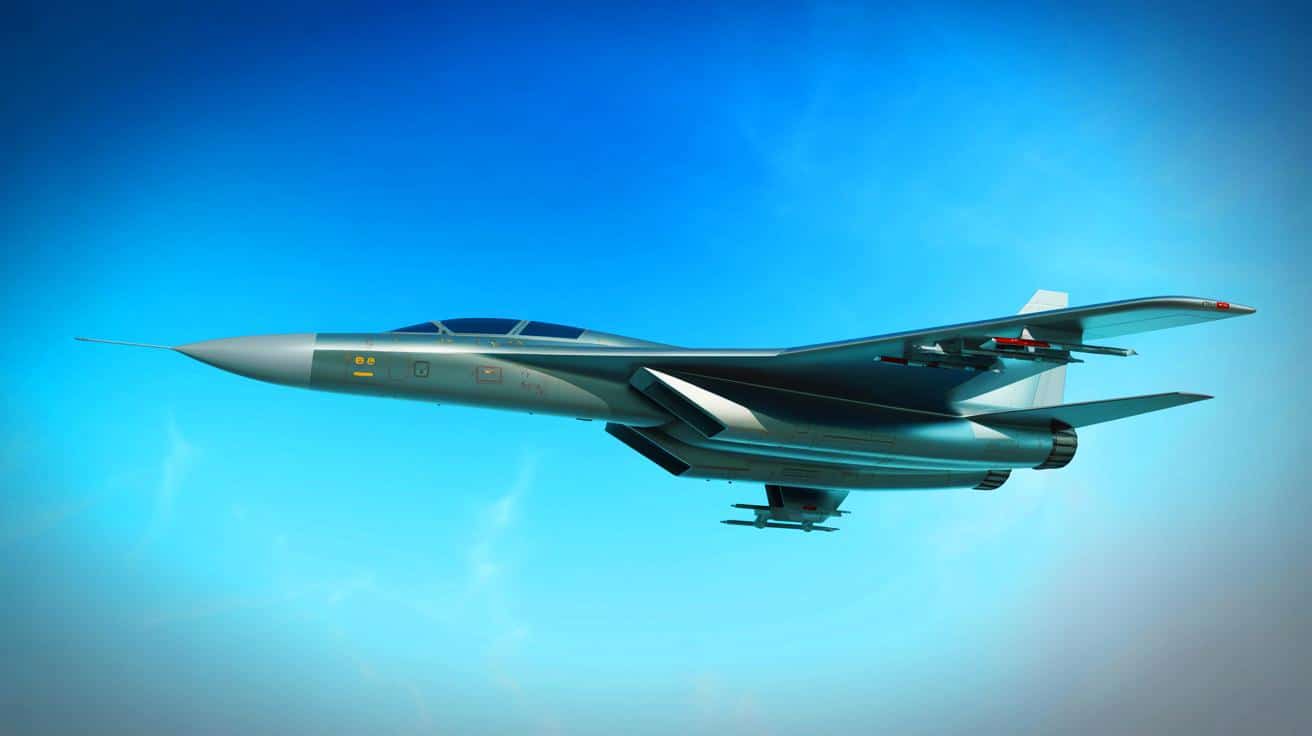
China’s aerospace industry has unveiled a groundbreaking concept for a next-generation strategic airlifter, marking a significant advancement in the country’s military logistics capabilities. The development of this new heavy transport aircraft, featuring a blended-wing-body (BWB) configuration, promises to elevate the People’s Liberation Army’s (PLA) global reach and power projection. With a focus on enhancing aerodynamics, reducing drag, and increasing internal cargo volume, this innovative design is poised to challenge Western counterparts like the U.S. C-5 Galaxy. The aircraft’s envisioned capabilities, including a 4,000-mile range and the ability to carry 120 tons, underscore China’s ambitions in military aviation.
Innovative Blended-Wing-Body Design
The newly proposed heavy transport aircraft boasts a revolutionary blended-wing-body (BWB) design, setting it apart from traditional aircraft layouts. Unlike conventional designs, where the fuselage and wings are distinct components, the BWB approach merges them into a single lifting surface. This integration not only enhances the aircraft’s aerodynamics but also reduces drag, allowing for more efficient fuel consumption and greater range.
The concept includes a V-shaped tail and swept-back outer wings, optimized for airflow efficiency. Wing-mounted engines further contribute to this efficiency, and the aircraft’s upward-angled winglets and redesigned tail section are intended to enhance control and stability. The projected engine thrust of 370 kilonewtons underscores the aircraft’s powerful capabilities.
This design is not just about aesthetics or theoretical performance. It emphasizes versatility, enabling operations in demanding environments. The aircraft could take off from semi-prepared runways as short as 8,530 feet, even when fully loaded, making it suitable for deployment from remote or rugged airfields. At lighter loads, it could operate at altitudes up to 13,120 feet, supporting missions in high-altitude regions.
“They’ve Been Hiding This Monster”: Student Discovers 23 Foot Killer Dinosaur In Museum Storage
Expanding China’s Global Military Reach
The development of this next-gen airlifter is a strategic move to enhance China’s intercontinental operational capabilities. With a maximum range of 4,000 miles, the aircraft can conduct long-haul missions without the need for mid-flight refueling. This capability is crucial for rapid deployment of military assets across vast distances, particularly in the Indo-Pacific region.
Comparative studies indicate that the BWB design offers higher aerodynamic efficiency and longer range than its Western counterparts. Optimization models, known as “Pareto solutions,” help balance payload, lift, and fuel consumption effectively. These models ensure that the aircraft can adapt to various operational needs, whether it’s short-field operations or enhanced climb performance.
For China, developing a strategic heavy transport aircraft of this scale is not just about matching Western capabilities; it’s about exceeding them. Such an aircraft would allow China to rapidly deploy armored vehicles, missile launchers, or mechanized infantry, enhancing its military presence and influence globally.
Implications for Global Security and Aid
The introduction of this new airlifter aligns with the PLA’s broader modernization efforts, aiming to improve long-range logistics, global air mobility, and expeditionary support. If realized, the aircraft would significantly bolster China’s capacity to conduct international missions, including humanitarian aid and disaster response. This capability could position China as a key player in global security dynamics.
While the project is still in the conceptual phase, it underscores China’s intent to advance military transport technology. No timeline has been announced for prototype development or flight testing, but the potential impact on China’s strategic capabilities is substantial.
The aircraft’s large cargo bay, capable of carrying 117 light vehicles or 300 troops, further emphasizes its role in both military and humanitarian missions. Its ability to support precision airdrop operations adds another layer of versatility, crucial for complex logistical challenges.
Challenges and Future Prospects
Despite the promising design, the path to operational deployment is fraught with challenges. Developing a new aircraft of this magnitude involves significant technological, financial, and logistical hurdles. China will need to invest heavily in research and development, testing, and production to bring this concept to fruition.
The global political and military landscape could also influence the project’s progress. As China seeks to expand its influence and capabilities, it may face increased scrutiny and competition from other nations. The development of this airlifter could trigger responses from countries aiming to maintain their strategic advantage.
Nevertheless, the potential benefits are substantial. A successful deployment of this new airlifter would enhance China’s military logistics, bolster its global presence, and support its long-term strategic objectives. The project represents a critical step in China’s ongoing efforts to modernize and expand its military capabilities.
As China continues to push the boundaries of military aviation, questions remain about the broader implications of such advancements. How will the development of this new airlifter influence geopolitical dynamics, and what responses might it provoke from other global powers?



Wow, this sounds like something out of a sci-fi movie! 😮
This article is fascinating! The potential for a new balance in global power is intriguing. 🚀
How does this compare to existing US airlifters? Any specific technological edges?
Is it really that groundbreaking or just more military posturing?
I wonder if this will lead to an arms race in aviation technology. 🤔
Is the 4,000-mile range enough to be a game-changer?
How does the blended-wing-body design compare to other military aircraft?
Great write-up, but I’d love to see more on the technical challenges. Thanks!
This could definitely shake things up globally. Thanks for the insights!
China is definitely making bold moves. But can they sustain these developments financially?
Did anyone else notice the typo in the third paragraph? 😅
I’m skeptical. Can China really pull this off technically and financially?
Blended-wing-body design sounds like something from a sci-fi movie!
The article is insightful, but I wish there were more details on the timeline for deployment.
LOL, are they building a Transformer? 🤖
Can this plane really make a difference in humanitarian missions?