




| IN A NUTSHELL |
|
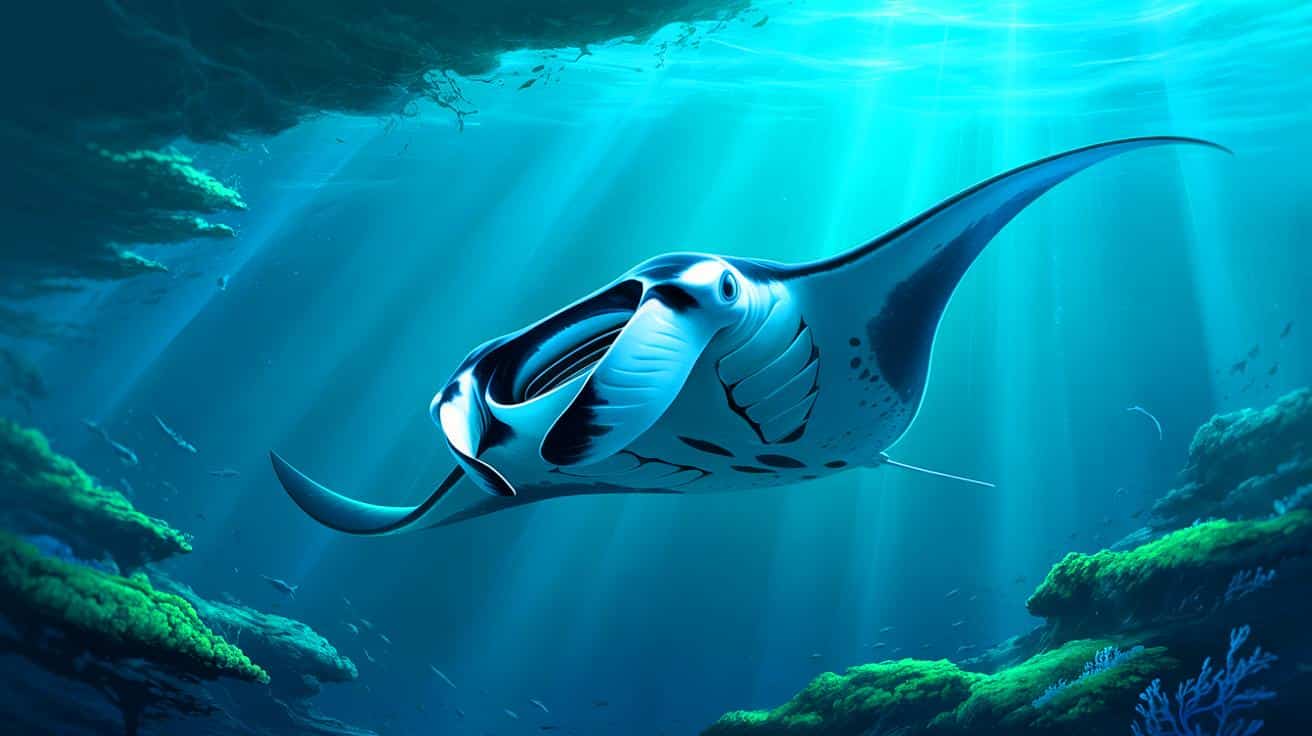
In a groundbreaking study, researchers have unveiled new insights into the mysterious deep-diving behavior of oceanic manta rays, the largest species of rays. Led by Murdoch University in Australia, the international team tagged manta rays across various locations, including Peru, Indonesia, and New Zealand. The study revealed that these giant marine creatures can dive to depths of nearly 4,000 feet, far deeper than previously recorded. This discovery sheds light on the unique adaptations of manta rays, suggesting that their deep dives may play a crucial role in their navigation and survival across vast oceanic expanses.
Unveiling the Depths: Data Collected Over a Decade
To understand the deep-diving behavior of oceanic manta rays, researchers embarked on an extensive study that spanned over a decade. They recorded a staggering 2,705 data tag-days, meticulously documenting the movements of 24 manta rays. The study sites included Raja Ampat in Indonesia, Tumbes in Peru, and Whangaroa in New Zealand. This comprehensive research involved both recovered and satellite-transmitted data from electronic tags, providing high-frequency insights into the rays’ diving patterns.
The recovered tags, found after a challenging search amidst waves and debris, offered valuable data recorded every 15 seconds. In contrast, the non-recovered tags transmitted summary data via satellite. The study noted that extreme dives, defined as those exceeding 1,640 feet, occurred on 79 different days. Remarkably, the deepest dive reached an astounding depth of 1,250 meters (approximately 4,100 feet), predominantly in the waters off New Zealand.
The Role of Deep Dives in Navigation
While deep dives are relatively common among marine species such as sharks and turtles, their purpose in manta rays remained elusive until now. The research suggests that these dives are not primarily for feeding or predator avoidance. Instead, they serve a potential navigational function. Manta rays may use these extreme dives to gather critical information about their environment.
By diving to such depths, manta rays can potentially sense changes in the Earth’s magnetic field and sample variations in oxygen, temperature, and light levels. This ability allows them to construct a mental map of their surroundings, aiding in their journey across the vast and featureless open ocean. Understanding this behavior provides essential insights into how manta rays connect ecosystems separated by thousands of miles.
Post-Dive Movements: Insights into Ray Behavior
The study further observed that after these deep dives, manta rays exhibited prolonged periods of recovery at the ocean’s surface. This was often followed by extended travel, with rays covering distances exceeding 124 miles in the subsequent days. This pattern reinforces the theory that the dives have a navigational purpose, facilitating long-distance migrations across the ocean.
In regions like Peru and Indonesia, where manta rays inhabit shallower coastal waters, extreme dives were less frequent. For instance, the geographic features of Raja Ampat present fewer opportunities for such dives. However, the deep offshore areas in New Zealand, with their steep seafloor gradients, provide a conducive environment for these essential dives.
Conservation Implications and Future Research
The findings of this study underscore the importance of protecting both coastal and offshore habitats that are crucial for migratory species like manta rays. By understanding the ecological roles and behaviors of these majestic creatures, conservation efforts can be better tailored to preserve the interconnected marine ecosystems they traverse.
Published in the journal Frontiers in Marine Science, this research opens new avenues for exploring the adaptation strategies of marine species in the face of environmental changes. The insights gained not only enhance our understanding of manta rays but also highlight the intricate dynamics of oceanic ecosystems. As marine environments continue to face challenges, what further mysteries about these enigmatic creatures await discovery?


This study is incredible! 🌊 I had no idea manta rays could dive so deep. What other creatures dive to such depths?
Wow, I had no idea manta rays could dive so deep! What a fascinating discovery! 🐠
Can we be sure these dives are for navigation? Seems like a pretty deep assumption to me. 🤔
Can someone explain why they’re diving so deep? Is it just for navigation or could there be other reasons? 🤔
Thanks for the enlightening article—always amazed by the ocean’s mysteries.
Were there any notable differences in diving behavior between the different locations?
Thanks for this insightful article! It really highlights the importance of marine conservation. 🌍
Do manta rays wear tiny wetsuits when they dive that deep? 😂
4,000 feet?! That’s deeper than some submarines go! What’s their secret to surviving such pressures?
How do they manage the pressure at such depths? That’s impressive.
Great read! More proof that we know so little about our oceans.
Interesting read, but I wonder how accurate these findings are. Could the tags have influenced the rays’ behavior?
The ocean is full of surprises. Keep up the good work, researchers! 🌊