




| IN A NUTSHELL |
|
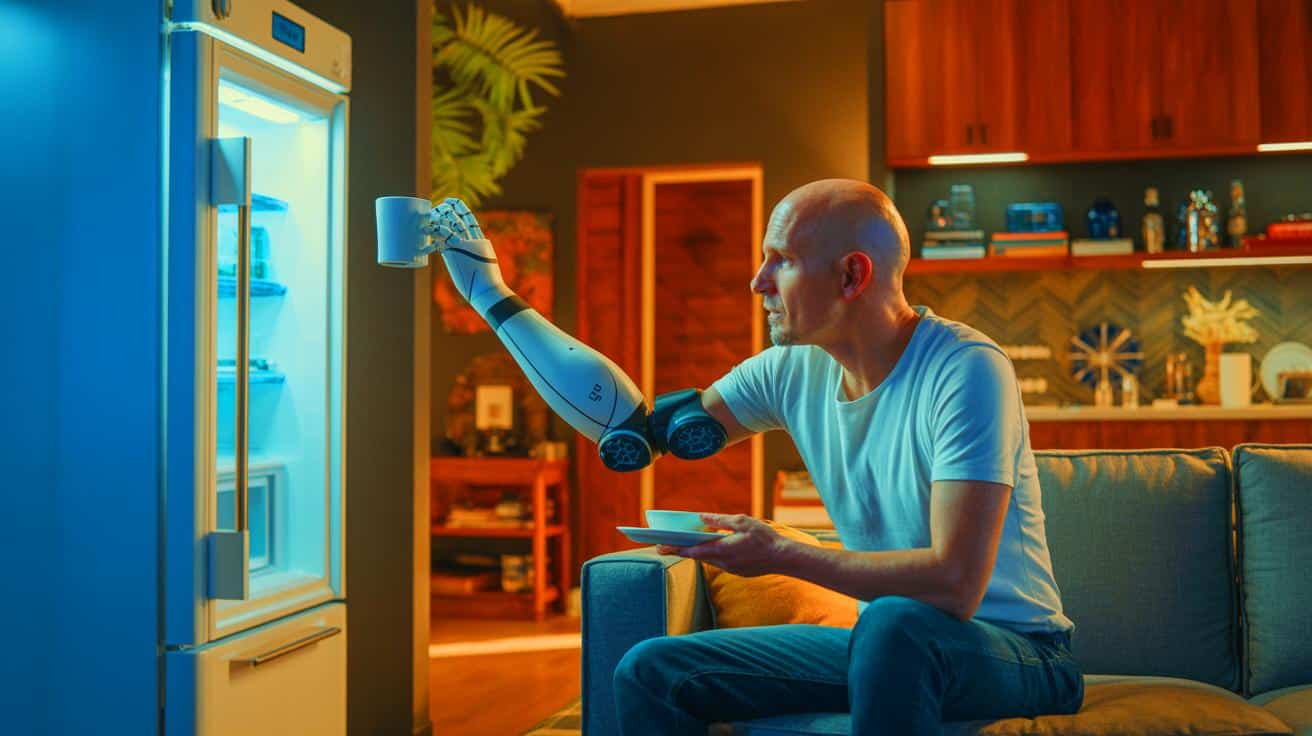
In recent developments in brain-computer interface technology, Neuralink, the company founded by Elon Musk, has achieved a significant milestone. A patient with amyotrophic lateral sclerosis (ALS) successfully controlled a robotic arm using only his thoughts. This breakthrough, part of the FDA-approved “CONVOY” study, marks a critical step toward enhancing autonomy for individuals with severe mobility impairments. The demonstration, featuring Nick Wray, showcased the potential of implanted brain chips in performing everyday tasks, such as drinking from a cup and opening a refrigerator. As the eighth participant to receive the Neuralink implant, Wray’s experience highlights the transformative possibilities of neural technology.
Mind Controls Machine
Over three eight-hour sessions, Nick Wray, an ALS patient, demonstrated the capabilities of Neuralink’s brain implant. The chip, embedded in his brain, converts neural signals into Bluetooth commands, enabling him to control a robotic arm with his thoughts. This technology allowed Wray to perform tasks such as picking up a cup, microwaving food, and donning a hat. According to PC Magazine, Wray achieved remarkable results, setting records on dexterity tests designed for stroke patients. He moved 39 cylinders across a table in five minutes and flipped five puzzle-like pegs in another.
Wray’s use of the robotic arm extended beyond basic tasks. He reportedly completed a “ridiculous trick shot,” which is anticipated to be featured in an upcoming video. In a separate trial, Wray successfully maneuvered his wheelchair using the brain-computer interface, as reported by The Dallas Express. This achievement further underscores the potential of neural technology in providing independence to those with mobility challenges.
“They’ve Been Hiding This Monster”: Student Discovers 23 Foot Killer Dinosaur In Museum Storage
Brain Chip Progress
Neuralink’s journey to human trials began in the United States in 2024, following the resolution of significant safety concerns with the FDA. Initially, the FDA had rejected Neuralink’s bid in 2022 due to these concerns. However, with clearance obtained, the company proceeded with implanting the experimental brain chip in eight severely paralyzed individuals. These participants can now interact with digital devices using only their thoughts.
Among the first recipients was Noland Arbaugh from Arizona, who demonstrated the implant’s capabilities by controlling a cursor and playing video games through thought alone. Despite a major technical setback where 85% of the device’s fine threads detached from his brain tissue, Neuralink swiftly implemented a software solution. This update maintained the implant’s functionality by refining algorithmic interpretations of neural signals.
Technical Insights and Challenges
The Neuralink implant, known as the N1 chip, is approximately the size of a 10-pence coin. It operates through 128 ultra-fine threads, each thinner than a human hair, linking roughly 1,000 electrodes directly to the brain’s surface. These electrodes detect and transmit neural activity, translating brain signals into precise digital commands like cursor movements or device control.
Although the technology promises significant advances, challenges remain. The incident with Arbaugh’s implant highlights the technical complexities involved in maintaining long-term functionality. Neuralink’s rapid software solution to address the thread detachment illustrates the company’s proactive approach to overcoming such hurdles. As the technology progresses, further refinements will be essential to ensure both safety and efficacy in wider applications.
As Neuralink continues to push the boundaries of brain-computer interfaces, the implications for individuals with mobility impairments are profound. The ability to control devices with thought alone could revolutionize the quality of life for many. However, as with any emerging technology, the path forward will require careful consideration of ethical, technical, and regulatory challenges. What does the future hold for this groundbreaking technology, and how might it reshape our understanding of human-machine interaction?



This is incredible! Can’t wait to see how this changes lives. 🎉
Wow, this is absolutely mind-blowing! 😮 How soon can we expect this technology to be available for the general public?
Amazing breakthrough! Kudos to the Neuralink team for making this happen. 👏
How long before we see this tech available for everyone?
This sounds too much like sci-fi! Are there any risks involved with these implants?
Elon Musk is really turning sci-fi into reality. What a time to be alive! 🚀
Is this technology reversible? What happens if someone wants the implant removed?
The potential here is incredible, but I can’t help but wonder about the ethical implications. 🤔
Does this mean we’re getting closer to telekinesis? 🤔
How does the N1 chip manage to translate thoughts into actions so accurately?
I’m curious about the long-term effects of having a chip in your brain. Any studies on that?
Can this tech be used to control devices other than robotic arms? Like a computer or smartphone?
As a tech enthusiast, I’m thrilled by this news! What are the next steps for Neuralink?
Mind-blowing stuff! But will it be affordable for most people?
This is a fantastic development for people with mobility issues. Thank you for sharing this inspiring story!
Neuralink seems promising, but I’m worried about privacy issues.
I wonder how comfortable the implant is. Does it cause any discomfort or require frequent adjustments?