

| IN A NUTSHELL |
|
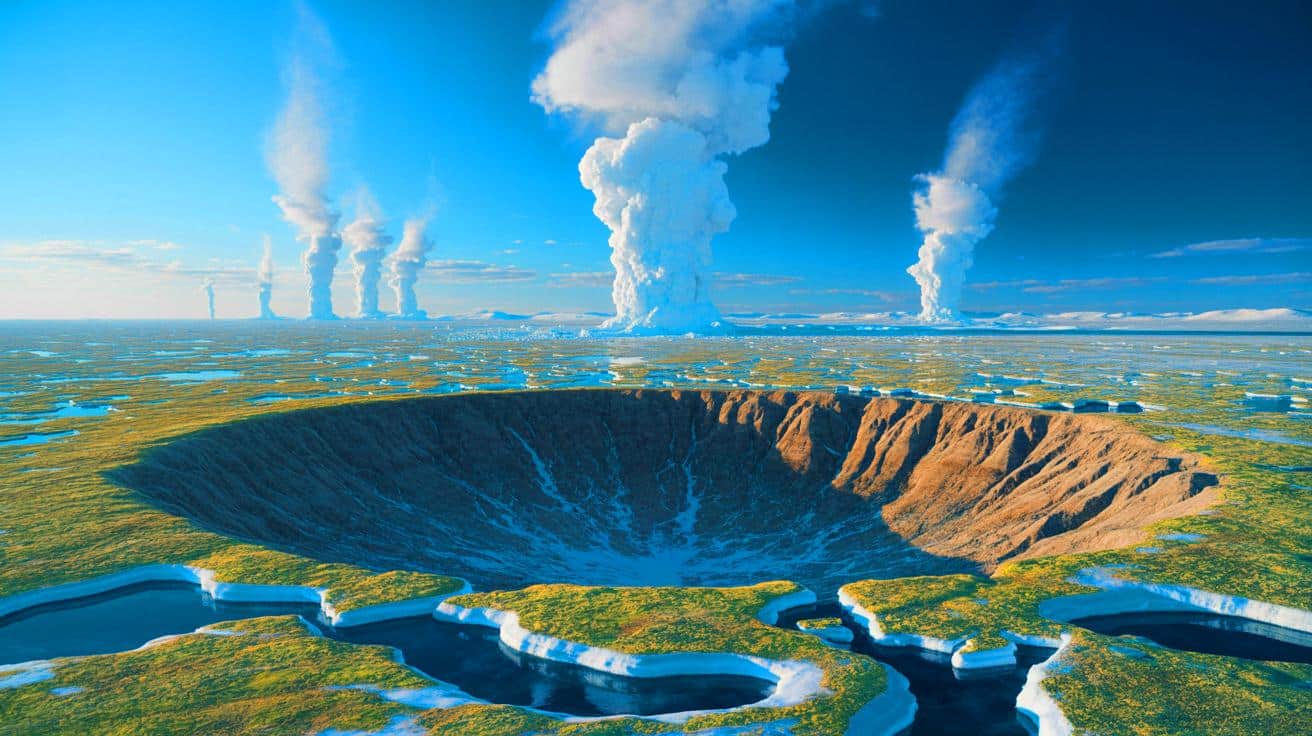
The enigmatic phenomenon of large craters appearing in Siberia has puzzled scientists for over a decade. These massive depressions, first discovered in 2014, have sparked numerous theories regarding their formation. Initially, many speculated that they were remnants of meteorite impacts or the result of gas explosions. Recently, a breakthrough study by Norwegian geoscientists has provided new insights into why these craters are concentrated in western Siberia. This study not only sheds light on the geological processes involved but also underscores the broader implications of climate change on such natural occurrences.
Unveiling the Siberian Craters’ Unique Location
Western Siberia has become a focal point for geologists due to the mysterious craters that have appeared exclusively in this region. The team led by Helge Hellevang has confirmed that these depressions are indeed the result of methane gas emissions. However, they challenge previous assumptions that the permafrost’s structure alone is responsible for these formations. According to Hellevang, if permafrost processes, influenced by climate change, were solely to blame, similar craters would be found in other regions with methane hydrates.
Instead, the study suggests a more localized source of methane. This gas accumulates in cavities beneath the ground, eventually leading to explosive eruptions that form craters. The research points to specific geological and environmental conditions in the Yamal and Gydan peninsulas that facilitate this phenomenon. Identifying these unique conditions helps explain why such craters have not been observed elsewhere.
Climate Change's Role in Exacerbating Crater Formation
Beneath the layers of Siberian permafrost lie vast reserves of natural gas and geothermal heat. These resources have the potential to escape through the deep rock layers, contributing to the localized formation of craters. However, the role of climate change in this process cannot be overstated. Human-induced climate change has accelerated the melting of ice, forming lakes that further weaken the permafrost layers.
This weakening effect makes the frozen ground more susceptible to gas emissions. As temperatures rise, the permafrost's ability to contain these gases diminishes, leading to more frequent and intense eruptions. The study highlights how climate change is not only a contributing factor but a catalyst that intensifies the natural processes leading to crater formations.
This Robot That Replaces Human Pregnancy And Doctors Hide The Terrifying Medical Revolution
Understanding Methane's Contribution to the Phenomenon
Methane, a potent greenhouse gas, plays a critical role in the formation of these Siberian craters. The gas is trapped under the permafrost, and as the ground thaws, it finds pathways to the surface. This release can be sudden and violent, resulting in massive craters that punctuate the landscape. The study by the Norwegian team emphasizes the importance of understanding methane's behavior in the context of global warming.
The researchers suggest that monitoring methane emissions in these regions could provide valuable data on the impacts of climate change. By tracking these emissions, scientists can gain insights into the broader environmental changes occurring in the Arctic. This knowledge is crucial for developing strategies to mitigate the effects of climate change on both local and global scales.
The Broader Implications for Arctic Regions
The findings from the Siberian crater study have significant implications for other Arctic regions. As global temperatures continue to rise, similar geological processes could occur elsewhere, posing challenges for communities and ecosystems. The study underscores the need for comprehensive climate monitoring and proactive measures to address the impacts of thawing permafrost.
Additionally, the potential release of trapped methane into the atmosphere could accelerate climate change, creating a feedback loop with far-reaching consequences. This scenario highlights the interconnectedness of natural systems and the critical importance of addressing climate change as a global issue.
The discovery of the craters' origins raises important questions about our understanding of Earth's geological processes. As scientists continue to explore these phenomena, how can we apply this knowledge to better predict and mitigate the impacts of climate change on vulnerable regions around the world?


Wow, exploding craters! Is this like a real-life video game? 🎮
Wow, this is really fascinating! Are there any preventive measures being considered to mitigate these eruptions? 🌍
How do they know it’s methane causing the craters and not something else?
Thanks for the informative article. It’s alarming to see climate change having such dramatic effects.
So, should we be worried about similar craters appearing in other cold regions?
This is why climate change is scary. 😨 Thanks for the insightful article!
Wait, so they’re blaming climate change for everything now? 🤔
Can anyone explain why these craters are only showing up in Siberia?
How do these methane bursts affect local wildlife in Siberia?
Has anyone considered using these craters for geothermal energy?
I’m not convinced. Could be aliens, just saying! 🛸
This is both fascinating and terrifying. Nature never ceases to amaze me.
How does this affect the local wildlife and communities?
Great job highlighting the link between climate change and geological events!
Can this methane be captured and used for energy instead of just exploding?
Is it possible to predict when and where the next crater might appear? 🔮