


| IN A NUTSHELL |
|
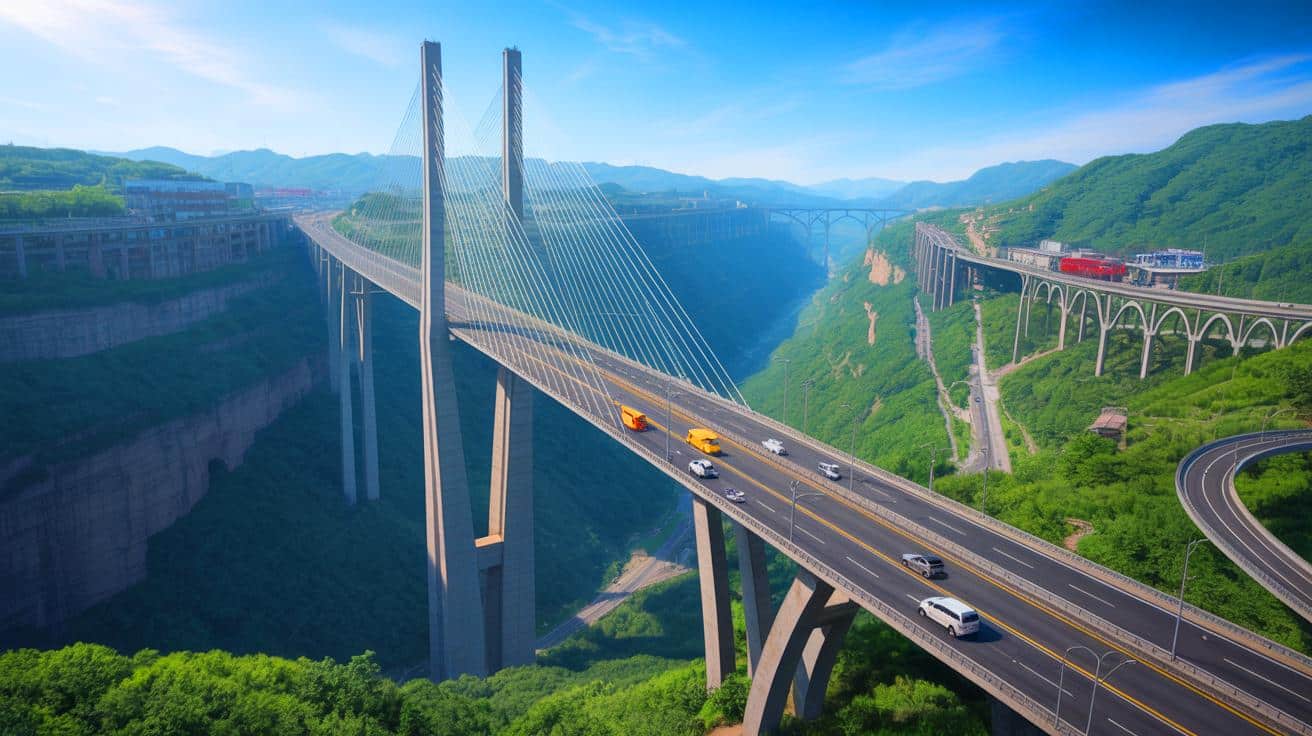
The Huajiang Grand Canyon Bridge in China has set a remarkable new world record by becoming the highest bridge ever constructed, towering 2,051 feet above the ground. This engineering marvel, stretching almost 1.8 miles, is suspended between two mountains, nearly doubling the height of the Eiffel Tower. This ambitious project, costing around $341 million, began construction in January 2022 and was completed after four years of intense work. Beyond its architectural significance, the bridge is a pivotal part of a larger strategy aimed at boosting tourism and facilitating economic integration in this mountainous region.
The Engineering Feat of a Lifetime
The construction of the Huajiang Grand Canyon Bridge is a testament to modern engineering prowess. The primary structure is supported by a steel lattice composed of 93 segments, weighing approximately 44 million pounds in total. According to Zhang Shenglin, the chief engineer from the Guizhou Highway Group, this “super project” not only showcases China’s technological strength but also stands as a symbol of its ambitious infrastructure goals. The bridge crosses what is colloquially referred to as the “Earth’s fault,” highlighting the complex geological challenges that had to be overcome.
This region of China, known for its rugged terrain, presented significant obstacles for the construction team. With 92% of the area covered in mountains, traditional infrastructure development was not feasible. Thus, engineers resorted to cutting through mountains to pave the way for the bridge’s four lanes of traffic. This decision resulted in breathtaking images of split mountain crests, demonstrating the lengths to which the team went to achieve their goal.
Bridging Economic Gaps
The completion of the bridge is expected to significantly enhance the economic landscape of the region. Chen Jianlei, the deputy director of the Guizhou Department of Transportation, stated that the bridge will strengthen economic ties between the cities of Guiyang, Anshun, and Qianxinan. In addition to providing a new transportation route, the project includes plans for glass elevators and the highest bungee jumping platform in the world, aiming to attract tourists and stimulate the local economy.
The bridge drastically reduces travel time across the canyon from 70 minutes to just two minutes by car, a reduction by a factor of 35. This transformation is expected to increase accessibility and encourage economic activities that were previously hindered by geographical isolation. As Mao Ning, spokesperson for China's Foreign Affairs Ministry, noted, "For people and development, no mountains too high." This statement underscores the broader vision of overcoming natural barriers to foster regional growth and connectivity.
Environmental and Social Considerations
While the bridge is an engineering marvel, it also raises important questions about environmental impact and social change. The decision to cut through mountains has sparked discussions about ecological consequences. The project involved altering natural landscapes, which could have long-term effects on local ecosystems. Balancing infrastructure development with environmental preservation remains a challenge and a topic of debate among experts and policymakers.
Socially, the bridge is poised to transform the lives of residents in this previously isolated region. Improved connectivity can lead to better access to education, healthcare, and economic opportunities. However, such rapid development also poses the risk of cultural and societal shifts, as traditional ways of life may be altered by increased tourism and modernization. How the local population adapts to these changes will be crucial in determining the long-term success of this ambitious project.
Setting the Stage for Future Innovations
The Huajiang Grand Canyon Bridge is a bold statement of China's infrastructure ambitions. It highlights the country's commitment to pushing the boundaries of engineering and architecture. The project's successful completion sets a precedent for future developments in challenging terrains, providing valuable insights into overcoming geographical constraints. This bridge is not only an achievement in its own right but also a catalyst for further innovation in infrastructure development worldwide.
As the bridge opens to traffic by the end of 2025, it will be interesting to observe its impact on the local region and its role in China's broader economic strategy. Will the benefits of enhanced connectivity and increased tourism outweigh the environmental and social challenges? This remains an open question as the world watches the unfolding story of one of the most ambitious infrastructure projects of our time.

Wow, 2,051 feet! 🏔️ That’s higher than I imagined. What’s next, a bridge to the moon? 😂
Wow! 2,051 feet high? That’s insane! 🚀
Hope they did environmental impact studies. Nature should come first!
How will this project impact the local wildlife? It seems like a massive disruption. 🌿
Incredible engineering feat! But I wonder if the ecological cost is too high. 🤔
I’m curious, how long did it take to build the bridge?
Will this bridge be open to pedestrians too? That view must be incredible!
Reducing travel time from 70 minutes to 2 minutes is impressive. I guess time is money! ⏰💰
Why do they always have to cut through mountains? 🚜
Why did they decide to build a bridge in such a remote area? Does it really need it?
Hope the locals benefit from this project rather than just facing the downsides. 🙏
Is there any financial support for locals affected by the construction? 💸
I’m curious, how do they ensure safety given the bridge’s height?
Massive project! But how do they plan to address the environmental concerns?
Looks like an engineering marvel, but at what cost to nature? 😟
Are there any traditional communities that will be affected by this development?
What measures are in place to prevent potential landslides or natural disasters?
Will there be any pedestrian walkways on the bridge for tourists?
How long did the construction actually take? Four years seems both short and long!
Did they consider alternatives to cutting through mountains? Seems quite drastic.
This is amazing! I can’t wait to visit and see it for myself. 🌉
The environmental impact is concerning. How sustainable is this project?
What technologies did they use to overcome the rugged terrain?
Is this bridge part of a larger infrastructure plan in China?
Just wondering, how does this bridge compare to other famous bridges worldwide?
Are there any plans to monitor the environmental impact post-construction?
Thank you for sharing this! The engineering world is truly fascinating. 🙌
Is there a documentary or something on how they built this? Would love to watch!
Are there any local protests against the project? Seems likely with such impact.
The bridge is impressive, but is it worth the potential loss of natural beauty?
Hope this doesn’t lead to over-tourism affecting local communities negatively. 🏞️