



| IN A NUTSHELL |
|
In a bold stride towards redefining space exploration, SpinLaunch, a trailblazing California-based startup, is gearing up to deploy hundreds of flattened “microsatellites” into low-Earth orbit using a revolutionary centrifugal cannon. As the aerospace industry seeks more sustainable and cost-efficient methods of satellite deployment, SpinLaunch’s innovative technology positions it as a formidable challenger to industry giants like SpaceX. With significant funding backing its endeavors, the company’s approach not only promises to cut costs but also aims to minimize environmental impacts, marking a pivotal moment in the evolution of satellite technology and space exploration.
A New Era of Satellite Launches
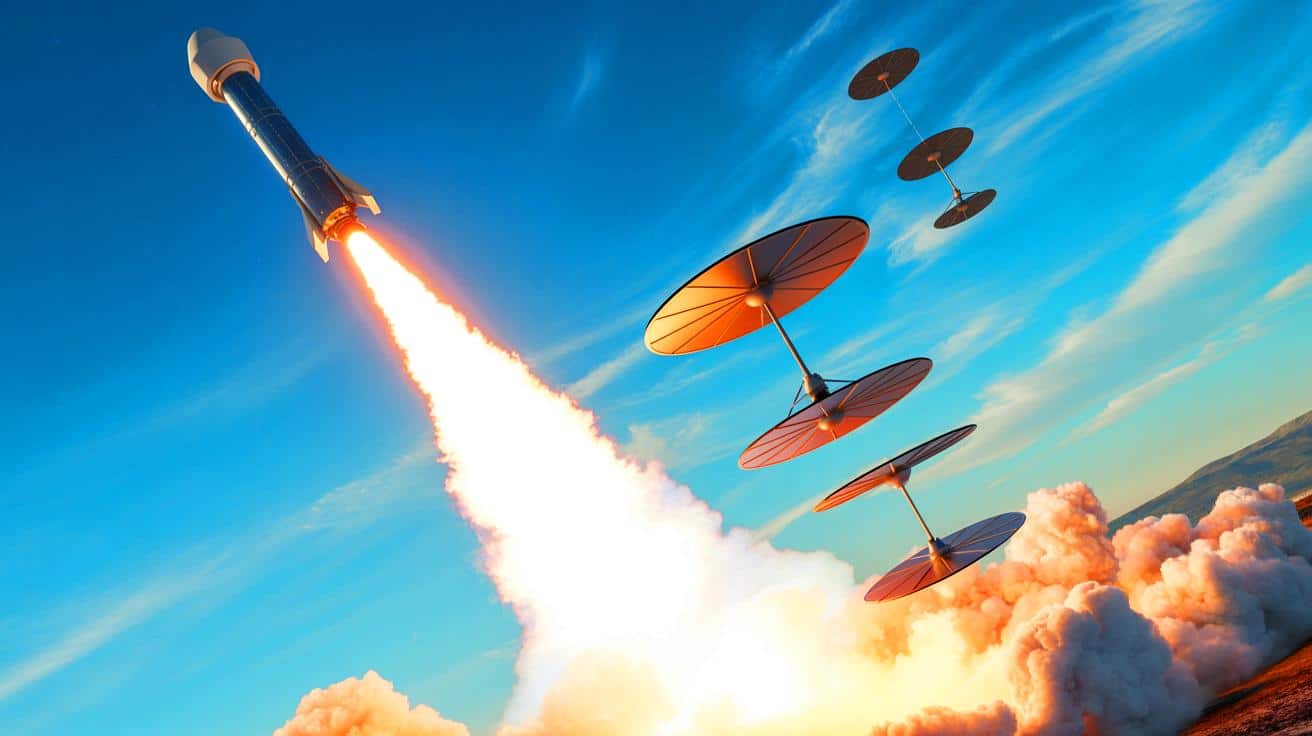
SpinLaunch is pioneering a novel method of satellite deployment that involves using a giant centrifugal cannon to launch spacecraft into orbit. This innovative approach is designed to drastically reduce costs and minimize environmental harm, offering a fresh perspective on how satellites can be deployed. The company’s ambitious Meridian Space constellation is poised to be a game-changer in the industry. The first batch of pancake-like satellites, each measuring approximately 7.5 feet in width and weighing 154 pounds, is slated for launch as early as next year. These microsatellites are stacked in a “launch bus,” making them significantly lighter and more efficient than traditional designs.
Supported by substantial investment, SpinLaunch has recently secured an additional $12 million from Kongsberg Defence and Aerospace, bringing its total funding to nearly $150 million. This financial backing underscores investor confidence in the company’s groundbreaking technology. The involvement of Kongsberg’s NanoAvionics in constructing the first batch of 250 satellites further cements the project’s credibility, setting the stage for a promising launch in 2026. With these advancements, SpinLaunch is poised to potentially set a new record for the most spacecraft launched simultaneously, a title currently held by SpaceX.
The Revolutionary Launch System
SpinLaunch’s unique launch system utilizes a vacuum-sealed chamber and spinning arms to accelerate payloads to incredible speeds. Known as the Suborbital Accelerator, this system has already demonstrated its capabilities by successfully launching 10 rockets into suborbital flight from New Mexico. The process involves spinning payloads to speeds of up to 5,000 mph, subjecting them to forces as high as 10,000 Gs, before releasing them into the upper atmosphere. The success of these test launches, including the latest in September 2022, lays a strong foundation for the forthcoming orbital demonstration.
The primary advantage of this system is its unparalleled cost-efficiency. SpinLaunch forecasts that future commercial launches could cost between $1,250 and $2,500 per kilogram, significantly less than SpaceX’s Falcon 9 rockets. Additionally, the absence of greenhouse gas emissions during the launch process and the elimination of booster rockets contribute to a more environmentally sustainable approach to space travel. This innovation not only reduces launch costs but also addresses the growing concern of space debris and pollution.
Implications for the Satellite Industry
The introduction of SpinLaunch’s technology holds significant implications for the satellite industry. By offering a more affordable and eco-friendly launch option, SpinLaunch is poised to challenge established players and reshape the competitive landscape. The Meridian Space constellation aims to deliver high-speed communication services at a lower cost than its competitors, potentially democratizing access to space-based services.
Moreover, SpinLaunch’s ambitions to expand its capabilities with a larger Orbital Accelerator could see the company launching up to five commercial payloads into space daily. This ambitious target, if realized, would dramatically increase the frequency and accessibility of satellite launches, unlocking new opportunities for industries reliant on satellite technology. However, the surge in satellite activity in low-Earth orbit raises concerns about potential challenges such as spacecraft collisions, light pollution, and interference with astronomical observations.
Scientists Warn: Seafood Waste Sparks US-China CO2 Battle Over Billion-Dollar Green Tech Race
Looking Ahead: Challenges and Opportunities
While SpinLaunch’s innovations present exciting opportunities, they also bring challenges that must be addressed. The potential for increased satellite activity in low-Earth orbit could exacerbate existing problems such as space debris and atmospheric pollution from re-entering spacecraft. As the company progresses with its ambitious plans, it is crucial to consider these factors and work towards sustainable solutions that balance growth with responsibility.
The success of SpinLaunch’s upcoming launches could set a new standard for satellite deployment, offering a glimpse into a future where space is more accessible and sustainable. However, the question remains: how will the industry adapt to these changes, and what measures will be taken to mitigate the potential risks associated with increased activity in low-Earth orbit?



Wow, a 10,000G cannon! Imagine the rollercoaster ride! 🎢
Wow, 10,000 Gs? How do the satellites even survive that kind of force? 🤯
How does SpinLaunch manage to keep the satellites intact with such high G-forces?
Is it just me, or does this sound like something out of a sci-fi movie? 😂
This is revolutionary! Finally, a sustainable option for space launches.
Thank you for the interesting read! It’s amazing to see new innovations in space tech. 👍
Sounds cool, but how reliable is this technology compared to traditional methods?
Good luck SpinLaunch! Can’t wait to see it in action. 🌟
How much cheaper is this method compared to using SpaceX rockets?
Seems like something straight out of a sci-fi movie! 🚀
Hope they have a plan for dealing with space debris!
This is fascinating! But aren’t there risks with launching so many satellites at once?
Is this safe for the satellites? 10,000Gs sounds intense! 😮
Why hasn’t anyone thought of this before? Genius!
Can these launches be viewed by the public? Would be exciting to watch!
Is there any risk to the payload during the launch process?
Wow, defying gravity in a whole new way! ✨
When’s the first launch scheduled? Can’t wait!
How will this affect the current space launch industry?
Just hope they don’t accidentally launch anything else by mistake! 🚀😂
Is the technology patented? Can other companies adopt it?
Sounds ambitious! Are there any backup plans if it fails?
I’m skeptical. How can they ensure the accuracy of the launches?
Impressive funding! Shows strong investor confidence.
Can this tech be used for larger satellites too?
10,000Gs… I wouldn’t want to be that satellite! 😅
Is there a limit to the size of satellites this can launch?
Thank you for paving the way for more sustainable space exploration!
Looking forward to seeing how this changes the industry landscape.
Are there any environmental impacts during the launch process?
Seems like a game-changer! Hope it lives up to the hype.
Is this the future of space launches? Exciting times ahead! 🚀
Fingers crossed for a successful launch! 🤞
Are there any environmental concerns with launching satellites this way?
Sounds promising, but I wonder about the environmental impact of the materials used. 🌍