



| IN A NUTSHELL |
|
The South Atlantic Anomaly (SAA) has become a significant subject of study due to its implications for space technology and Earth’s magnetic field. This region, characterized by a weakened magnetic field over South America and the South Atlantic Ocean, presents unique challenges. As the anomaly evolves, scientists are striving to understand its underlying mechanisms and anticipate the challenges it could pose to our technological infrastructure. By examining the history, risks, and evolving nature of the SAA, researchers aim to develop strategies to protect space technology and gain insights into Earth’s magnetic dynamics.
Understanding the South Atlantic Anomaly
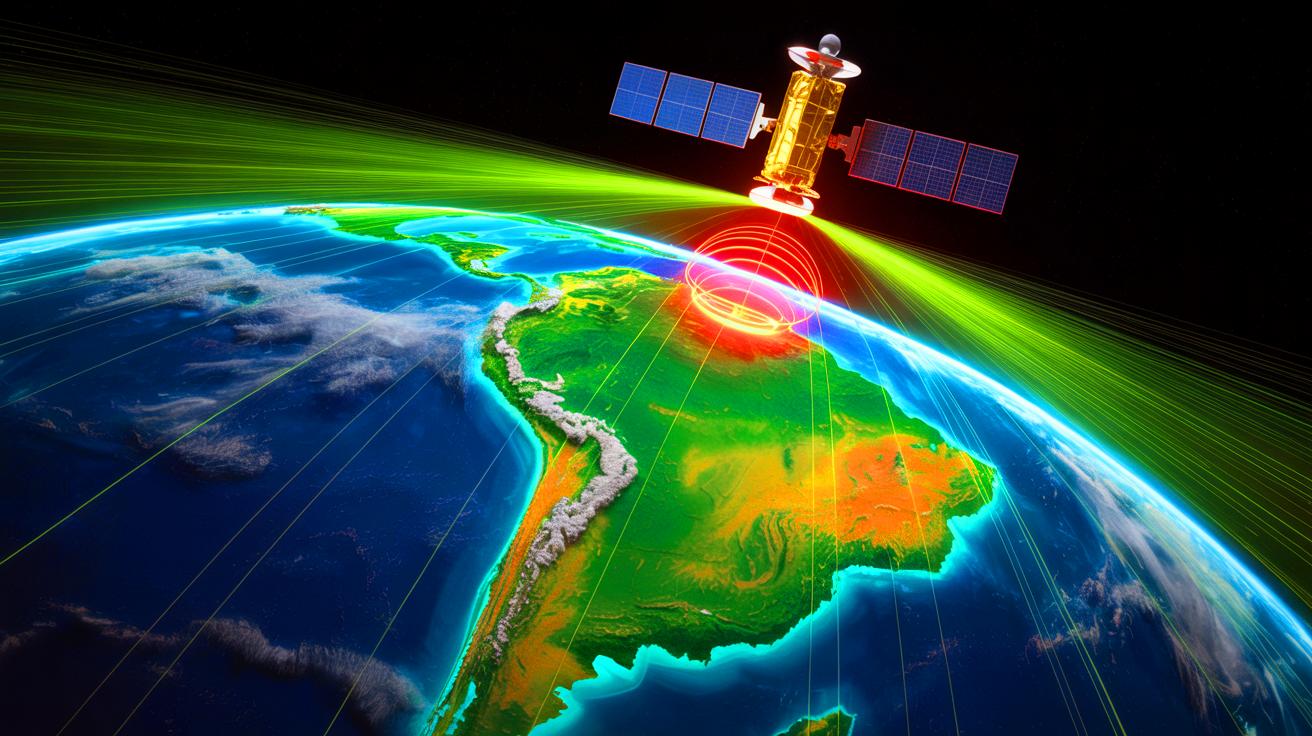
The South Atlantic Anomaly is an area where Earth’s magnetic field is considerably weaker, making it a point of concern for researchers worldwide. This region acts as a vulnerability in Earth’s magnetic shield, allowing high-energy particles from the sun to penetrate closer to the planet’s surface. This phenomenon is not merely an anomaly but a window into the complex processes occurring deep within the Earth.
The SAA’s origins lie in the geodynamo, which is the mechanism generating Earth’s magnetic field. This process takes place in the outer core, where molten iron and nickel circulate, creating magnetic forces. The anomaly is influenced by the tilt of Earth’s magnetic axis and a dense structure beneath Africa, disrupting normal field generation and causing polarity reversals. These disruptions lead to the localized weakening of the magnetic field, resulting in the anomaly.
Implications for Space Technology
The South Atlantic Anomaly poses a significant threat to space technology. Satellites transiting this region face exposure to high-energy particles, risking single event upsets (SEUs) that can cause malfunctions or data corruption. These disruptions are particularly concerning for satellites with missions critical to communication and data collection.
To combat these risks, satellite operators often shut down non-essential systems when passing through the anomaly. Even the International Space Station (ISS) encounters the SAA, with its protective shielding safeguarding astronauts but leaving external instruments vulnerable. Instruments like the GEDI on the ISS report occasional data losses due to the anomaly. Such measures highlight the need for ongoing monitoring and adjustments to satellite operations to mitigate potential damage.
The Dynamic Nature of the Anomaly
The South Atlantic Anomaly is not static; it demonstrates dynamic changes over time. Recent observations from ESA’s Swarm constellation and historical data from NASA indicate that the anomaly is drifting northwest and expanding. Furthermore, the anomaly has begun to split into two distinct lobes, increasing the complexity of its impact on space operations.
This bifurcation creates additional hazardous zones, complicating predictive models of geomagnetic conditions. Understanding these changes is crucial for ensuring the safety and functionality of current and future satellites. Continuous monitoring and adaptation to these developments are necessary to avoid disruptions and maintain satellite integrity.
Cultural Heritage Goes Digital: Yan Zeng Honored with Red Dot for Tie-Dye Revival App
Future Prospects and Scientific Endeavors
NASA and other organizations are using a combination of satellite data and core simulations to refine their understanding of the SAA. These efforts aim to improve models like the International Geomagnetic Reference Field (IGRF), which tracks Earth’s magnetic field changes. By doing so, scientists can better plan space missions and understand the planet’s internal structure.
While the current SAA’s evolution is unique in the modern era, historical records suggest that similar anomalies have occurred over geological timescales. Crucially, researchers assert that the SAA does not indicate an impending magnetic pole reversal, which would take thousands of years to occur. Thus, studying the SAA remains vital for safeguarding space technology and deepening our understanding of Earth’s magnetic forces.
As the South Atlantic Anomaly continues to change, the scientific community is keen to understand its implications further. The anomaly’s potential to disrupt satellite operations and influence our knowledge of Earth’s magnetic field raises intriguing questions. How will these changes shape our scientific pursuits and technological advancements in the future?



Wow, this sounds like the plot of a sci-fi movie! 😮 Are we sure it’s not aliens? 👽
So, are we all doomed or is it just space technology that’s at risk? 😬
Does this affect GPS signals? I’ve noticed my phone acting weird lately. 📱
Can someone explain what “single event upsets” are in simpler terms?
Is the anomaly visible from space? That would be quite a sight!
Great info! How is this anomaly monitored on a daily basis?
Seems like another reason to stay grounded. No more space travel for me! 😂
Can solar flares impact the anomaly or vice versa?
Is there any correlation between this anomaly and recent volcanic activities? 🌋
How does this anomaly compare to others around the world?
Thank you for bringing this to light. I hope our technology can keep up with these changes!
Is there any way to shield satellites better from these effects?
Does this mean the Earth’s core is changing? That sounds serious! 😳
Can the anomaly be reversed or is it a permanent change?
Too many scientific terms make my head spin! But thanks for the effort! 😊
Looks like NASA has their work cut out for them. Good luck! 🚀
Is there any evidence of this anomaly affecting wildlife in the region?
How long has this anomaly been under observation by scientists?
What are the potential impacts on international space stations?
This is fascinating! How often do these anomalies occur? 🤔
Does this anomaly affect weather patterns in any way? ⛈️
Could the anomaly cause issues for military satellites as well?
Sounds like we need some superhero help here! 🦸♂️
How do scientists simulate the magnetic field’s evolution?
What’s the most unexpected outcome of this anomaly so far?
This article is really informative! Keep up the good work!
How does this affect radio communication with satellites?
Is the South Atlantic Anomaly dangerous to aircraft flying over the region? ✈️
Thank you for the detailed explanation. I had no idea about the South Atlantic Anomaly until now!
The split into two lobes is quite concerning. How much more complex does this make satellite navigation?
Typo in the article: “satellites” not “satelites”. Otherwise, great read!
Is this anomaly related to climate change in any way? 🌍