


| IN A NUTSHELL |
|
The depths of the ocean continue to be a source of endless fascination and discovery. Recently, a remarkable revelation occurred off the coast of Vancouver Island, Canada, where an underwater volcano exposed thousands of giant eggs belonging to the elusive Pacific white skate. These eggs, often referred to as “mermaid’s purses,” offer a glimpse into the complex ecosystems that thrive in the extreme conditions of the ocean’s depths. As researchers investigate this stunning discovery, they uncover insights that could transform our understanding of marine biodiversity and the intricate life cycles of deep-sea creatures.
The Astonishing Revelation of an Active Underwater Volcano
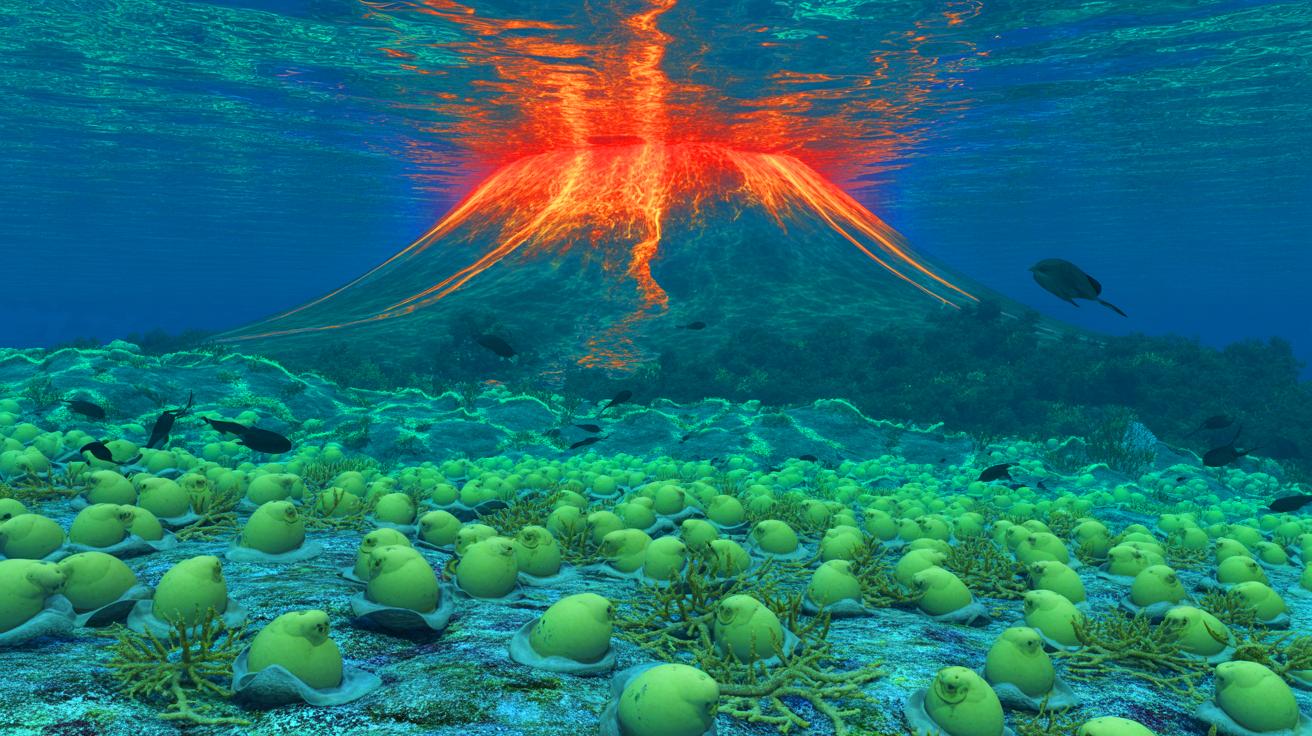
The underwater volcano near Vancouver Island, long assumed to be dormant, made a dramatic appearance during a 2019 expedition led by marine biologist Cherisse Du Preez. Rising about 3,600 feet from the ocean floor, this seamount is located approximately 0.93 to 0.99 miles beneath the ocean surface. The expedition revealed that the volcano emitted warm, mineral-rich waters, creating an unexpectedly diverse marine ecosystem. This geothermal activity plays a crucial role in the development of the giant eggs, which measure 18 to 20 inches in width and require a lengthy gestation period of four years.
The volcanic warmth serves as a natural incubator, accelerating the development of young Pacific white skates and providing them with a head start in life. This phenomenon illustrates the intricate interplay between geological and biological processes beneath the sea, showcasing how geological features such as underwater volcanoes can significantly influence marine life cycles.
Unique Traits of the Pacific White Skate
The Pacific white skate, scientifically known as Bathyraja spinosissima, inhabits the cold Pacific waters at depths ranging from 2,600 to 9,500 feet. Females of this species lay large eggs, investing significant energy to supply essential nutrients for their offspring, a process known as marine gigantism. Adult skates can grow up to 6.5 feet long, highlighting their adaptation to the harsh conditions of the deep ocean.
The warmth from the volcano’s shallower summit creates an ideal environment, described by Cherisse Du Preez as “almost a coral garden and a safe nursery for juveniles before they descend into the deep.” This setting emphasizes the important role these volcanic habitats play in the early life stages of skates. A similar occurrence was noted in 2018 near the Galápagos Islands, where eggs over 4 inches were found near hydrothermal vents, suggesting that volcanic heat is a common resource for various marine species during incubation.
Implications for Marine Research and Biodiversity
The discovery of this active underwater volcano and its function as a natural nursery provides new insights into the complexity of marine ecosystems. The geothermal warmth supports a unique biodiversity, allowing scientists to study how such environments impact marine life development. The presence of these giant eggs in an active volcano suggests that underwater volcanic activity may play a more significant role in marine life cycles than previously understood.
In 2023, a follow-up expedition witnessed a Pacific white skate laying an egg at the Canadian site, revealing more about the reproductive behaviors of this enigmatic species. Evidence also suggests that multiple species utilize this unique site as a natural nursery, highlighting the broader ecological significance of these volcanic habitats.
The Future of Oceanic Exploration and Conservation
Understanding the intricate dynamics of these underwater ecosystems is essential for marine conservation efforts. The discovery of the Pacific white skate’s breeding ground within an active volcano underscores the need to protect these fragile environments. As climate change continues to affect ocean temperatures and ecosystems, preserving these unique habitats becomes even more crucial.
Researchers and conservationists must collaborate to ensure the sustainability of these ecosystems, which serve as vital sanctuaries for marine life. Future explorations may uncover even more hidden secrets of the deep, challenging us to rethink our relationship with the ocean. What other mysteries lie beneath the waves, waiting to be discovered?


Wow, I had no idea volcanoes could be such great incubators! 🥚🌋
Wow, this is like something out of a sci-fi movie! 🌋🐟
Is it safe for researchers to get that close to an active underwater volcano?
Why did scientists think the eggs would hatch so soon? Was there a miscalculation? 🤔
It’s incredible how nature finds a way to thrive in the most unexpected places.
Thank you for shedding light on this fascinating topic! Really makes you appreciate marine life. 🌊
How do they ensure the safety of the researchers while exploring such extreme environments?
Are there any other species benefiting from the volcanic heat in this area?
I’m curious how much this impacts our understanding of marine life cycles overall.
Did the researchers encounter any other unusual marine creatures during their expedition?
Is this discovery a one-off, or could it be happening in other parts of the ocean too?
How can we ensure these habitats are protected against climate change?
I’m loving the idea of a “mermaid’s purse”! Sounds so mystical. 🌊
What role does volcanic activity play in the broader marine ecosystem?
Skates seem like such fascinating creatures. I didn’t know they could grow so large!
Did the scientists find any baby skates hatched during the expedition?
How do you measure the temperature and conditions around an underwater volcano?
How does this research impact conservation efforts?
The ocean is full of secrets—can’t wait to see what else we uncover!
How do researchers explore such deep and extreme environments safely?
The link between geology and biology is more important than I thought! 🌍
Are there any known predators of the Pacific white skate?
Nature never ceases to amaze. Imagine calling a volcano home! 🌋
What are the next steps for this research? Is there a follow-up expedition planned?
So, does this mean there are potentially more undiscovered species in volcanic regions?
Skates that grow over 6 feet? That’s bigger than me! 😲
This article is fascinating! Thanks for sharing such an intriguing discovery. 😊
This is one of the coolest articles I’ve read in a while, thanks!
I wonder if there are similar volcanic nurseries elsewhere. Any thoughts on that?
Do researchers think this volcanic activity will remain stable for future studies?
How do marine biologists track the life stages of these deep-sea creatures?
Is there any footage or images from the expedition? I’d love to see more! 📸
I wonder if this volcanic activity affects other species in the area…
So, the volcano is like an incubator? That’s pretty wild! 🔥