


| IN A NUTSHELL |
|
China recently concluded its 15th and most extensive Arctic Ocean scientific expedition, marking a significant milestone in polar research. This expedition, which included both crewed and uncrewed submersibles, ventured into the depths of the Arctic Ocean, gathering critical data on marine biodiversity, ocean hydrology, and the effects of climate change. The mission’s success underscores China’s growing capabilities in deep-sea exploration and its commitment to understanding the rapidly changing Arctic environment. As the planet warms and ice caps recede, such research is increasingly vital for global climate models and future environmental policies.
Upgraded Jiaolong Submersible Leads China’s First Crewed Dives
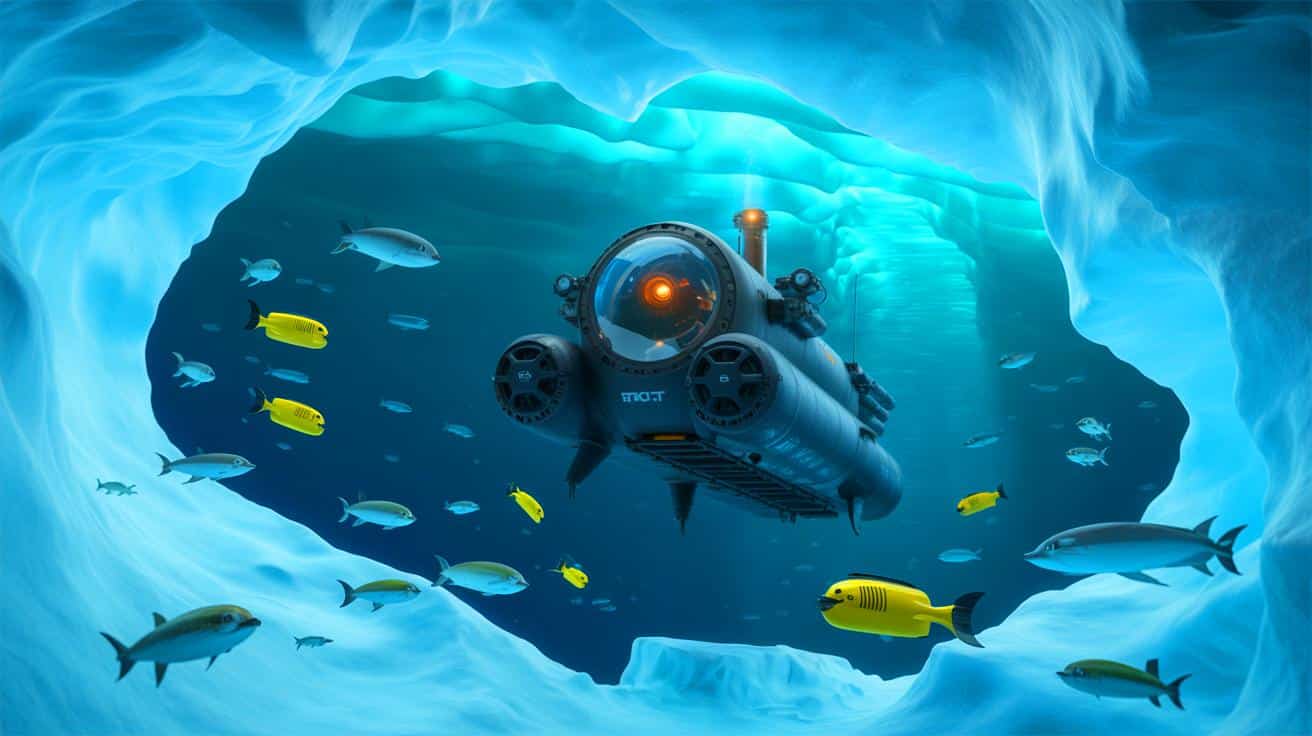
China’s Arctic expedition featured an advanced fleet, including the domestically built icebreaker Xue Long 2 and the research ship Shenhai 1, which carried the upgraded Jiaolong submersible. The fleet departed from Qingdao in July, reaching as far north as latitude 77.5 degrees to conduct extensive marine surveys. This mission marked China’s first crewed deep dives in the ice-covered Arctic waters, a feat that provided unprecedented data from extreme depths.
During the expedition, the Jiaolong submersible underwent significant operational enhancements. According to Fu Wentao, the chief pilot, the team innovated by coordinating the Jiaolong’s dives with a remotely operated vehicle. This advancement addressed challenges like underwater communication and positioning accuracy. Fu noted that this successful trial represents a crucial step toward more complex joint operations in future deep-sea missions. Such advancements are vital as countries race to explore the planet’s final frontiers.
Jiaolong Submersible Collects 183 Samples
Throughout August, the Jiaolong submersible, alongside a remotely operated vehicle, conducted a series of dives that set a new standard in polar research. These dives were not only significant for their technical achievements but also for the biological and geological samples they collected. The Jiaolong gathered 183 samples, including a variety of marine life such as shrimps, sea spiders, and sea anemones, along with sediment, rock, and seawater samples.
The National Deep Sea Centre in Qingdao highlighted the high quality of these samples compared to traditional trawling methods. The refined sampling techniques are expected to enhance morphological identification and scientific study. Furthermore, researchers utilized AI tools and environmental DNA detection to improve organism identification, showcasing the integration of advanced technology in marine research. This approach could revolutionize how scientists study marine ecosystems.
Technological Innovations in Deep-Sea Exploration
The technological advancements demonstrated during China's Arctic expedition are noteworthy. By employing both crewed and uncrewed submersibles, the mission achieved a coordinated operation that had not been attempted before in polar regions. This synergy between human and machine highlights the potential for future deep-sea exploration missions to be more efficient and informative.
Innovations such as AI-driven data analysis and the use of environmental DNA detection have furthered researchers' ability to identify and classify deep-sea organisms accurately. These technologies offer a glimpse into the future of marine exploration, where precision and efficiency are paramount. Such tools are critical for understanding the complex interactions within marine ecosystems and the broader implications for global climate patterns.
Implications for Climate Change Research
The data collected during this expedition holds significant implications for climate change research. As the Arctic region undergoes dramatic transformations due to global warming, understanding these changes is essential for developing accurate climate models. The insights gained from the Jiaolong's dives into biodiversity, ocean hydrology, and water chemistry will contribute to a deeper understanding of the Arctic's role in the global climate system.
This expedition emphasizes the importance of international collaboration in addressing climate change. As nations strive to understand and mitigate the impacts of a warming planet, sharing data and research findings will be crucial. The Arctic serves as a barometer for global climate health, and continued exploration and study of this region are necessary to inform future environmental policies and strategies.
China's groundbreaking Arctic expedition marks a significant step forward in deep-sea exploration and climate research. By combining advanced technology with innovative research methods, the mission has set a precedent for future scientific endeavors in polar regions. As the Arctic continues to change, what new discoveries will further our understanding of this critical region and its impact on the global climate?

Wow, 183 samples! That’s a lot of shrimp and sea spiders 🦐🕷️. How do they store all of them?
Wow, China’s really pushing the boundaries with this Arctic expedition! 🚢
Did I read that right? AI and environmental DNA? Sounds like science fiction!
Does anyone know how this discovery might affect global warming predictions?
Why is China so invested in Arctic research now? 🤔
Great article! But why is China leading these explorations and not other countries?
This discovery sounds like a game-changer for climate predictions. Thanks for the insights!
This is fascinating, but I’m curious about the environmental impact of such expeditions.
China’s deep-sea capabilities are impressive, but what about environmental concerns?
AI and environmental DNA? Sounds like something out of a sci-fi movie! 🤖
I’m skeptical. How can they be sure these findings are accurate?
How do they prevent the submersible from freezing in those ice-covered waters?
Interesting article, but what are other countries doing in the Arctic?
Can’t believe they coordinated both crewed and uncrewed submersibles! That’s some serious tech!
Hope this research leads to real changes in climate policy. 🌍
The Arctic is such a mysterious place. Can’t wait to hear more discoveries from this expedition.
I wonder how this compares to other international Arctic research missions?
Does anyone else find it ironic that China is leading in Arctic exploration? 🤨
Those technological advancements are mind-blowing! The future of exploration looks promising.
Great article! I had no idea about China’s capabilities in deep-sea exploration.
This seems like a big leap for science. What will they discover next?
How does the Jiaolong compare to other submersibles used in polar research?
Is this just China’s way of flexing their technological muscles? 🤷
Can this research really make a dent in our understanding of climate change?
I appreciate the article, but more details on the exact findings would be great!
The blend of AI and marine biology is fascinating. Imagine what they’ll discover next! 🤖🧬
Wait, China did this in the Arctic? That’s like playing on someone else’s turf!
Thanks for the detailed write-up. It’s crucial to stay informed about climate research.
How long until other nations catch up to China’s Arctic research efforts?
These discoveries are mind-blowing. What does this mean for the future of our planet?
Great job on the article! I learned a lot about the technological side of exploration.