




| IN A NUTSHELL |
|
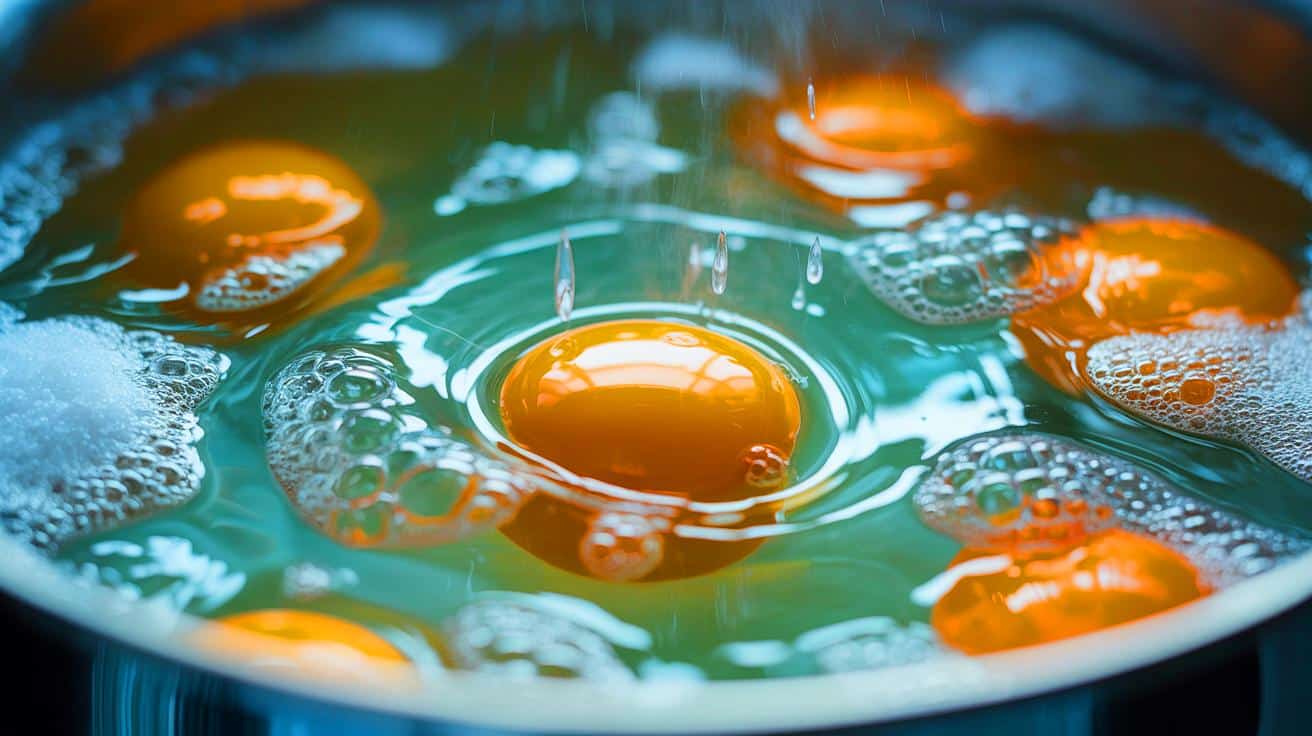
Boiling eggs is a common kitchen task, often accompanied by the casual addition of salt to the water. While many believe this helps in peeling the eggs later, science suggests a different story. Recent studies reveal that adding salt to boiling water has benefits beyond ease of peeling. The science of food chemistry supports its utility, not for the reasons most people assume, but for its role in ensuring a smooth cooking process. This article delves into the science behind this culinary habit, debunking myths and shedding light on the true role of salt in egg boiling.
The Scientific Role of Salt: An Emergency Sealant
When eggs are boiled, the proteins in the egg white, known as albumin, denature and clump together to form a solid gel, a process called coagulation. This transformation is essential for turning a raw egg into a hard-boiled one. Sometimes, however, a small crack, undetectable to the eye or caused by thermal shock, may appear in the shell during cooking. This allows egg white to seep out, creating unsightly filaments in the water.
Salt comes into play precisely at this point. Adding salt to the water alters its chemical environment and significantly speeds up protein coagulation. In simpler terms, if an egg cracks, the salt prompts the escaping white to solidify almost instantly upon contact with the salty water. This forms a natural “plug” that seals the crack, preventing further leakage. The result is a perfectly cooked egg without waste or a messy appearance. It’s akin to an emergency patch for your egg.
Food science experts confirm this phenomenon. Harold McGee, a renowned authority in the field and author of the reference book “Keys to Good Cooking,” explains this principle clearly. He notes:
A bit of salt in the water can help the egg white set more quickly and firmly if the egg cracks during cooking, thereby minimizing the resulting white trail.
The Myth of Easy Peeling: A Persistent Misconception
Now that the true role of salt is clear, it's time to debunk a common urban legend: no, salt does not make eggs easier to peel. If you struggle to peel an egg, losing half the white in the process, the cause lies elsewhere. Several more effective factors contribute to perfect peeling, as highlighted by a study from the Department of Poultry Science at the University of Guelph in Canada.
The first secret is the age of the egg. An extra-fresh egg is notoriously difficult to peel. Over time, the egg loses some moisture, and its pH increases slightly, reducing the adherence of the inner membrane to the shell. For hard-boiled eggs, opt for eggs that are a few days old.
The second crucial factor is thermal shock. Once cooking is complete, it is vital to halt the process immediately. Plunging the eggs into a large bowl of ice water for several minutes causes the egg white to contract, making it easier to separate from the membrane and shell.
Finally, the cooking method can also play a role. Starting the cooking process in already boiling water rather than cold water seems to encourage easier peeling. By combining these three tips, you significantly increase your chances of success, far more effectively than with a mere pinch of salt.
The Chemistry Behind Egg Coagulation
Understanding the chemistry of egg coagulation provides further insight into why salt is beneficial during the boiling process. Proteins are complex molecules that undergo structural changes when exposed to heat. In the case of eggs, heat causes the proteins to unfold and bond together, forming a solid mass. This transformation is sensitive to several factors, including temperature and the surrounding environment.
Salt, when dissolved in water, creates a saline solution that alters the water's properties. This change affects how quickly and effectively the proteins coagulate. By speeding up the coagulation process, salt helps manage any unintended cracks in the shell, ensuring that the egg white doesn’t seep out and disrupt the cooking.
This scientific understanding underscores the practical application of salt in culinary practices. It highlights its role not as a flavor enhancer or peeling aid, but as a tool to maintain the integrity of the egg during boiling.
Practical Tips for Perfect Boiled Eggs
While salt plays a critical role in egg boiling, achieving the perfect boiled egg involves more than just adding salt to the water. Experimenting with the age of the eggs can provide different results, especially when seeking to improve peeling. Older eggs are generally better for boiling, as their shells are easier to separate from the whites.
The cooking duration and temperature are also important. Boiling eggs for too long can result in a rubbery texture, while undercooking leaves them runny. Finding the right balance is key to achieving the desired firmness.
Additionally, cooling the eggs promptly after boiling, using an ice bath, helps stop the cooking process and prevents overcooking. This method also aids in peeling by causing the egg whites to contract, pulling away from the shell.
The next time you find yourself boiling eggs, consider the science that transforms this simple task into a delicate balance of chemistry and practice. How might understanding these scientific principles change your approach to everyday cooking tasks, and what other culinary processes could benefit from such insights?



Wow, I never knew salt was so important when boiling eggs! 🥚
Wow, who knew salt was such a multitasker? 🧂
If salt doesn’t help with peeling, why have I been doing it all these years? 🤔
Wait, so salt doesn’t help with peeling? I’ve been living a lie!
Thank you for the tips! I always struggle with peeling eggs, so this is super helpful.
Thank you for explaining this! I always wondered why my eggs still stuck. 🙌
So, I guess my grandmother was right about the salt but for the wrong reasons!
Is there a specific type of salt that’s better for this, or will any kind do?
Great article! But what about vinegar? Does it help at all?
Does the type of salt matter? Sea salt vs table salt?