



| IN A NUTSHELL |
|
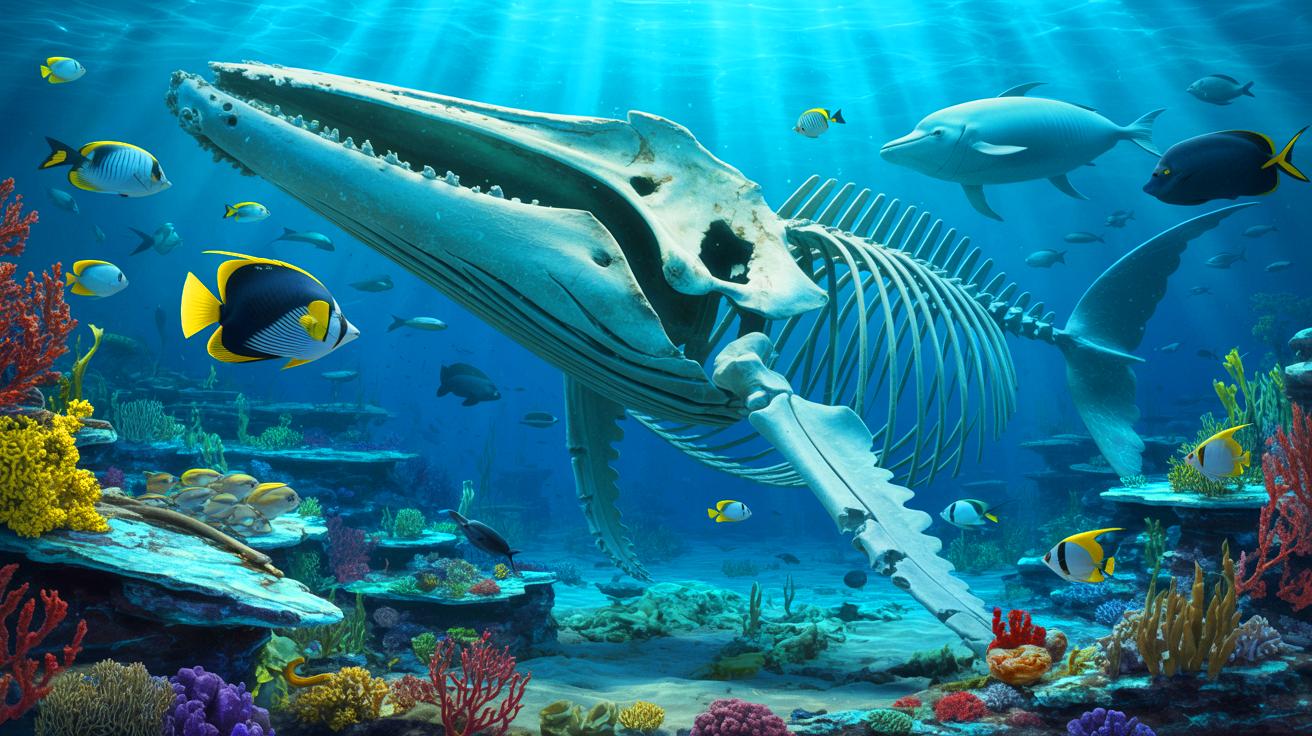
Deep beneath the ocean’s surface lies a mysterious world that thrives around the remains of massive marine creatures. Known as “whale falls,” these phenomena occur when a whale’s carcass sinks to the ocean floor, creating a temporary oasis for various deep-sea organisms. The Schmidt Ocean Institute documented such an event in 2021, capturing the intricate ecosystem that develops around these remains. This discovery provides valuable insights into the complex relationships and survival strategies of marine life in one of Earth’s harshest environments.
Understanding the Phenomenon of Whale Falls
Whale falls are unique ecological events that occur when the body of a dead whale descends to the ocean floor. This occurrence transforms the carcass into a hub of life, nourishing a wide array of organisms. The descent of a whale’s body, which can weigh up to 160,000 pounds, marks not an end but a beginning for many deep-sea species. In the nutrient-scarce environment of the deep ocean, whale falls become critical sources of sustenance.
The event initiates with scavengers such as hagfish, sharks, and crabs descending upon the carcass. These predators feast on the whale’s flesh, taking advantage of the rich energy it provides. As the whale’s body is consumed, smaller organisms, including bone-eating worms, step in to decompose the remaining bones. This intricate life cycle underscores the deep sea’s remarkable ability to sustain life in the most unlikely circumstances, with each stage supporting a different community of marine life.
The Sequential Stages of a Whale Fall
A whale fall unfolds in several distinct stages, each characterized by different ecological processes and inhabitants. The initial phase, known as the “scavenger phase,” features large predators like sharks and deep-sea fish that feast on the soft tissue of the whale. These creatures rapidly consume the flesh, leaving behind only the bones.
Subsequently, the “decomposer phase” begins, where smaller organisms, including bacteria and specialized worms, take over. These organisms, such as the Osedax worms, possess unique adaptations allowing them to break down the whale’s bones. This phase can extend over several years as the skeletal remains are gradually dismantled.
The final stage is the “remineralization phase,” during which the bones release minerals into the surrounding environment. This stage can last decades, supporting a diverse community of invertebrates such as crabs and shrimp. The whale’s carcass, much like a coral reef, provides essential nutrients and a thriving habitat in an otherwise barren ecosystem.
The Rich Biodiversity Supported by Whale Falls
Whale falls serve as crucial components of the deep-sea ecosystem, supporting a diverse range of species. These ecosystems encompass everything from bacteria to large marine animals, all adapted to the extreme conditions of the ocean depths. Furthermore, rare species of deep-sea corals often thrive by feeding on the organic matter from the whale’s carcass.
Some species, such as certain snails, shrimp, and crabs, rely exclusively on whale falls for sustenance. The presence of these species highlights the interconnectedness of marine life in the deep ocean. Whale falls offer scientists a unique opportunity to study complex interspecies relationships that would otherwise remain hidden.
Beyond providing food, whale falls also act as breeding grounds for certain species. The nutrients they supply attract creatures that might otherwise migrate long distances in search of sustenance. This phenomenon illustrates how life, even in the ocean’s most desolate regions, manages to find ways to flourish.
Whale Falls as Ocean Health Indicators
The study of whale falls offers crucial insights into the health of marine ecosystems. As human activities threaten ocean life through overfishing, pollution, and climate change, understanding natural processes like whale falls becomes increasingly important. These events can serve as indicators of ocean health, occurring in otherwise inaccessible or unexplored areas.
The decomposition process during a whale fall helps researchers understand carbon cycling in the ocean. This knowledge is vital in the context of climate change, as it provides clues about the ocean’s capacity to absorb and store carbon. By understanding the functioning of deep-sea ecosystems, we can better protect these fragile environments from future harm.
As researchers continue to explore the depths of the ocean, the study of whale falls will remain a vital area of inquiry. These events not only reveal the resilience and adaptability of marine life but also serve as a reminder of the interconnectedness of our planet’s ecosystems. How might the continued study of these natural phenomena influence our approach to ocean conservation and climate change mitigation?



Wow, I never knew dead whales could become cities! 🏙️
Fascinating read! I had no idea whale carcasses could support life for so long. Nature never ceases to amaze me. 🐋
Can whale falls affect commercial fishing areas, or are they usually too deep?
How do scientists even discover these underwater ecosystems? 🤔
Thank you for this article! It really opened my eyes to another side of marine life. 🐟
Thanks for sharing such a fascinating topic! I learned a lot. 😊
What happens if there are more whale falls than usual? Could it disrupt the ecosystem?
This seems like a great plot for a documentary! I’d watch it! 🎥
Is this the same process that happens with other large sea creatures?
Do whale falls occur only in certain parts of the ocean?
So, are whale falls good or bad for ocean health?
I found a typo in the article; you spelled “ecosystem” wrong in one section!
160,000 pounds? I can’t even imagine how big that is! 😲
Mind-blowing how a single whale can support so much life. Nature’s recycling plan is impressive! ♻️
Is there any way whale falls could benefit humans directly?
Do whale falls happen often, or are they rare events?
What a way to go! Becomes an underwater city instead of just decaying.
Does this mean we should be thankful for whale deaths? 🤔
Do other marine animals like squids or dolphins have similar impacts when they die?
100 years is a long time for a carcass to be useful… how do they even last that long?
Thanks for sharing such an insightful piece! Never knew about this. 🌊
Could human activities like deep-sea mining affect these underwater ecosystems?
Is there a specific type of bacteria that thrives on whale bones?
Should we be concerned about the impact of climate change on whale falls?
Why aren’t these events more widely discussed? Seems like a big deal for ocean health.
Can we somehow use whale falls to help with ocean conservation efforts?
Do whale falls happen often enough to be a reliable indicator of ocean health?
This sounds like science fiction, but it’s real! 😮
Are there any famous documented whale falls I can read more about?
Just wow! Who knew death could bring so much life. 🐋🌍
If a whale dies from pollution, does it still support a whale fall?
How did scientists first discover and study whale falls?
What happens to the ecosystem after the whale fall is completely consumed?
It’s amazing how interconnected all life is, even in the ocean’s depths. 🌐
Is there any chance whale falls could influence ocean currents?
Crazy thought: do whales know about this and choose where they die?
How do scientists monitor these deep-sea ecosystems?
Thanks for the article! I learned so much about an aspect of the ocean I never considered. 🐠
Do whale falls attract specific types of deep-sea predators?
This is the coolest thing I’ve read all day. Nature is metal! 🤘
Are there any threats to whale falls caused by human activity?
Do certain species of whales lead to different types of whale falls?