



| IN A NUTSHELL |
|
In a fascinating turn of scientific discovery, researchers have uncovered a new variety of tektites in South Australia, revealing a previously unknown asteroid impact event. These tiny glass fragments, formed when a meteorite strikes Earth with immense force, offer insight into Earth’s ancient history. The unique chemistry and age of these tektites, dating back 11 million years, distinguish them from other known examples. Despite the magnitude of the impact, the actual crater remains elusive. This discovery, led by scientists from Curtin’s School of Earth and Planetary Sciences and Aix-Marseille University, adds a new chapter to our understanding of Earth’s past and its geological mysteries.
Unveiling Earth’s Hidden Geological Events
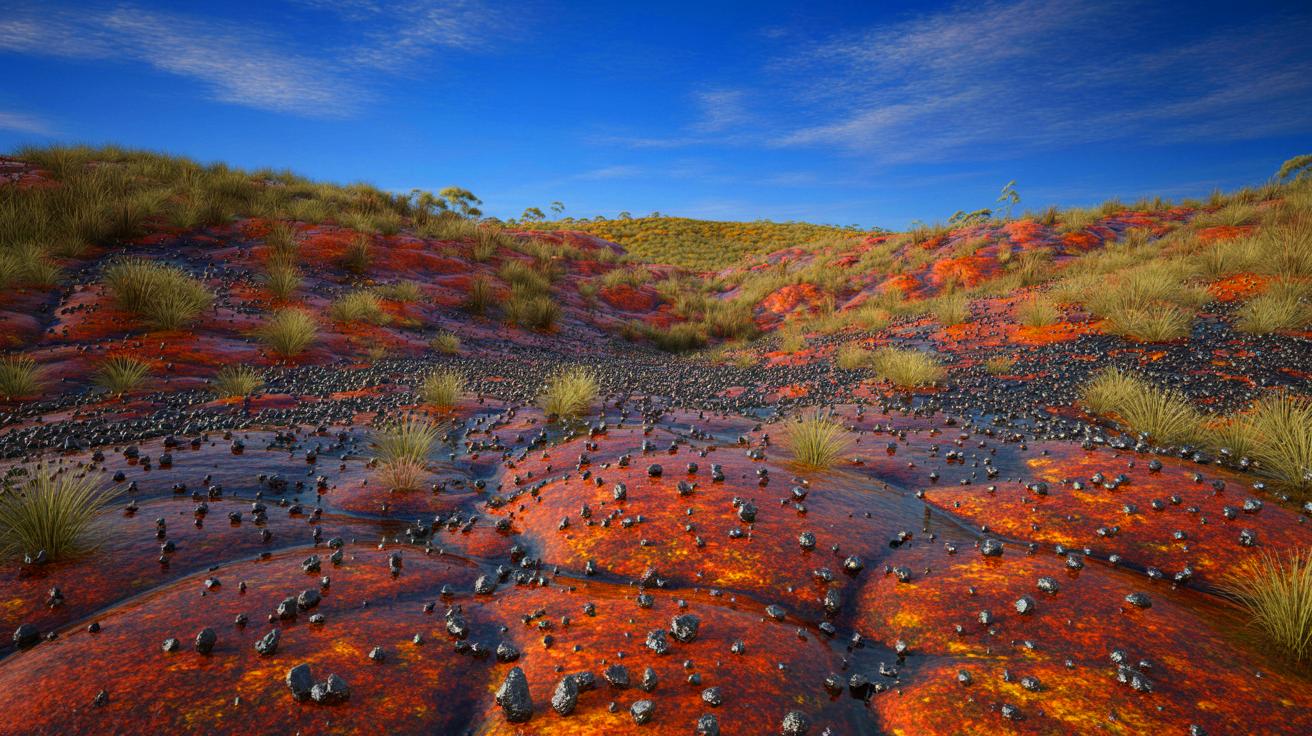
The discovery of these unique tektites in Australia has opened a new window into Earth’s geological history. Formed when a meteorite impacts the planet with such force that it melts the surface, these glass fragments are scattered over vast distances. In this case, the tektites were found across parts of South Australia, marking them as a distinct geological phenomenon. Unlike the well-documented Australasian tektites, which spread across half the globe about 780,000 years ago, these new tektites are much older and suggest a completely separate impact event.
Professor Fred Jourdan from Curtin’s School of Earth and Planetary Sciences highlights the significance of these findings. He likens the discovery to uncovering a new chapter in Earth’s turbulent past. The tektites’ unique chemistry and age—about 11 million years—set them apart from previously known examples, challenging scientists to re-evaluate the frequency and impact of large asteroid strikes on Earth. This revelation is crucial for understanding our planet’s history and assessing future risks.
The Mystery of the Missing Crater
One of the most intriguing aspects of this discovery is the absence of a known crater. Despite the immense impact that must have created these tektites, the location of the originating crater remains a mystery. This absence presents a significant challenge for scientists who aim to piece together Earth’s geological puzzle. The missing crater raises questions about the conditions and processes that might obscure such impact sites over millions of years.
Professor Jourdan emphasizes the significance of finding the crater, as it would provide invaluable insights into the impact’s magnitude and effects on the surrounding environment. Locating the crater could also offer clues about the regional geological transformations that have occurred since the impact. The search for this elusive crater continues, driving researchers to explore new methodologies and technologies to uncover hidden geological features.
Implications for Planetary Defense
Understanding past asteroid impacts is not only a matter of historical interest but also crucial for planetary defense. By studying these ancient events, scientists can better assess the likelihood and potential consequences of future impacts. The discovery in Australia offers a unique opportunity to refine models predicting asteroid behavior and impact risks.
Professor Jourdan notes that this research enhances our ability to gauge the frequency of large asteroid strikes. It also informs strategies to mitigate potential threats. As our planet continues to face the possibility of future impacts, this research underscores the importance of advancing our understanding of asteroid dynamics and developing effective planetary defense measures.
A New Chapter in Tektite Research
Lead author Anna Musolino from Aix-Marseille University highlights the tektites’ unusual chemistry as a key factor in their uniqueness. These glass fragments not only expand our understanding of tektites but also challenge existing theories about their formation and distribution. The study, part of a larger research project led by Emeritus Professor Pierre Rochette, demonstrates the value of interdisciplinary collaboration in uncovering Earth’s hidden histories.
As researchers continue to analyze these tektites, new questions arise about the processes that shape our planet. The study’s findings, published in Earth and Planetary Science Letters, invite the scientific community to explore further the implications of this ancient impact. By integrating geological, chemical, and physical data, scientists can develop a more comprehensive picture of Earth’s past and its dynamic processes.
As scientists delve deeper into the mystery of these ancient tektites, they are confronted with both challenges and opportunities. The search for the missing crater and the implications for planetary defense highlight the complexity of Earth’s geological history. These discoveries not only enrich our understanding of the past but also prepare us for future challenges. As new findings emerge, one must ask: how will this knowledge shape our approach to planetary protection and our understanding of Earth’s evolving landscape?


Wow, this is like a real-life treasure hunt for scientists! 🕵️♂️
Wow, a missing crater! It’s like a cosmic detective story. Who doesn’t love a good mystery? 🕵️♂️
Great article! This really makes me appreciate the intricate history of our planet. Thank you!
Why can’t they find the crater? Is it possible it got covered up or something?
How do scientists even begin to look for a missing crater? Sounds like finding a needle in a haystack!
Thank you for this fascinating article! I’ve always been intrigued by Earth’s geological mysteries. 🌍
Is it possible that the crater was erased by other geological events over millions of years?
So, are these tektites worth anything? Like, can you sell them on eBay? 😄
Why are tektites always found in such remote places? Are they hiding from us? 😂
This discovery could redefine our understanding of Earth’s impact history. Exciting times for geology!
Is there any chance this missing crater could be underwater? 🤔
Can we expect more discoveries like this in the future? The Earth has so many secrets!