




| IN A NUTSHELL |
|
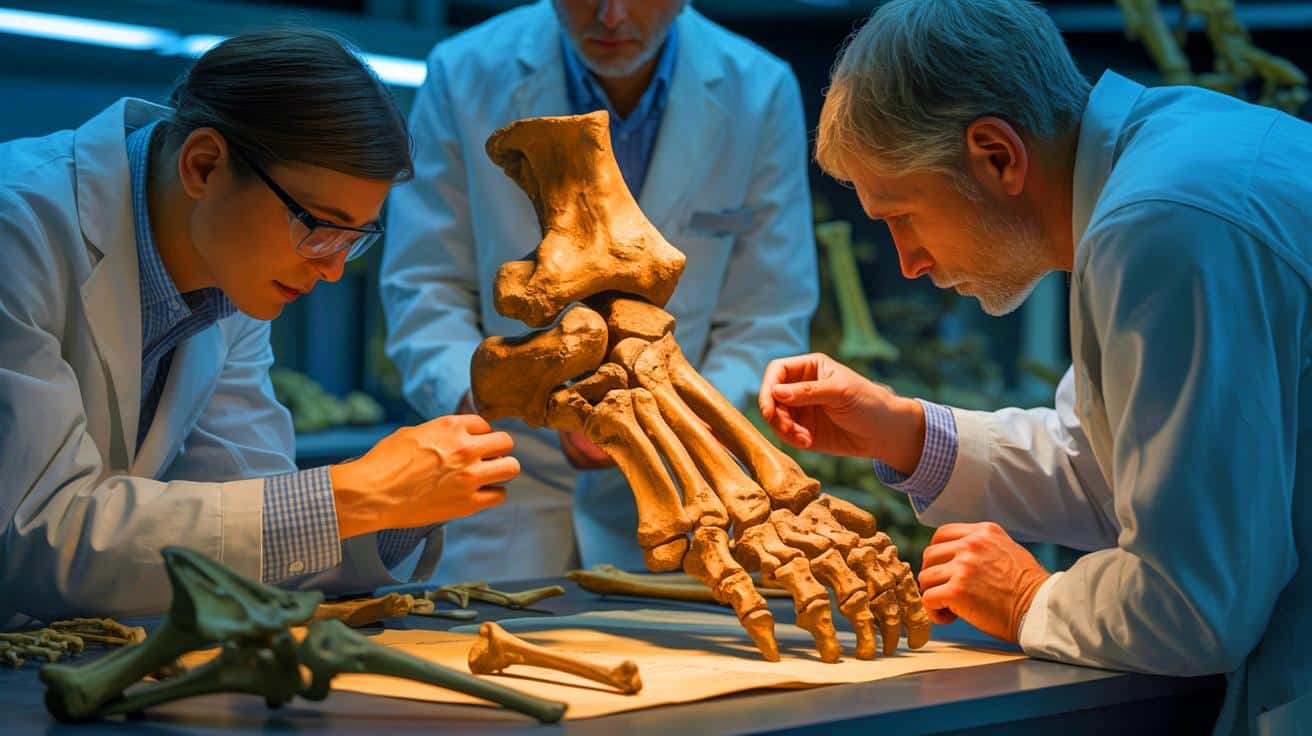
The discovery of ancient fossil bones has unveiled fascinating insights into early human history. A 3.4-million-year-old hominin foot, initially found in 2009, has now been linked to a species distinct from the well-known Lucy. This finding strengthens the notion that two separate species of early human ancestors coexisted in the same region. The Burtele Nature Foot was discovered by a team led by Arizona State University’s paleoanthropologist Yohannes Haile-Selassie. This discovery has reshaped our understanding of the complexity of human evolution, offering a glimpse into a time when multiple hominin species shared the same landscape.
Linking the Burtele Foot to Australopithecus deyiremeda
The enigmatic Burtele foot, first introduced in a 2012 publication, posed an intriguing puzzle for scientists. It was different from the foot of Lucy’s species, Australopithecus afarensis. However, naming a species based on postcranial elements, such as the foot bones, is not common practice. Researchers hoped to find cranial elements to solidify the species classification. In 2015, the discovery of a new species, Australopithecus deyiremeda, provided a potential match for the Burtele foot. Over the next decade, repeated fieldwork and fossil discoveries led to a confident association of the Burtele foot with A. deyiremeda.
This development highlights the importance of multidisciplinary collaboration in paleoanthropology. Dental and cranial elements play a critical role in species recognition, allowing scientists to piece together the evolutionary puzzle. The careful examination of fossil layers and stratigraphic association provided the necessary evidence to confirm the link between the Burtele foot and A. deyiremeda. This connection sheds light on the diversity of early hominins and their evolutionary trajectories.
Two Hominin Species Coexisting
The discovery of the Burtele foot emphasizes an intriguing aspect of human evolution—the coexistence of multiple hominin species. The Woranso-Mille site in Ethiopia, where the foot was found, offers clear evidence of two closely related species living together. The Burtele foot, associated with A. deyiremeda, is considered more primitive than Lucy’s species. Unlike Lucy, this species retained an opposable big toe, aiding in climbing while still walking bipedally on the ground.
This revelation suggests that bipedality evolved in various forms among early human ancestors. The presence of an abducted big toe in A. deyiremeda challenges the notion of a single evolutionary path toward modern human locomotion. The diversity in walking styles indicates that early hominins adapted to their environment in different ways. This finding raises intriguing questions about how these species interacted and shared their habitat without driving each other to extinction.
Dietary Insights from Isotope Analysis
To gain insights into the diet of A. deyiremeda, researchers analyzed teeth from the Burtele area using isotope techniques. This meticulous process involves sampling the tooth enamel with a dental drill to extract small amounts of powder. The powder is then subjected to isotopic analysis to determine the dietary resources utilized by the species.
Surprisingly, the isotope data revealed that A. deyiremeda relied more heavily on C3 resources, derived from trees and shrubs, while Lucy’s species had a mixed diet, incorporating both C3 and C4 plants. This dietary distinction highlights the ecological adaptations of A. deyiremeda. The findings emphasize the importance of understanding how early hominins exploited available resources to survive in their environment. This knowledge provides valuable insights into the ecological dynamics of ancient ecosystems and the adaptability of early human ancestors.
Reconstructing Ancient Environments and Growth Patterns
Paleoanthropologists meticulously dated the fossils and reconstructed the ancient environments of the Woranso-Mille site. Establishing the age of fossil layers and understanding the conditions in which species lived are crucial for unraveling the story of human evolution. The geological work led by Beverly Saylor provided essential context for the Burtele foot’s association with A. deyiremeda.
Additionally, the discovery of a juvenile jaw offered insights into growth and development patterns. The jaw, belonging to A. deyiremeda, contained both baby and developing adult teeth. CT scanning technology allowed researchers to visualize the teeth, revealing growth patterns similar to those of other early australopiths. Despite the diversity in size, diet, and locomotion, early australopiths exhibited remarkable similarities in their growth processes.
The discovery of the Burtele foot and its association with Australopithecus deyiremeda has enriched our understanding of early human evolution. By uncovering the coexistence of multiple hominin species and revealing their dietary and locomotor adaptations, researchers have painted a more nuanced picture of our ancient past. As we continue to explore these findings, how might they inform our understanding of human adaptability in the face of environmental changes today?


Wow, another human cousin? How many species do we have in our family tree now? 🤔
Wow, this changes everything we thought we knew about our ancestors! 🦶
This is fascinating, but how can we be sure the foot belongs to a different species?
Thanks for sharing such an insightful article! Truly mind-blowing discoveries in paleoanthropology. 😊
Is it possible that there are even more undiscovered species out there? 🤔
I wish I could read more about the coexisting species. Does this mean they were competitors?
Thank you for this insightful article! It’s amazing how much we are still learning about our origins.
3.4 million years old foot? That’s older than my grandmother’s jokes! 😂
Is the Burtele foot the only fossil evidence for Australopithecus deyiremeda?
Wait, so does this mean Lucy wasn’t as special as we thought?
How accurate are these dating methods? Can we really trust them?
Nice work on the article! The comparison between the species’ diets was an interesting touch.
Great article, but I’m a bit skeptical about the methods used to date the fossils. Can anyone explain?
Isotope analysis always sounds so technical. Can someone explain it in simple terms?
Lucy, meet your new cousin! Family reunions just got a lot more interesting. 🎉