




| IN A NUTSHELL |
|
The discovery of an ancient crocodile relative, Tainrakuasuchus bellator, has unveiled a fascinating chapter in Earth’s prehistoric timeline. This armored predator roamed the Earth approximately 240 million years ago, predating the dinosaurs. Unlike its contemporary crocodilian relatives, this species displayed unique characteristics that offered insight into the diversity of life during the Triassic Period. Unearthed in Brazil, this fossil provides a window into an era when reptiles dominated the landscape, occupying ecological niches that would soon be filled by the emerging dinosaurs. The implications of this find extend beyond the fossil itself, highlighting intricate connections across ancient landmasses.
Early Crocodile Relatives: Predators of the Triassic
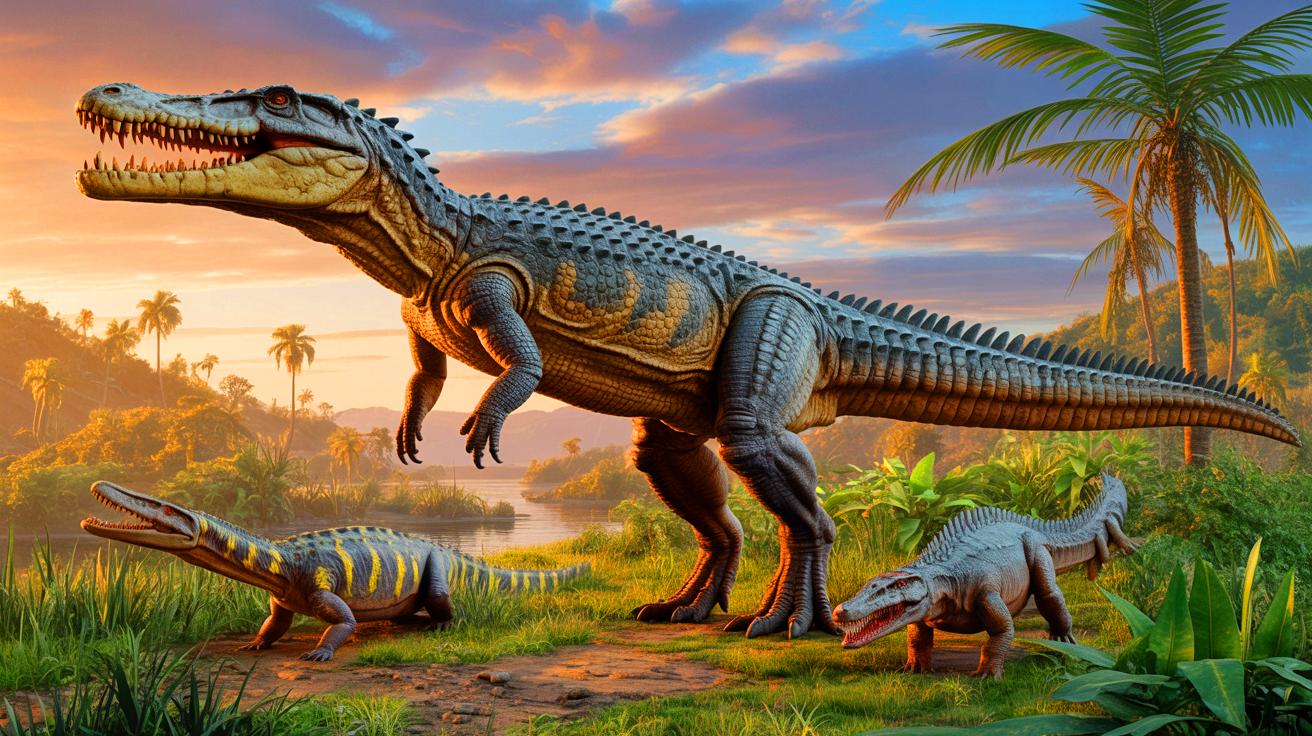
The Tainrakuasuchus bellator is a remarkable find, shedding light on the evolutionary history of crocodiles. As a member of the Pseudosuchia, it belonged to a group that thrived long before dinosaurs became the dominant terrestrial vertebrates. Measuring about 8 feet in length and weighing approximately 130 pounds, this predator was equipped with a long neck and agile body, enabling it to hunt effectively. Its slender jaws, lined with sharp, recurved teeth, were perfect for securing prey.
Despite its size, it was not the largest predator of its time. Larger creatures, reaching lengths of 23 feet, coexisted within the same ecosystem. “This animal was an active predator,” explains Dr. Rodrigo Temp Müller, the lead author of the study. The Journal of Systematic Palaeontology details how this species used its physical traits to navigate its environment successfully. Its skeletal structure, particularly the pelvis and femur joints, differentiates it from dinosaurs, offering paleontologists a clearer understanding of reptilian evolution.
A Window Into Pre-Dinosaur Biodiversity
The discovery of Tainrakuasuchus bellator in Brazil’s Dona Francisca region provides crucial insights into the biodiversity of pre-dinosaur ecosystems. This species was part of a complex web of life, with various pseudosuchia species occupying distinct ecological niches. The fossils, uncovered in 2025, included parts of the lower jaw, vertebrae, and pelvic girdle, all encased in rock.
Analysis revealed that the creature was protected by osteoderms, bony plates akin to those found in modern crocodiles. Although its limbs were not preserved, researchers believe it moved on all fours, similar to its relatives. “Tainrakuasuchus bellator’s discovery represents the complexity of the ecosystem at the time,” notes Dr. Müller. The find helps illuminate the period just before dinosaurs rose to dominance, offering a glimpse into the evolutionary pressures and strategies that shaped prehistoric life.
The Name and Its Significance
The name Tainrakuasuchus combines Guarani and Greek words, reflecting the creature’s sharp teeth and crocodilian lineage. The term bellator, Latin for “warrior” or “fighter,” pays homage to the resilience of the people of Rio Grande do Sul, Brazil. This region, recently affected by floods, symbolizes strength and endurance, much like the ancient predator itself.
The naming of this species underscores the cultural and scientific connections that these discoveries foster. The fossil serves as a testament to both the ancient ecosystems of South America and the enduring spirit of its people. By linking local heritage with paleontological research, the discovery bridges past and present, illustrating the deep-rooted connections between biology and culture.
Ancient Links Across Continents
The find provides compelling evidence of the connections between ancient South America and Africa during the Triassic Period. At that time, the landmasses were united as part of the supercontinent Pangaea, allowing for the free movement of species. Dr. Müller describes the discovery as “extremely rare,” highlighting the challenges in uncovering such fossils.
The meticulous preparation of the fossils revealed that Tainrakuasuchus bellator shared similarities with Mandasuchus tanyauchen, a species from Tanzania. This connection illustrates the shared evolutionary history between the continents, with faunas reflecting intertwined ecological and evolutionary paths. This predator lived along a vast, arid desert, the same environment where dinosaurs first emerged, showing that diverse reptilian communities had already formed complex survival strategies.
The discovery of Tainrakuasuchus bellator enriches our understanding of prehistoric biodiversity and the evolutionary lineage of crocodiles. As scientists continue to uncover these ancient secrets, they piece together the puzzle of life before dinosaurs. This rare find not only highlights the intricate ecological dynamics of the Triassic but also raises questions about the resilience and adaptability of life. How did these early reptiles navigate their changing world, and what can they teach us about evolution and survival in an ever-evolving planet?


Wow, this is mind-blowing! 🐊 Who knew crocs were such big shots before dinos?
This is a game changer for understanding prehistoric ecosystems! Can’t believe these creatures existed before dinosaurs. 🐊
I’m curious, how do they determine the exact age of these fossils? 🤔
Fascinating read! How do they determine the age of these fossils with such precision?
Thanks for the article! It’s fascinating to learn about prehistoric life in such detail.
Wait, is this for real? Sounds like something out of a sci-fi movie! 😄
Is the name Tainrakuasuchus bellator a nod to any specific cultural reference?
How did they even manage to find all these fossils in the first place?
Whoa, 8 feet long? That’s one big lizard. 😳
This discovery is just another piece of evidence showing how little we know about Earth’s history.
Why don’t we hear more about these kinds of discoveries in mainstream media? 🤷♂️
How do they know it was an active predator? Could it have been a scavenger instead?
The name Tainrakuasuchus bellator is epic! Sounds like a warrior from a fantasy novel.