




| IN A NUTSHELL |
|
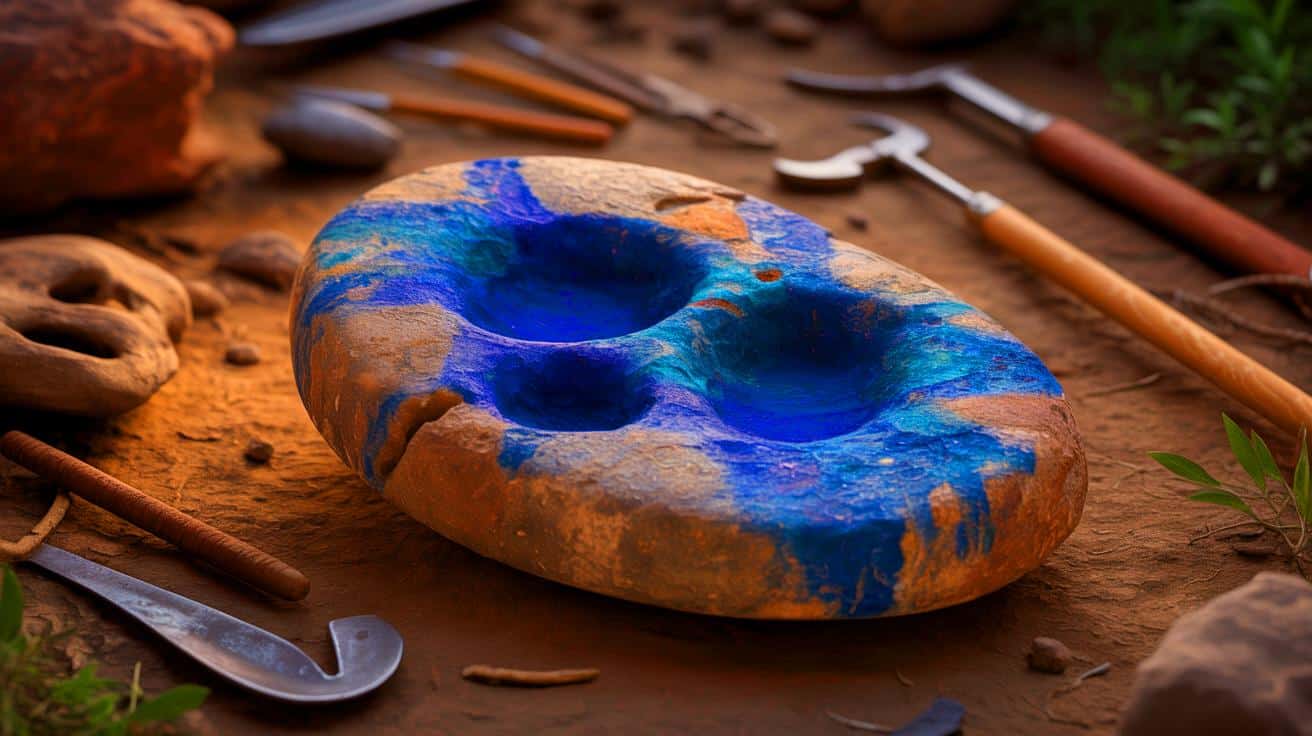
Recent archaeological findings in Germany are challenging long-held assumptions about the use of color in Paleolithic art. Researchers from Aarhus University discovered traces of azurite, a rare blue pigment, on a 13,000-year-old artifact. This unexpected find suggests that ancient peoples were more sophisticated in their use of color than previously believed. The presence of blue pigments, previously thought to be absent in Paleolithic artworks, opens up new possibilities for understanding cultural expressions and artistry in the Ice Age. The finding not only enriches our knowledge of early human creativity but also invites further exploration into the symbolic meanings of colors in prehistoric times.
Rethinking Color in Paleolithic Art
The discovery of blue pigment on an ancient tool has prompted a reevaluation of the color palette used by Paleolithic artists. Historically, experts believed that early humans predominantly used red and black pigments, as these are the most commonly found colors in surviving artworks from the era. The lack of blue pigments in archaeological finds led many to assume that either blue minerals were scarce or that early peoples had little interest in the color.
However, the presence of azurite on the artifact suggests a more nuanced understanding of mineral pigments by our ancestors. Dr. Izzy Wisher, the lead researcher, noted that the use of blue indicates a deeper knowledge of natural resources and a potentially selective approach to color application. This revelation challenges existing narratives and opens up discussions about other possible uses of pigments that may not have survived in the archaeological record, such as body decoration or textile coloring.
A New Interpretation of an Ancient Tool
Initial analysis of the stone artifact suggested it served as an oil lamp. However, further examination revealed its true function might have been as a palette for grinding or mixing pigments. This reinterpretation shifts the focus from practical utility to artistic and cosmetic practices that are rarely preserved in archaeological sites.
The tool’s role in pigment preparation suggests that Paleolithic peoples might have engaged in artistic traditions that extended beyond the bounds of surviving cave paintings. The existence of such a palette implies a more complex artistic expression, potentially involving personal adornment or ceremonial objects, reflecting a rich cultural life that remains largely undocumented.
Broader Implications for Early Human Culture
The finding of azurite residue invites a broader reconsideration of the role color played in early human societies. Colors could have been a means of conveying identity, status, or cultural beliefs, much like they are today. The diversity and vibrancy of materials likely used by Ice Age communities suggest a more visually complex world than previously understood.
The collaborative efforts of researchers from Aarhus University and international partners highlight the interdisciplinary nature of this study. By combining expertise in geoscience, archaeology, and art history, the team is redefining our comprehension of early human expression. This discovery underscores the importance of revisiting and questioning established archaeological interpretations.
New Avenues for Research
As researchers delve deeper into the implications of this discovery, new avenues for exploration are emerging. The study not only raises questions about the availability and trade of blue minerals during the Paleolithic era but also about the symbolic meanings attached to colors. The potential for other undiscovered pigments in archaeological contexts encourages ongoing examination of ancient artifacts with fresh perspectives and advanced technologies.
Such research could significantly enrich our understanding of the cultural and social dynamics of early human groups. By examining pigments and their applications, scientists hope to uncover more about the aesthetics, rituals, and daily lives of our ancestors, offering a fuller picture of our shared human heritage.
The revelation of azurite use in Paleolithic art compels us to rethink the creative expressions of early humans. As scholars continue to explore the cultural significance of color in ancient societies, what other hidden aspects of prehistoric life might come to light with further research?



Wow, who knew our ancestors were so into blue! 💙
Wow, blue pigment in the Paleolithic era? Mind blown! 💙
Does this mean other colors might be found on more artifacts in the future?
Can someone explain why this is such a big deal? I thought blue was common in ancient art?
Thank you for shedding light on such an intriguing topic! More articles like this, please!
I’m skeptical. How can we be sure the blue pigment isn’t a modern contamination?
Great article! Thanks for sharing such fascinating insights into our past.
How did they determine that the pigment was azurite and not something else?
The idea of ancient humans using blue is mind-blowing! Can’t wait to see what else we discover.
This is amazing! It really makes you wonder what other colors might have been used back then. 🌈
So, were they using these colors for art or something else? 🤔
Did the article mention how they preserved the artifact for so long?