




| IN A NUTSHELL |
|
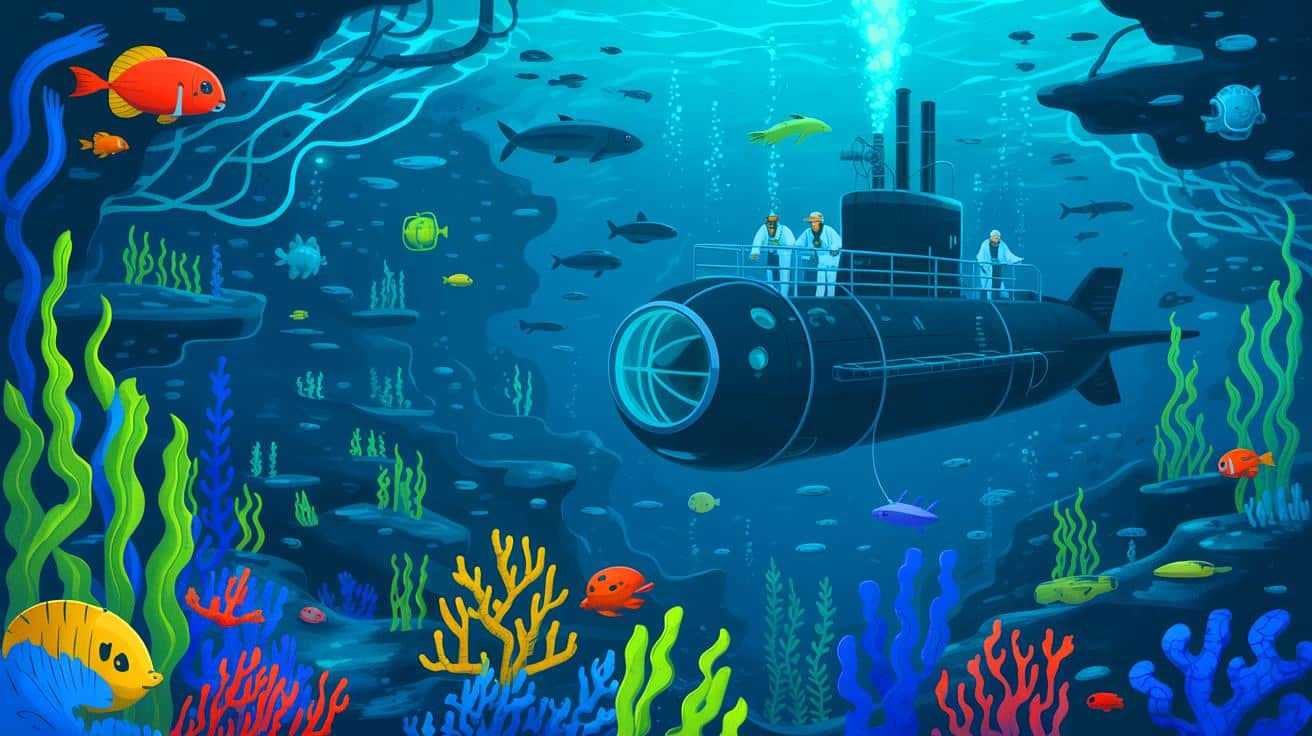
The deep ocean, a mysterious and largely unexplored frontier, plays a crucial role in regulating our planet’s climate by storing carbon. Researchers at UC Santa Barbara, led by microbial oceanographer Alyson Santoro, have made a groundbreaking discovery that challenges traditional beliefs about carbon dioxide fixation in the ocean’s depths. This research, published in Nature Geoscience, addresses a long-standing discrepancy in our understanding of how carbon and nitrogen cycles interact. The findings not only reshape our understanding of oceanic carbon fixation but also have significant implications for climate science, as the ocean absorbs a substantial portion of human-generated carbon dioxide emissions.
The Ocean as a Carbon Sink
The ocean is the largest carbon sink on Earth, absorbing approximately one-third of human carbon dioxide emissions. This natural buffering capacity is crucial for maintaining global temperature balance. Understanding the processes that govern carbon movement and storage in the ocean is essential for climate science. Without the ocean’s ability to sequester carbon, the impacts of climate change could be far more severe.
At the ocean’s surface, phytoplankton, single-celled photosynthetic organisms, play a major role in carbon fixation. These organisms utilize carbon dioxide and water to produce organic matter, releasing oxygen in the process. However, recent findings suggest that similar processes occur in the ocean’s depths, albeit through different mechanisms.
The ocean’s ability to fix carbon is more complex than previously thought, involving a variety of microorganisms beyond the well-known phytoplankton.
Challenging Old Assumptions
For years, scientists believed that most dissolved inorganic carbon (DIC) fixation occurred in the ocean’s sunlit surface layer. In the deeper, darker regions, this process was thought to be dominated by autotrophic archaea that oxidize ammonia for energy. However, discrepancies in energy budgets prompted researchers to reevaluate this model.
Sampling the water column revealed a mismatch between measured carbon fixation rates and the available nitrogen-derived energy. This discovery suggested that our understanding of microbial energy sources in the deep ocean was incomplete. The realization that ammonia-oxidizing archaea might not be the sole contributors to deep-sea carbon fixation was a pivotal moment in the study.
A Decade-Long Mystery
For nearly a decade, researchers like Santoro and lead author Barbara Bayer have sought to resolve this discrepancy in our understanding of the ocean’s carbon cycle. Earlier hypotheses suggested that carbon-fixing archaea might be more efficient than previously thought, requiring less nitrogen. However, these theories did not hold up under scrutiny.
In their new study, the researchers shifted focus to assess the actual contribution of ammonia oxidizers to overall DIC fixation. Through targeted experiments, they inhibited these organisms’ activity to observe any changes in carbon fixation rates. Surprisingly, the results indicated that inhibiting ammonia oxidizers did not significantly reduce carbon fixation, suggesting other microbes were involved.
New Players in Carbon Fixation
If ammonia-oxidizing archaea are not the primary contributors, other microorganisms must be involved. The study suggests that heterotrophs—microorganisms that consume organic carbon—also play a role in fixing carbon dioxide. This finding challenges long-held views on deep-sea carbon fixation and highlights the complexity of the ocean’s microbial community.
This revelation opens up new avenues for understanding the deep ocean’s food web and its role in carbon cycling. By quantifying the contributions of different microbes, researchers can better understand how carbon moves through marine ecosystems and influences global climate.
Implications for Climate Science
The new insights into deep-sea carbon fixation have broader implications for climate science. By refining our understanding of how carbon is stored and cycled in the ocean, scientists can improve climate models and predictions. This research underscores the importance of studying the deep ocean, a critical component of our planet’s climate system.
As researchers continue to explore these complex processes, questions remain about how nitrogen and carbon cycles interact with other elemental cycles, such as iron and copper. Understanding these interactions will be key to unlocking the secrets of the deep ocean and its role in mitigating climate change.
The findings from this research represent a significant step forward in our understanding of the ocean’s role in carbon fixation. However, they also raise new questions about the intricacies of deep-sea microbial communities and their impact on global climate. How will these discoveries shape future research and our approach to managing climate change’s challenges?


This is so cool! 🌊 Who knew the deep ocean had such a big role in carbon fixing?
Wow, mind-blowing stuff! 🌊 Could this mean we’re underestimating the ocean’s role in climate regulation?
Does this mean we need to rethink our current climate models?
Great article! But I’m curious, what methods did the researchers use to reach these conclusions?
Wow, groundbreaking stuff! Thanks for the detailed explanation. 🙌
So, are we saying heterotrophs are like the unsung heros of the deep sea? 😅
I’m a bit skeptical. How reliable are these findings?
Is there any chance these findings might be wrong or misinterpreted? 🤔
Is there a way to actively enhance these natural processes for better climate outcomes?
Thanks for sharing such an informative piece! This gives me hope for our planet’s future. 🙏
Great article, but how do these new players in carbon fixation impact marine life?
How does this discovery affect current climate models? Will they need major updates?