



| IN A NUTSHELL |
|
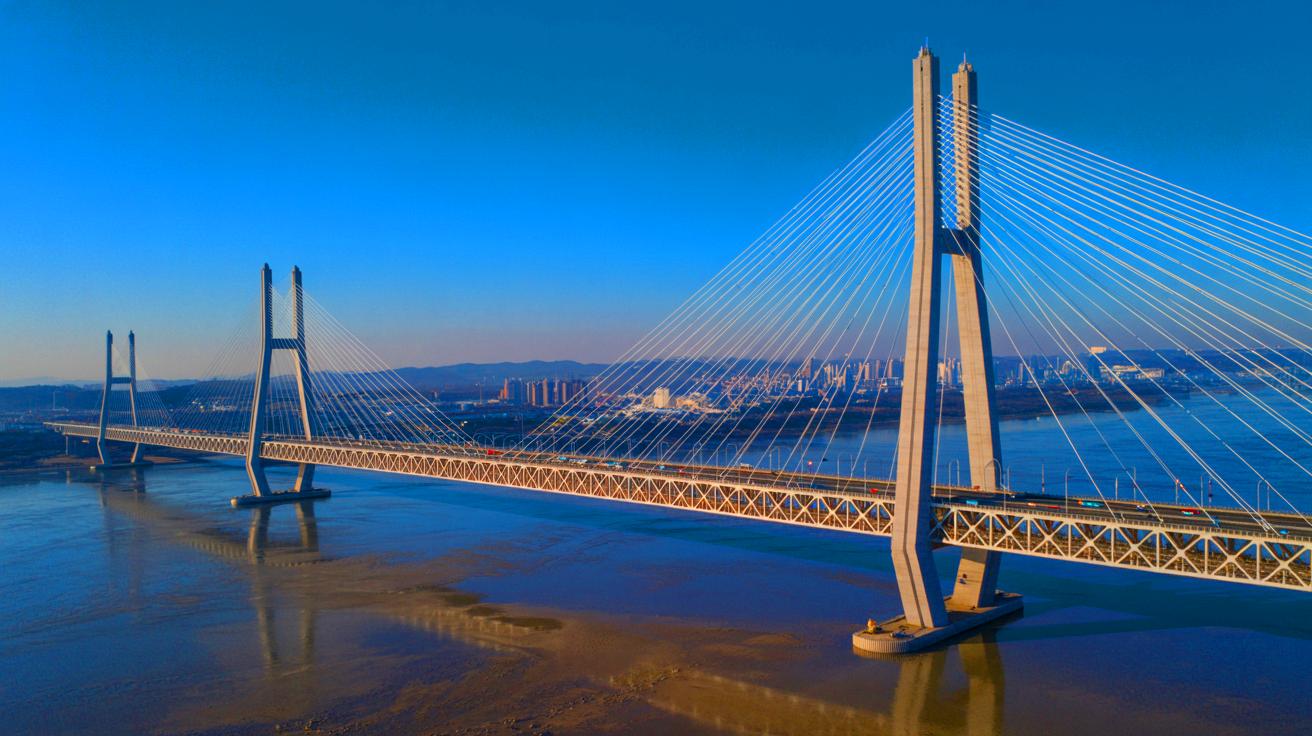
China has once again demonstrated its prowess in infrastructure development with the introduction of the Changtai Yangtze River Bridge, the world’s longest cable-stayed bridge. This monumental structure, located in Jiangsu province, connects the cities of Changzhou and Taizhou. By integrating an expressway, a regular road, and an intercity railway, the bridge offers a transformative transportation solution. Travelers can now journey between the cities in just 20 minutes, a substantial reduction from the previous 80-minute travel time. This engineering marvel not only breaks records but also sets new standards in bridge construction, reflecting China’s commitment to advancing infrastructure capabilities.
World Records Set During Construction and After
The Changtai Yangtze River Bridge is not just a bridge; it is a feat of engineering that has set several world records. As the longest span cable-stayed bridge and the longest-span combined road-rail steel truss arch bridge, it stands as a testament to human ingenuity. The bridge’s construction phase saw remarkable achievements, including the fastest sinking speed for large caissons in silty clay layers and the development of the world’s first intelligent tower crane with a lifting capacity exceeding 10,000 tonne-meters.
Adding to its accolades, the bridge features the world’s largest-tonnage deck crane, capable of millimeter-level precision in placing ultra-heavy segments. The towering structure, equivalent to a 120-story building, is expected to significantly boost economic activity in the Yangtze River Delta. As the third-longest river in the world, the Yangtze River is a vital artery for transportation and commerce in China. This bridge enhances connectivity and efficiency along this crucial waterway.
Other Marvels of the Changtai Yangtze River Bridge
Beyond its record-setting span, the Changtai Yangtze River Bridge incorporates several innovative features. The bridge’s main deck, supported by numerous cables, is a hallmark of cable-stayed bridge design. The diamond-shaped towers, constructed with steel and concrete, provide enhanced stability and the flexibility to adapt to temperature fluctuations.
In a departure from traditional bridge designs, this structure features an asymmetrical lower deck. On one side lies a high-speed railway capable of reaching speeds of 124 miles per hour, while the other side accommodates a regular local road. This side-by-side layout marks a first for large bridge designs, where typically the railway would run through the center. Such innovation highlights the forward-thinking approach taken in its design and construction.
Economic and Social Implications
The completion of the Changtai Yangtze River Bridge is expected to have profound economic and social impacts. By drastically reducing travel time between Changzhou and Taizhou, the bridge facilitates smoother and faster movement of goods and people. This connectivity is crucial for enhancing regional trade and economic integration within the Yangtze River Delta, one of China’s most economically vibrant areas.
Moreover, the bridge is a symbol of advancement, reflecting China’s broader infrastructure strategy aimed at fostering regional development. It is anticipated that the bridge will attract investments, boost tourism, and improve the overall quality of life for residents in the region. Such infrastructure projects underscore the importance of strategic planning in national development agendas and highlight the role of innovation in addressing transportation challenges.
Challenges and Future Prospects
Despite its achievements, the construction of the Changtai Yangtze River Bridge was not without challenges. Engineers had to contend with the river’s strong currents and challenging weather conditions. The project’s success required meticulous planning and advanced engineering solutions to ensure the structure’s durability and safety.
Looking ahead, the bridge sets a new benchmark for future infrastructure projects. It serves as an example of what can be achieved with the right combination of technology, expertise, and vision. As China continues to expand its infrastructure network, the lessons learned from the Changtai project will likely inform future endeavors. The bridge not only represents a physical connection between cities but also a bridge to future possibilities in engineering and economic development.
The unveiling of the Changtai Yangtze River Bridge marks a significant milestone in global infrastructure development. Its innovative design and record-breaking features challenge conventional engineering limits and open new avenues for future projects. As China continues to pioneer such advancements, what other groundbreaking infrastructure projects might we expect to see in the coming years?




Wow, this bridge sounds like something out of a sci-fi movie! 🚀
Wow, 20 minutes instead of 80? That’s incredible! 🚗💨
How much did this bridge cost to build?
Does this mean we’ll see more cable-stayed bridges in the future?
Can someone explain what “cable-stayed” means? 🤷♂️
Imagine the views from the top of this bridge! 🌉
How does this bridge impact the local economy?
Isn’t it risky to build such tall structures in earthquake-prone areas?
Would love to see a documentary on the making of this bridge!
This makes me wonder what other infrastructure marvels China has planned.
How long did it take to build the Changtai Yangtze River Bridge?
How was the bridge’s construction site chosen, given the strong river currents?
It seems like China is always 10 steps ahead in infrastructure. 😅
What kind of maintenance does a bridge like this require?
Why aren’t there more bridges like this in the U.S.?
Is this bridge open to tourists, or just for local traffic?
Will the bridge be lit up at night? That would be stunning! ✨
What challenges did engineers face during construction?
Does the bridge have any special features for cyclists or pedestrians?
The world’s largest-tonnage deck crane sounds like a beast! 🏗️
Are there plans to build more bridges across the Yangtze River?
I’m curious if this will inspire other countries to improve their infrastructure.
How does this compare to the Golden Gate Bridge in terms of engineering?
So is this bridge really 120 stories tall, or is that just a metaphor? 🤔
Will this bridge reduce traffic congestion in the area?
Does the bridge have any eco-friendly features?
The design sounds impressive, but what about durability?
Will the bridge be a new symbol for the region, like the Eiffel Tower for Paris?
Why can’t the U.S. build such impressive infrastructure? 🤔
How do you even begin to design something of this magnitude?
Is there any public transportation integrated into the bridge design?
What other regions would benefit from such infrastructure?
This bridge is a testament to what humans can achieve with technology. 💡
I hope this encourages more countries to invest in infrastructure. 🌍
This is just another example of China’s engineering dominance. Amazing!
China always seems to be ahead in infrastructure. Why can’t the US keep up? 🤷♂️
Is it safe to have a high-speed railway and road on the same bridge?
If it reduces travel time by 400%, what were people doing before? 🚗💨
Is this bridge open to the public now, or still under construction?
Can we expect similar projects in other parts of the world?
This sounds like a game-changer for the region’s economy!
Are there any environmental concerns with such massive construction projects?
Will this bridge affect local wildlife in any way?
How do they manage to build such large structures so quickly? 🤯
The engineering behind this is absolutely mind-blowing! 😮