




Close Menu
  • Last News
    • Cities
    • Climate
    • Energy
    • Impact
    • Markets
    • Opinions
    • Policy
    • Reports
    • Research
  • About Us
  • Advertise
  • Contact Us

Subscribe to Our Newsletter

News, investigations, and analysis — our top stories every morning to start your day right.

Trending
learn effective methods to measure your personal sustainability impact and make mindful choices for a greener future.
How to measure your personal sustainability impact
explore the growth of sustainable investments and green finance, highlighting their impact on the global economy and the shift towards environmentally responsible financial practices.
The rise of sustainable investments and green finance
Region Trade Bank Strengthens Governance as Sustainable Finance Places Greater Emphasis on Institutional Integrity
Facebook X (Twitter) LinkedIn YouTube TikTok
Sustainability Times
Facebook X (Twitter) LinkedIn YouTube TikTok
Subscribe
  • Featured
  • Cities

    The Hidden Carbon Cost of Construction Projects (And Why Better Planning Matters More Than You Think)

    05/13/2026
    explore the future of sustainability in urban development, focusing on innovative strategies and technologies shaping eco-friendly and resilient cities.

    The future of sustainability in urban development

    02/24/2026
    Illustration of a vertical farm in Beijing showcasing sustainable urban agriculture practices.

    “China Just Built Farm Skyscraper”: Beijing Greenhouse Grows Food In 37,673 Square Feet While Solar Panels Power Vertical Agriculture Revolution

    09/30/2025
    Illustration of Trojena Ski Resort's futuristic design in the Saudi Arabian desert.

    “We’re Building Winter Olympics in Pure Desert”: Saudi Arabia’s Trojena Ski Resort Hosts 2029 Asian Games Without Natural Snow

    09/09/2025
    Illustration of the historic Kiruna Church being relocated on self-propelled transporters to its new site in Sweden.

    “Sweden Moved a 700-Ton Church”: Historic Kiruna Building Traveled 3.1 Miles on Robot Transporters While King Watched the Journey

    09/03/2025
  • Climate

    The Hidden Carbon Cost of Construction Projects (And Why Better Planning Matters More Than You Think)

    05/13/2026
    explore the vital link between sustainability and climate change, understanding how sustainable practices can help mitigate environmental impact and promote a healthier planet.

    The connection between sustainability and climate change

    04/07/2026

    How to Turn ESG Commitments into Real Results in Oil & Gas: Mikhail Zubkov on Implementing Practical Solutions

    02/24/2026

    Sustainability in Action—How Straight Six Auto Parts Is Revolutionising Automotive Recycling

    01/05/2026
    Illustration of glaciers retreating due to rising global temperatures.

    New Forecast Reveals When Thousands of Glaciers Will Disappear, Highlighting Urgent Need for Climate Action

    12/20/2025
  • Energy

    How bio-LNG is transforming the maritime sector

    06/29/2026
    explore how technology is accelerating sustainability innovations, driving eco-friendly solutions and creating a greener future for our planet.

    How technology is driving sustainability innovations

    03/24/2026

    How to Turn ESG Commitments into Real Results in Oil & Gas: Mikhail Zubkov on Implementing Practical Solutions

    02/24/2026
    explore the vital role of renewable energy in promoting sustainability and reducing environmental impact for a greener future.

    The role of renewable energy in achieving sustainability

    01/27/2026

    How Ilnar Iakhin’s Practical Field Innovations Are Reducing the Environmental Footprint of Gas Production

    12/19/2025
  • Impact
    learn effective methods to measure your personal sustainability impact and make mindful choices for a greener future.

    How to measure your personal sustainability impact

    07/14/2026

    Region Trade Bank Strengthens Governance as Sustainable Finance Places Greater Emphasis on Institutional Integrity

    06/30/2026
    explore sustainable packaging options designed to reduce environmental impact and promote eco-friendly practices for a greener future.

    Sustainable packaging options to reduce environmental impact

    06/30/2026
    explore how circular economy models promote sustainability by reducing waste, conserving resources, and fostering eco-friendly innovation.

    How circular economy models support sustainability

    06/23/2026
    discover practical tips and actions individuals can take at home to support sustainability and contribute to a greener planet.

    What individuals can do to support sustainability at home

    06/09/2026
  • Markets
    explore the growth of sustainable investments and green finance, highlighting their impact on the global economy and the shift towards environmentally responsible financial practices.

    The rise of sustainable investments and green finance

    07/07/2026
    Switzerland’s regulated online gambling ecosystem is built on strict licensing rules, ensuring that only ESBK-approved casinos tied to land-based establishments can legally operate.

    Are Online Casinos Legal in Switzerland? Understanding the Current Regulatory Framework

    11/21/2025
    Illustration of the abrupt halt of a major lithium mine in China impacting global markets.

    “One Mine Shut Down and Prices Exploded”: CATL Halts Major Chinese Lithium Operation Sending Global Markets Into Chaos

    09/11/2025
    Illustration of the massive iron ore deposit discovered in the Pilbara region of Western Australia.

    Geologists Iron Find Worth $6 Trillion Sparks Geopolitical Firestorm As US-China Trade Rivalry Reaches Unprecedented Flashpoint

    08/24/2025
    Illustration of a colossal 55 billion-ton iron ore deposit discovery in Western Australia. Image generated by AI.

    Worldwide Panic as Monumental Geological Find Disrupts Global Trade and Triggers Market Turmoil on Every Continent

    06/04/2025
  • Opinions
    discover the essentials of sustainability and corporate social responsibility, exploring their impact on businesses and society for a better future.

    Sustainability and corporate social responsibility explained

    04/21/2026

    The Hidden Risks of Nepotism and Conflicts of Interest in Corporate Governance

    03/19/2026

    Sustainability, Family Offices, and Private Equity: A Powerful Alignment for Long-Term Impact

    08/05/2025

    Preserving Heritage While Innovating: How AI is Reshaping Design for a Sustainable Future

    07/23/2025

    Factories Without Real-Time Carbon Data Are Flying Blind: Why MES Must Become the Carbon Control Tower

    07/23/2025
  • Policy
    explore the crucial role of governments in advancing sustainability policies to protect the environment, promote social equity, and ensure economic growth for future generations.

    Role of governments in promoting sustainability policies

    06/16/2026
    explore effective strategies to promote sustainability through education, empowering communities to adopt eco-friendly practices and foster environmental awareness.

    Ways to promote sustainability through education

    03/10/2026
    Illustration of the NUMO Ground Robot Deployed by Ukraine for Military Operations.

    “It’s Doing the Dangerous Work for Us”: This Ukrainian Combat Robot Redefines the Battlefield (and It’s Already Saving Soldiers’ Lives)

    10/15/2025
    Illustration of NATO aircraft participating in the Steadfast Noon nuclear deterrence exercise.

    “You Can Feel the Tension in the Air”: This NATO Nuclear Exercise Sparks Unease Across Europe (and Leaders Call It ‘Routine’)

    10/15/2025
    Illustration of China's newly constructed underground military command center near Beijing.

    “Analysts Warn of Escalation”: Satellite Images Expose China Building World’s Largest Underground Military Command Hub To Counter US Power And Regional Rivals

    10/03/2025
  • Reports
    explore the latest trends and innovative solutions driving sustainability in the food industry, from eco-friendly practices to cutting-edge technologies reshaping the future of food production.

    Sustainability in the food industry: trends and solutions

    06/02/2026

    New Study Finds Drip Irrigation Can Cut Coffee’s Carbon Footprint by Nearly 60%

    05/13/2026
    explore the top sustainable development goals to prioritize in 2026 and learn how to make a meaningful impact towards a greener, more equitable future.

    Top sustainable development goals to focus on in 2026

    04/28/2026

    MFC Asset Management Steps Up Its ESG Agenda

    09/24/2025
    Illustration of naval aviators in training during the Top Gun program.

    “We Push Them Until They Break”: Top Gun Training Forces Pilots Through 7.5 Gs While National Geographic Films

    09/21/2025
  • Research
    Illustration of ancient marine super predators dominating the complex food chains of the Cretaceous period.

    Ancient Super Predators Ruled Oceans: New Discoveries Challenge Our Understanding of Marine Life’s Evolutionary Past

    12/20/2025

    How Ilnar Iakhin’s Practical Field Innovations Are Reducing the Environmental Footprint of Gas Production

    12/19/2025
    Illustration of the body's distinct molecular systems for detecting cold on the skin and internally.

    Your Body’s Cold Sensations: Revealing the Dual Ways Temperature Affects Us and What It Means for Comfort

    12/19/2025
    Illustration of the digital reconstruction of a 1.5-million-year-old Homo erectus face from the DAN5 fossil.

    Scientists Reveal 1.5-Million-Year-Old Human Face, Unveiling New Clues to Our Ancient Ancestry

    12/18/2025
    Illustration of ancient pottery featuring plant motifs reflecting early mathematical thinking.

    Ancient Art Reveals How Early Humans Used Math Concepts 8,000 Years Ago Without Numbers

    12/18/2025
Sustainability Times
Home - Impact - The Green Revolution is a warning, not a blueprint for feeding a hungry planet

The Green Revolution is a warning, not a blueprint for feeding a hungry planet

Hina DinooHina Dinoo10/13/20230
Share Twitter Facebook LinkedIn Telegram WhatsApp Email Copy Link
Follow Us
Google News
Photo: Pixabay/sasint
Share
Twitter Facebook LinkedIn WhatsApp Email Copy Link

Photo: Pixabay/sasint

Feeding a growing world population has been a serious concern for decades, but today there are new causes for alarm. Floods, heat waves and other weather extremes are making agriculture increasingly precarious, especially in the Global South.

The war in Ukraine is also a factor. Russia is blockading Ukrainian grain exports, and fertilizer prices have surged because of trade sanctions on Russia, the world’s leading fertilizer exporter.

Amid these challenges, some organizations are renewing calls for a second Green Revolution, echoing the introduction in the 1960s and 1970s of supposedly high-yielding varieties of wheat and rice into developing countries, along with synthetic fertilizers and pesticides. Those efforts centered on India and other Asian countries; today, advocates focus on sub-Saharan Africa, where the original Green Revolution regime never took hold.

But anyone concerned with food production should be careful what they wish for. In recent years, a wave of new analysis has spurred a critical rethinking of what Green Revolution-style farming really means for food supplies and self-sufficiency.

As I explain in my book, “The Agricultural Dilemma: How Not to Feed the World,” the Green Revolution does hold lessons for food production today – but not the ones that are commonly heard. Events in India show why.

A triumphal narrative

There was a consensus in the 1960s among development officials and the public that an overpopulated Earth was heading toward catastrophe. Paul Ehrlich’s 1968 bestseller, “The Population Bomb,” famously predicted that nothing could stop “hundreds of millions” from starving in the 1970s.

India was the global poster child for this looming Malthusian disaster: Its population was booming, drought was ravaging its countryside and its imports of American wheat were climbing to levels that alarmed government officials in India and the U.S.
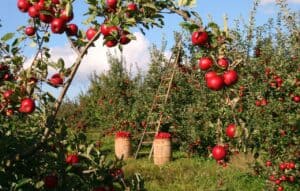
photo: Pixabay/lumix2004

Then, in 1967, India began distributing new wheat varieties bred by Rockefeller Foundation plant biologist Norman Borlaug, along with high doses of chemical fertilizer. After famine failed to materialize, observers credited the new farming strategy with enabling India to feed itself.

Borlaug received the 1970 Nobel Peace Prize and is still widely credited with “saving a billion lives.” Indian agricultural scientist M.S. Swaminathan, who worked with Borlaug to promote the Green Revolution, received the inaugural World Food Prize in 1987. Tributes to Swaminathan, who died on Sept. 28, 2023, at age 98, have reiterated the claim that his efforts brought India “self-sufficiency in food production” and independence from Western powers.

Debunking the legend

The standard legend of India’s Green Revolution centers on two propositions. First, India faced a food crisis, with farms mired in tradition and unable to feed an exploding population; and second, Borlaug’s wheat seeds led to record harvests from 1968 on, replacing import dependence with food self-sufficiency.

Recent research shows that both claims are false.

India was importing wheat in the 1960s because of policy decisions, not overpopulation. After the nation achieved independence in 1947, Prime Minister Jawaharlal Nehru prioritized developing heavy industry. U.S. advisers encouraged this strategy and offered to provide India with surplus grain, which India accepted as cheap food for urban workers.

Meanwhile, the government urged Indian farmers to grow nonfood export crops to earn foreign currency. They switched millions of acres from rice to jute production, and by the mid-1960s India was exporting agricultural products.

Borlaug’s miracle seeds were not inherently more productive than many Indian wheat varieties. Rather, they just responded more effectively to high doses of chemical fertilizer. But while India had abundant manure from its cows, it produced almost no chemical fertilizer. It had to start spending heavily to import and subsidize fertilizer.

India did see a wheat boom after 1967, but there is evidence that this expensive new input-intensive approach was not the main cause. Rather, the Indian government established a new policy of paying higher prices for wheat. Unsurprisingly, Indian farmers planted more wheat and less of other crops.

Once India’s 1965-67 drought ended and the Green Revolution began, wheat production sped up, while production trends in other crops like rice, maize and pulses slowed down. Net food grain production, which was much more crucial than wheat production alone, actually resumed at the same growth rate as before.

But grain production became more erratic, forcing India to resume importing food by the mid-1970s. India also became dramatically more dependent on chemical fertilizer.

According to data from Indian economic and agricultural organizations, on the eve of the Green Revolution in 1965, Indian farmers needed 17 pounds (8 kilograms) of fertilizer to grow an average ton of food. By 1980, it took 96 pounds (44 kilograms). So, India replaced imports of wheat, which were virtually free food aid, with imports of fossil fuel-based fertilizer, paid for with precious international currency.

Today, India remains the world’s second-highest fertilizer importer, spending US$17.3 billion in 2022. Perversely, Green Revolution boosters call this extreme and expensive dependence “self-sufficiency.”

The toll of ‘green’ pollution

Recent research shows that the environmental costs of the Green Revolution are as severe as its economic impacts. One reason is that fertilizer use is astonishingly wasteful. Globally, only 17% of what is applied is taken up by plants and ultimately consumed as food. Most of the rest washes into waterways, where it creates algae blooms and dead zones that smother aquatic life. Producing and using fertilizer also generates copious greenhouse gases that contribute to climate change.

In Punjab, India’s top Green Revolution state, heavy use of fertilizers and pesticides has contaminated water, soil and food and endangered human health.

In my view, African countries where the Green Revolution has not made inroads should consider themselves lucky. Ethiopia offers a cautionary case. In recent years, the Ethiopian government has forced farmers to plant increasing amounts of fertilizer-intensive wheat, claiming this will achieve “self-sufficiency” and even allow it to export wheat worth $105 million this year. Some African officials hail this strategy as an example for the continent.

But Ethiopia has no fertilizer factories, so it has to import it – at a cost of $1 billion just in the past year. Even so, many farmers face severe fertilizer shortages.

The Green Revolution still has many boosters today, especially among biotech companies that are eager to draw parallels between genetically engineered crops and Borlaug’s seeds. I agree that it offers important lessons about how to move forward with food production, but actual data tells a distinctly different story from the standard narrative. In my view, there are many ways to pursue less input-intensive agriculture that will be more sustainable in a world with an increasingly erratic climate.

This article was written by Glenn Davis Stone, a research professor of Environmental Science at Sweet Briar College. It is republished from The Conversation under a Creative Commons license. Read the original article.

Subscribe to Our Newsletter

News, investigations, and analysis — our top stories every morning to start your day right.

Agriculture Food Security
Follow on Google News Follow on X (Twitter)
Share. Facebook Twitter LinkedIn Telegram WhatsApp Email Copy Link
Previous ArticleNew approaches are needed to stop the killing of orangutans in Borneo
Next Article Study finds cleaner snow may mean fewer resource impacts
Hina Dinoo
  • X (Twitter)

Hina Dinoo is a Toronto-based journalist at Sustainability Times, covering the intersection of science, economics, and environmental change. With a background in journalism acquired in Toronto, she translates complexity into clarity. Her work focuses on how systems — ecological, financial, and social — shape our sustainable future. Contact: [email protected]

Keep Reading
learn effective methods to measure your personal sustainability impact and make mindful choices for a greener future.

How to measure your personal sustainability impact

Region Trade Bank Strengthens Governance as Sustainable Finance Places Greater Emphasis on Institutional Integrity

explore sustainable packaging options designed to reduce environmental impact and promote eco-friendly practices for a greener future.

Sustainable packaging options to reduce environmental impact

Add A Comment

Comments are closed.

Subscribe to Our Newsletter

News, investigations, and analysis — our top stories every morning to start your day right.

Trending
learn effective methods to measure your personal sustainability impact and make mindful choices for a greener future.
How to measure your personal sustainability impact
explore the growth of sustainable investments and green finance, highlighting their impact on the global economy and the shift towards environmentally responsible financial practices.
The rise of sustainable investments and green finance
Region Trade Bank Strengthens Governance as Sustainable Finance Places Greater Emphasis on Institutional Integrity
News by category
  • Featured
  • Cities
  • Climate
  • Energy
  • Impact
  • Markets
  • Opinions
  • Policy
  • Reports
  • Research
Information
  • About Us
  • Meet the Team
  • Advertise
  • Contact Us
  • Legal Mentions
  • Privacy Policy

Subscribe to Our Newsletter

News, investigations, and analysis — our top stories every morning to start your day right.

Facebook X (Twitter) LinkedIn YouTube TikTok
© Sustainability-Times.com. All rights reserved.

Type above and press Enter to search. Press Esc to cancel.