


| IN A NUTSHELL |
|
Air travel has become an integral part of modern life, yet few passengers pause to consider the complex engineering that makes it possible. Among the myriad systems aboard a commercial jet, one of the most intriguing is the airplane toilet. Known for its distinctive loud flush, this system is not just a quirky feature. It is a testament to decades of engineering innovation. The flush noise, often likened to a “slurp,” is more than just a sound; it is a demonstration of physics and engineering at play, developed since the first patent of the vacuum toilet system in 1975.
The Physics Behind the Flush
The functionality of an airplane toilet hinges on a fundamental principle of physics: pressure differentials. According to Bill Crossley, head of the School of Aeronautics and Astronautics at Purdue University, the pressure inside an airplane cabin is significantly higher than the pressure outside, especially at cruising altitudes. This difference is crucial for the vacuum toilet system.
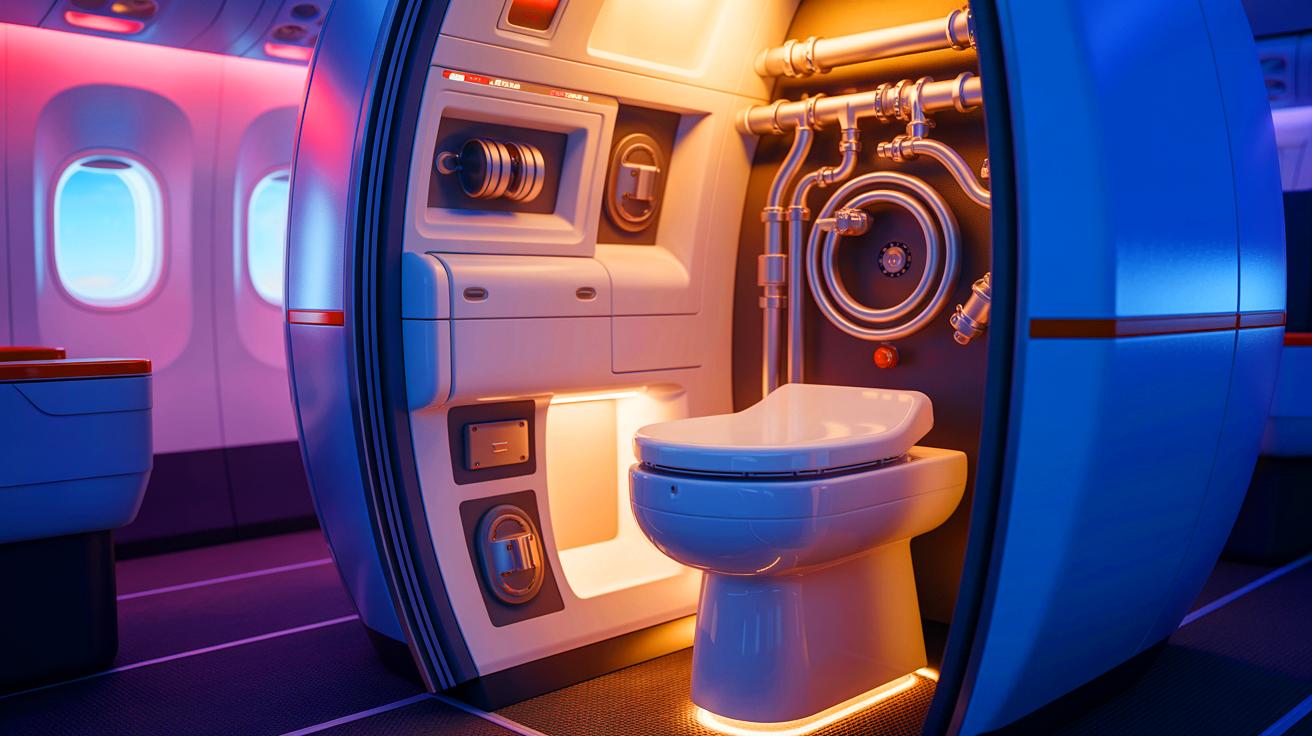
When a passenger presses the flush button, a valve opens, connecting the pressurized cabin to a storage tank at a lower pressure. This allows the pressure differential to “suck” waste into the tank without the need for a vacuum pump at altitude. As Crossley explains, “When you flush the toilet, you’re basically opening a valve to the outside, and the pressure differential sucks away whatever’s in the bowl.” This ingenious use of natural forces not only conserves energy but also reduces the mechanical complexity of the system.
From Patent to Standard Practice
The vacuum toilet system, introduced in 1975, quickly became the industry standard due to its efficiency and simplicity. Its design eliminates the need for heavy machinery by leveraging the existing cabin pressure, making it a lightweight and reliable choice for aircraft. In aviation, where weight and reliability are paramount, this system is a perfect fit.
The adoption of vacuum toilets marked a significant advancement in aviation technology. By reducing the mechanical components traditionally needed for waste disposal, the system minimizes potential points of failure. This not only enhances safety but also reduces maintenance requirements, which is a critical consideration for airlines operating under tight schedules and budgets.
When Systems Get Too Complex
Despite the elegance of the vacuum toilet system, not all implementations have been straightforward. The Lockheed TriStar, for example, featured a complex design with toilets connected to tanks both at the front and rear of the aircraft. This system utilized multiple pumps controlled by a “logic box” that determined which pump should operate next.
According to retired aircraft engineer Nigel Jones, this complexity often led to maintenance challenges. Engineers needed to navigate cramped spaces to perform repairs, highlighting the aviation industry’s preference for simplicity. Jones notes, “It was incredibly complicated, and all just to flush the toilet.” His experience underscores the lesson that in aviation engineering, simplicity is often the key to success.
Slowing Waste for Safety
An often-overlooked aspect of airplane toilet design is the speed at which waste is transported. The strong suction created by the pressure differential can propel waste at high speeds, posing a risk to the integrity of the storage tank. To mitigate this, the system incorporates curved piping that slows the flow of waste.
This design not only protects the tank from damage but also reduces the noise level, which is an important consideration for passenger comfort. By carefully managing the flow rate, engineers ensure that the system operates safely and efficiently, without causing undue stress on its components.
The Era of “Blue Ice”
Before the adoption of vacuum systems, aircraft relied on chemical toilets filled with blue disinfectant liquid. This design led to the infamous phenomenon of “blue ice,” where leaks at high altitudes would freeze and fall to the ground. This problem has largely been eliminated with the advent of vacuum toilets.
However, chemical systems still exist in some small business jets where the cost and weight of a vacuum system are prohibitive. In these cases, the design remains similar to a portable toilet, as Crossley describes, essentially “a fancy port-a-potty.” This highlights the balance between technological advancement and practical constraints in aircraft design.
As aviation technology continues to evolve, the systems on board aircraft will undoubtedly become even more sophisticated. The story of the airplane toilet is a reminder of the ingenuity and complexity involved in making modern air travel possible. What other innovations might lie ahead for aviation engineering, and how will they continue to shape our flying experience?




Never thought I’d be grateful for a toilet’s “slurp” sound! Thanks for the insight. 🚽✈️
Wow, who knew flushing a toilet could be so scientific! 🚽✈️
So, does the loud noise mean it’s working better or just by design?
This is why I love reading about engineering—there’s always more than meets the eye. Thanks for the insight!
Who knew airplane toilets had such a fascinating history! Amazing article!
So, next time I hear that slurp sound, I should be grateful? 😂
Why didn’t they just make quieter toilets from the start? 🤔
Why did it take until 1975 to come up with this vacuum system?
Interesting read, but I still hate using airplane toilets. Too cramped! 😅
Are there any environmental concerns with these vacuum toilets?
Wait, are airplane toilets basically open to the sky? That sounds scary! 🌌
I always thought the loud flush was just to scare passengers! 🤣
Does this mean older planes still use those chemical toilets? 🚀
Is this system used in other types of transportation like trains or ships?
Interesting! Does this mean the toilets are less likely to clog?
My favorite part of flying is definitely not the toilet, but this makes it a bit cooler!
Blue ice sounds terrifying. Glad it’s mostly a thing of the past!
Are there any new innovations in airplane toilets we should expect in the future?
This is fascinating! Thanks for explaining such a complex system in simple terms.
Does the pressure differential ever cause issues with other aircraft systems?
Why do some planes still use chemical toilets? Aren’t they outdated? 🤔
I always wondered why the toilet sounded like it was trying to eat my luggage! 😅
Great article, but more details on how this compares to other systems would be nice.
Does the “blue ice” incident still happen today? 😳
The fact that a toilet can be so complex is beyond me!
So, what happens if there’s a malfunction with this system mid-flight?
Is it true that the vacuum system is lighter than other toilet systems?
Who would have thought airplane toilets have such an interesting history? 🚀🚽
Any chance we’ll see quieter airplane toilets in the future?
Should passengers be concerned about the safety of these systems?
Does this system also help in conserving water on flights?
What’s the grossest thing that can happen with an airplane toilet malfunction?
Honestly, I’m just glad we don’t have to deal with leaks anymore! 😂
Is maintenance of these systems costly for airlines?
The article missed mentioning how this affects passenger comfort beyond noise.
Who would have guessed that physics plays such a big role in the bathroom of all places? 😆
Thanks for the research! Always love learning something new. 👍