




| IN A NUTSHELL |
|
In recent years, the automotive industry has been on a relentless quest for innovative materials that can enhance vehicle performance while reducing environmental impact. Carbon fiber, once the go-to material for high-performance sports cars, is now facing scrutiny due to its energy-intensive production and recycling challenges. Enter flax fiber, a material with ancient roots that is making waves as a sustainable alternative. BMW, a leader in automotive innovation, is at the forefront of this transition, exploring flax fiber’s potential to revolutionize the industry. As more manufacturers consider this shift, the implications could be far-reaching for the future of automotive manufacturing.
The Rise of Carbon Fiber
Carbon fiber emerged as a game-changer in automotive engineering due to its exceptional strength-to-weight ratio. In the 1980s, it became a staple in Formula 1 racing, where ultralight monocoques could withstand extreme forces without deforming. Its utility quickly extended beyond the racetrack, finding a place in sports cars’ hoods, roofs, diffusers, and dashboards. Carbon fiber’s allure lies not only in its functionality but also in its association with luxury and sophistication. However, the environmental cost of carbon fiber is significant. Its production is energy-intensive, and recycling the material is both complex and costly. This reality has prompted manufacturers to seek more sustainable alternatives.
Flax Fiber: A Sustainable Alternative
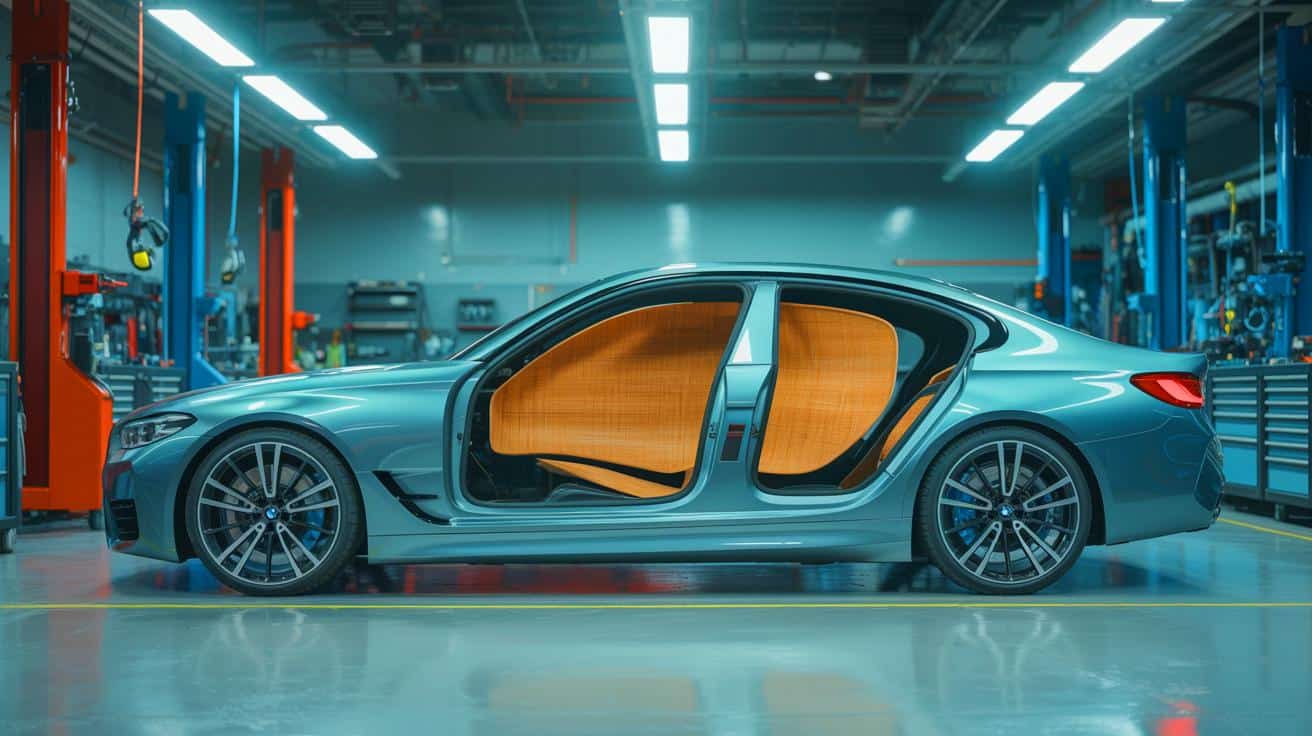
BMW has taken bold steps toward integrating flax fiber into its vehicle designs. The company began experimenting with flax in its Formula E and M4 DTM models, replacing carbon-fiber-reinforced plastic components with flax fiber parts. These efforts are supported by Bcomp, a Swiss startup originally rooted in the ski industry. Bcomp’s flax fiber innovations have been tested in demanding endurance races, including the prestigious 24 Hours of Nürburgring. The flax fibers used by Bcomp are not standard textiles. They are technical textiles designed to withstand the mechanical stresses of high-speed racing. Two key innovations, Amplitex and Powerribs, enhance the strength and rigidity of flax fiber components without adding unnecessary weight.
Industrial Applications and Broader Adoption
As BMW explores flax fiber’s potential, other automakers are taking notice. The transition from niche to mainstream manufacturing could redefine automotive production. BMW has already showcased prototypes featuring flax fiber roofs, rear diffusers, and interior trims. The environmental benefits are clear: flax fiber components significantly reduce carbon footprints and offer simpler recycling processes compared to carbon fiber. Other manufacturers, including Cupra, Kia, Polestar, and Porsche, are also experimenting with flax fiber in various applications. This growing interest indicates a shift toward more sustainable materials in automotive design.
The Challenges and Future Prospects
Despite the promise of flax fiber, skeptics remain cautious. Replacing decades of carbon fiber reliance with flax fiber won’t happen overnight. The transition requires extensive testing and gradual integration into production lines. However, history has shown that innovations from the competitive racing sector often find their way into mainstream markets. Technologies like turbocharging, direct injection, and carbon-ceramic brakes all transitioned from racing to consumer vehicles. As such, flax fiber’s journey from track to road may be a natural progression. The question remains: will flax fiber become a standard material in the cars of tomorrow, or will it remain a specialized choice?
As the automotive industry grapples with environmental challenges, the shift toward sustainable materials like flax fiber offers hope for a greener future. BMW’s pioneering efforts, along with the interest of other manufacturers, suggest that the industry is on the cusp of transformation. While flax fiber’s widespread adoption may take time, its potential to reduce environmental impact is undeniable. As automakers continue to innovate, the question emerges: how will the balance between performance and sustainability shape the cars of the future?


Wow, flax fiber in cars? That’s a twist! 🌿🚗
Interesting move by BMW! How does flax fiber compare in terms of durability to carbon fiber? 🤔
Will my car smell like a field after a rainstorm now? 🌧️😂
Is flax fiber as strong as carbon fiber? 🤔
Great initiative! But what about the cost implications for consumers? Thanks for the article! 😊
Will this make cars more expensive or cheaper?
Is flax fiber really strong enough for high-speed racing?
Love the idea of using plants for car parts! Way to go, BMW! 🌿💪
Flax over carbon fiber? Sounds like a hipster dream come true! 😎
How will flax fiber hold up in an accident?
How long before we see these flax-fiber vehicles on the roads?
Flax fiber? What’s next, wooden wheels? 😂
The idea is cool, but I worry about the safety aspect. Is it crash-tested?
Interesting concept, but how long before it’s mainstream?
Are there any downsides to using flax fiber?
Finally, a step towards sustainable cars! Thank you, BMW! 🌍🙌
Will the use of flax fiber affect the car’s performance?
As someone who’s allergic to flax, should I be worried? 😜
Is this just a marketing gimmick, or a real change?
More automakers should follow BMW’s lead on sustainability.
Can flax fiber be used in electric vehicles too?
Does flax fiber have any impact on fuel efficiency?
Are these cars going to be safe for long drives?
I hope this doesn’t mean more recalls due to new materials!
How are flax fibers recycled compared to carbon fibers?
Will the cars look different with flax fiber parts?
I’m all for green tech, but how about the durability? 🌱
Finally, a car that won’t weigh a ton! 😂
Is flax fiber weather-resistant?
How soon can we expect to see these cars on the road?
Flax fiber might be the future, but can it handle the present?
How does flax fiber compare cost-wise to carbon fiber?
Does this mean no more fancy carbon fiber look? 😢
What will happen to the carbon fiber industry now?
It’s about time car companies got serious about sustainability.
Flax fiber sounds interesting, but what about maintenance?
Hope the pioneers like BMW make it work; the planet needs it! 🌎
Is this change going to be international or just in Europe?
Can flax fiber be painted like carbon fiber?
Hope this doesn’t mean more expensive repair costs!
Will the use of flax fiber change the weight of the car?
Are there any competitors to flax fiber in the market?
Are they going to grow their own flax plants? 🌿😄