




| IN A NUTSHELL |
|
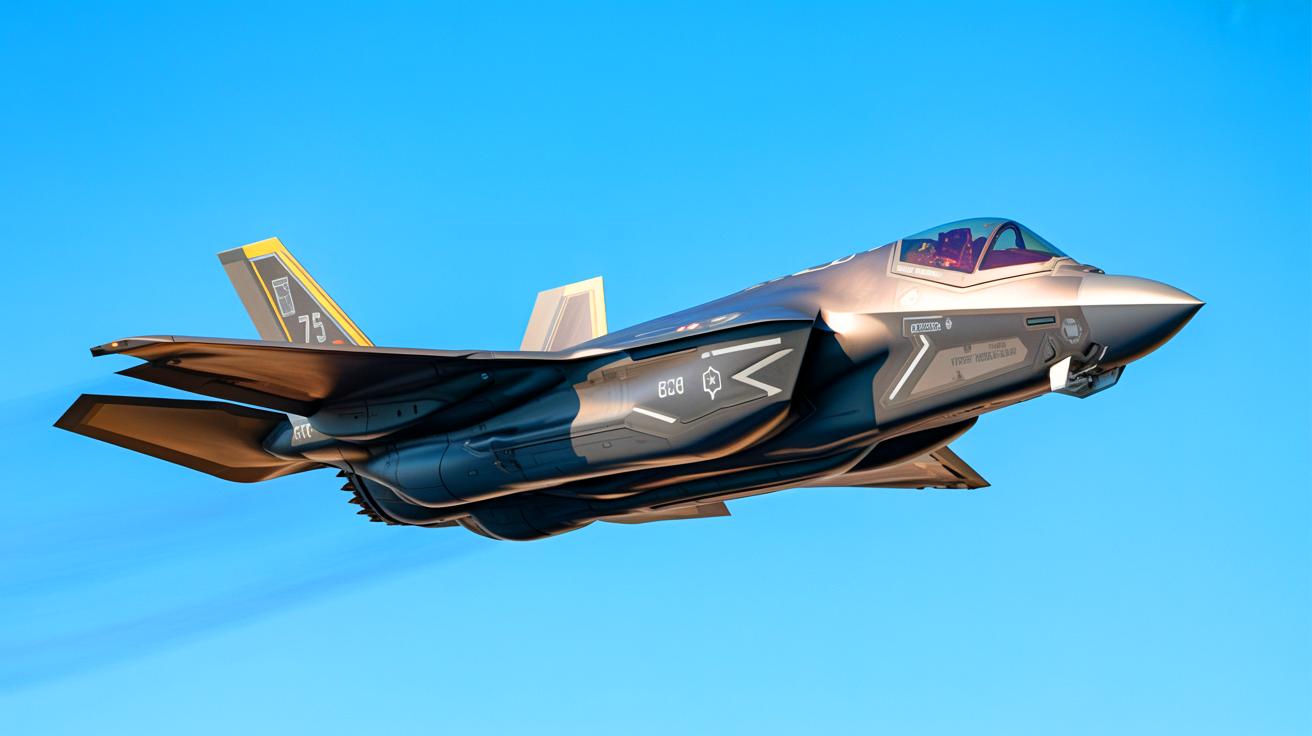
The Connecticut-based aerospace manufacturer Pratt & Whitney is poised to make significant strides in military aviation with its latest project: the production of Lot 18 of the F135 engines. These engines are set to power the F-35 Lightning II, a fifth-generation aircraft that stands at the forefront of modern aerial combat. With its impressive capabilities, the F135 engine is not just another engine; it represents a leap forward in propulsion technology. By delivering over 40,000 pounds of thrust, it equips the F-35 with a substantial edge over adversaries, providing unparalleled safety, readiness, and reliability.
The Power of Low-Observability
One of the standout features of the F135 engine is its low-observability, a critical factor in modern warfare. According to Christopher K. Johnson, Pratt & Whitney’s vice president for the F135 program, this feature ensures that operators can accomplish their missions with minimal detection. The engine’s design minimizes its radar signature, making the aircraft less visible to enemy radar systems.
The F135 engine’s advanced capabilities extend beyond just low-observability. It integrates a world-class thermal management system and an advanced engine control system. These elements combine to create what Pratt & Whitney describes as the “heartbeat” of the F-35. Such technological advancements are not only a testament to engineering prowess but also provide a strategic advantage in combat scenarios.
Redefining Mission Capabilities
The F135 engine redefines what is possible for military missions by providing superior performance in the most challenging threat environments. This capability is essential for maintaining air superiority, a cornerstone of the National Defense Strategy. Pratt & Whitney’s commitment to delivering this critical capability ensures that both the U.S. and its allies remain at the forefront of aerial combat technology.
Johnson emphasized the importance of the F135’s 5th Generation attributes, which set it apart from its 4th generation counterparts. These include increased power, enhanced thermal management, and improved engine-flight control integration. Such features are crucial for executing complex missions and maintaining a strategic edge.
Strategic Advantage Over Adversaries
The F135 engine offers a critical advantage over adversaries by enabling the F-35 to perform in advanced anti-access/area denial (A2/AD) environments. This capability aligns with the strategic objectives outlined in the National Defense Strategy. The engine’s performance is not just about power; it’s about enabling the aircraft to operate in environments where traditional aircraft might struggle.
Beyond its battlefield prowess, the F135 program contributes significantly to the U.S. economy. It sustains over 67,000 jobs domestically and involves 240 U.S. suppliers. In 2024 alone, it contributed over $9.1 billion to the economy. Such economic impacts highlight the dual benefits of technological advancement: military superiority and economic growth.
Focus on Sustainability and Reliability
Pratt & Whitney has designed the F135 with sustainability and maintenance in mind. Its tri-variant commonality and advanced digital health management system reduce operational costs while ensuring high mission capability rates. Since its first flight in 2006, the engine has demonstrated exceptional reliability, a crucial factor for military planners and operators.
The $2.8 billion contract for the production of F135 engines is set to boost the production of F-35 jets, further solidifying the role of the F135 in future military operations. This investment underscores the importance of reliable and advanced propulsion systems in maintaining air superiority and operational readiness.
As the F135 engine continues to power the F-35, questions remain about the future of military aviation technology. How will advancements in engine technology continue to evolve, and what implications will these changes have for global military strategies?


Wow, this sounds like something out of a sci-fi movie! Can it really be that stealthy? 🤔
Wow, can this engine really make the jet invisible? That’s some next-level tech! 🤯
How does this new engine compare to its predecessors in terms of fuel efficiency?
How much does one of these engines cost? Seems like a massive investment!
Is this article promoting war or just innovation? 🤔
Thank you Pratt & Whitney for keeping our skies safe. 🇺🇸
Impressive technology! Thanks for keeping us informed, Pratt & Whitney. 😊
Low-observability sounds cool, but how does it actually work?
Are there any concerns about the environmental impact of this engine? 🌍
Is this really the most advanced engine, or just good marketing? 😜
Love the idea of stealthy jets, but does this mean higher costs for taxpayers?
67,000 jobs supported… that’s impressive! How many of those are in engineering?
Great read! But what happens if the engine fails mid-flight?
Can this engine be used in commercial aircraft as well, or is it strictly for military?
Can this engine be used in commercial aviation, or is it purely military?
Nice article, but how does this affect international relations? Seems like it could heighten tensions. 🤨
Any plans to make this technology available to allied nations?
I’m curious about the digital health management systems. Are they really that advanced?
Could this engine be a game-changer in aerial combat? Sounds like it!
How does the F135 engine’s stealth compare to other stealth technologies? 🤷♂️
Wait, did they say “changing Earth’s rotation”? 😮 Is this related?
What’s the estimated lifespan of the F135 engine?
Congrats to Pratt & Whitney for this achievement! 👏 Hope it brings peace rather than conflict.
Seriously, can we just focus on peace rather than developing more weapons?
Nice info, but how does this impact the budget for other military projects?
Will this new engine technology eventually trickle down to civilian use?
How much does one of these engines cost? Must be astronomical! 💸
Is there any way to detect these stealth jets once they’re equipped with the F135 engine?
Why does the article mention “changing Earth’s rotation”? Seems unrelated. 🤔
Thanks for the update! Can’t wait to see how this influences future aerospace innovations.
Does this mean the F-35 is now invincible? Seems too good to be true. 😅
What are the potential drawbacks of this new engine technology?
Pratt & Whitney, you’re doing amazing work! Keep it up! 🚀
With such advanced tech, does this mean fewer pilots will be needed?
How does the F135 ensure low-observability? Magic? 😜
How do other countries react to the U.S. having such advanced military technology?
Can this engine adapt to other aircraft models, or is it exclusive to the F-35?
Is this a step towards more autonomous fighter jets? 🤖
Great read! But what’s the long-term vision for this technology?