



| IN A NUTSHELL |
|
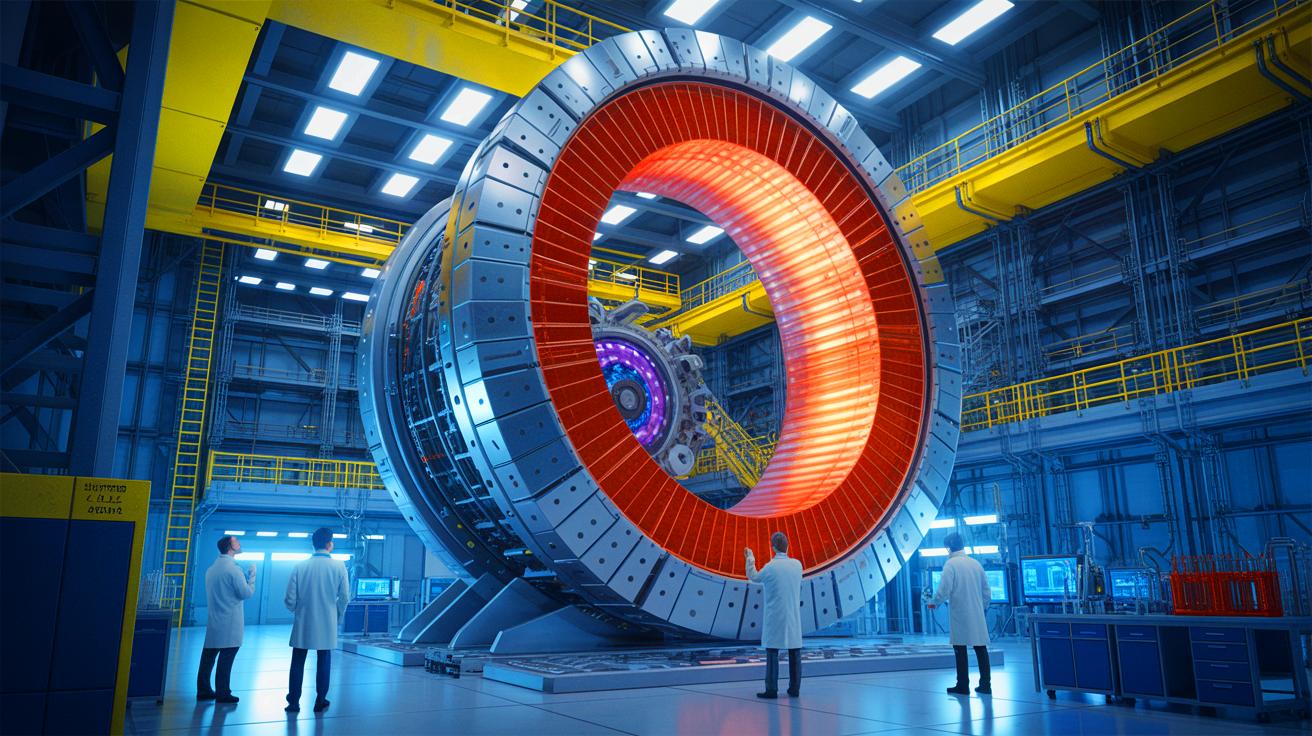
In a significant breakthrough for the field of fusion energy, General Atomics, a San Diego-based firm, has successfully completed the development of the Central Solenoid Modules. These modules form the largest and most powerful pulsed superconducting magnet ever constructed. Designed to power fusion reactions at ITER, an international fusion science facility under construction in southern France, the Central Solenoid represents a monumental achievement. This development not only highlights the technical prowess of General Atomics but also positions the United States as a key player in the race to achieve sustainable fusion energy.
Building Fusion Magnets
The construction of these fusion magnets marks a watershed moment for both the United States and General Atomics. Dr. Wayne Solomon, Vice President of Magnetic Fusion Energy for the General Atomics Energy Group, emphasized the significance of this achievement. As the first private company to undertake such a challenge, General Atomics has paved the way for developing the technologies necessary to make fusion power a reality. This accomplishment is a testament to the company’s pioneering spirit and technical expertise.
Each module of the Central Solenoid weighs more than 270,000 pounds and consists of six individual sections. The project underscores the capacity of U.S. industries to spearhead advancements in fusion technology. By successfully fabricating and assembling these components, General Atomics has set a new standard for innovation in this field.
Completion of the Central Solenoid
The fabrication and assembly of each module took over two years, followed by rigorous testing and shipment to France. Once there, they are stacked to form a massive system over 59 feet tall and 14 feet wide, weighing more than 1,000 tons. This milestone further cements General Atomics’ position at the forefront of global fusion innovation. The project not only provides the United States with a strategic advantage in the quest for fusion energy but also strengthens the nation’s role in shaping the future of energy.
John Smith, Senior Director of Engineering and Projects at General Atomics, remarked, “The country that gets to fusion first will hold the power to shape the future.” The Central Solenoid project demonstrates that the expertise, capabilities, and workforce necessary for such advancements are already present in Southern California. The project, completed at GA’s Magnet Technologies Center in Poway, California, required unprecedented engineering innovation and a specialized global supply chain.
Unmatched Technical Capabilities
Through this project, General Atomics has established unmatched technical capabilities that will serve as a foundation for future fusion technologies. These capabilities include blanket component testing and the manufacturing of large high-temperature superconducting magnets. Such advancements are not limited to fusion energy but extend to broader non-fusion applications as well.
“The country that gets to fusion first will hold the power to shape the future,” reiterated John Smith.
https://www.sustainability-times.com/energy/us-fusion-superpower-emerges-with-350-mw-reactor-as-russia-panics-over-losing-control-of-world-energy-dominance/
General Atomics’ commitment to innovation and excellence is evident in their approach to building the Central Solenoid. This project exemplifies how the expertise and infrastructure developed can be leveraged to drive future advancements in energy technology.
The Future of Fusion Energy
The completion of the Central Solenoid not only marks a significant achievement for General Atomics but also heralds a new era in fusion energy research. The successful development and deployment of these modules demonstrate the potential of fusion energy as a viable and sustainable energy source. This achievement underscores the importance of continued investment in fusion technology and the need for international collaboration in this field.
As General Atomics continues to push the boundaries of what is possible, the implications for the future of energy are profound. The advancements made in the development of the Central Solenoid provide a glimpse into the potential of fusion energy to revolutionize how the world produces and consumes power.
The successful completion of the Central Solenoid Modules by General Atomics represents a pivotal moment in the pursuit of fusion energy. As countries around the world race to harness this powerful and sustainable energy source, the United States stands at the forefront of innovation and development. The question remains: How will the advancements in fusion technology shape the global energy landscape in the coming decades?


Wow, this is amazing news! Could fusion energy really be the answer to our energy needs? 🤔
Wow, this is super exciting! Can’t wait to see how this changes the future of energy. 🔋
Isn’t fusion energy a bit like a sci-fi dream? I mean, will it ever really happen?
Why does it take so long to build each module? Is it because of the materials or the technology?
Thank you, General Atomics, for keeping the US at the forefront of energy innovation! 🇺🇸
Great job, General Atomics! Thank you for pushing the boundaries of what’s possible. 🌟
Why does it take so long to build these modules? Over two years seems excessive.
So, when can we expect to see fusion reactors powering our cities?
🤔 If the US gets fusion first, does that mean lower energy bills for us?
What are the environmental impacts of this kind of technology?
As amazing as this sounds, I’m skeptical. We’ve heard fusion promises before.
Does anyone else think “Central Solenoid” sounds like a Transformer? 😂
How many jobs did this project create in the US? Would love to know the economic impact!
This is a great achievement, but what about the environmental impact of building these magnets?
This is a huge step for the U.S. But what about other countries? Are they close to similar breakthroughs?
Can someone explain how this fusion magnet actually works in simple terms?
I’m curious: how much did this project cost, and who funded it?
It’s about time we saw some real progress in fusion energy. Kudos to the team! 👏
What are the chances this technology will be used beyond the lab anytime soon?
Are other countries involved in this project, or is it a solo US effort?
Seems like we’re still a long way from practical fusion reactors. What do others think?
Fusion energy could be a game-changer for climate change. Let’s hope it works!
Is this the same thing as nuclear fission, or is it completely different?
Can’t wait to see how this affects global politics. Fusion power could be a real game-changer! 🌍
How does this compare to the fusion research being done in China or Europe?
Does anyone know how stable this fusion technology is? Is it safe?
Finally, some good news in energy! How soon before we see the benefits?
Is there a backup plan if this fusion magnet doesn’t work as expected?
What kind of energy output are we expecting from these fusion reactors?
Could this technology help reduce our reliance on fossil fuels? 🤞
How does this affect the current energy market? Will oil prices drop?
Great job, General Atomics! This could be a huge step forward for sustainability. 🌱
Is fusion energy considered renewable, or is it in a category of its own?
Hope this doesn’t end up as another expensive experiment that goes nowhere.
What’s the timeline for seeing this operational in a real power grid?