


| IN A NUTSHELL |
|
The world is witnessing a significant environmental shift, as recent reports confirm that human activities have pushed Earth’s climate beyond a crucial tipping point. This alarming change highlights the vulnerability of warm-water coral reefs, which can no longer thrive under current temperature conditions. As scientists warn of the collapse of various Earth systems, the urgency to address climate change becomes more pressing. The implications of these findings extend beyond the natural world, affecting the lives and livelihoods of millions of people globally. The challenge now lies in how humanity chooses to respond to this environmental crisis.
The Decline of Coral Reefs
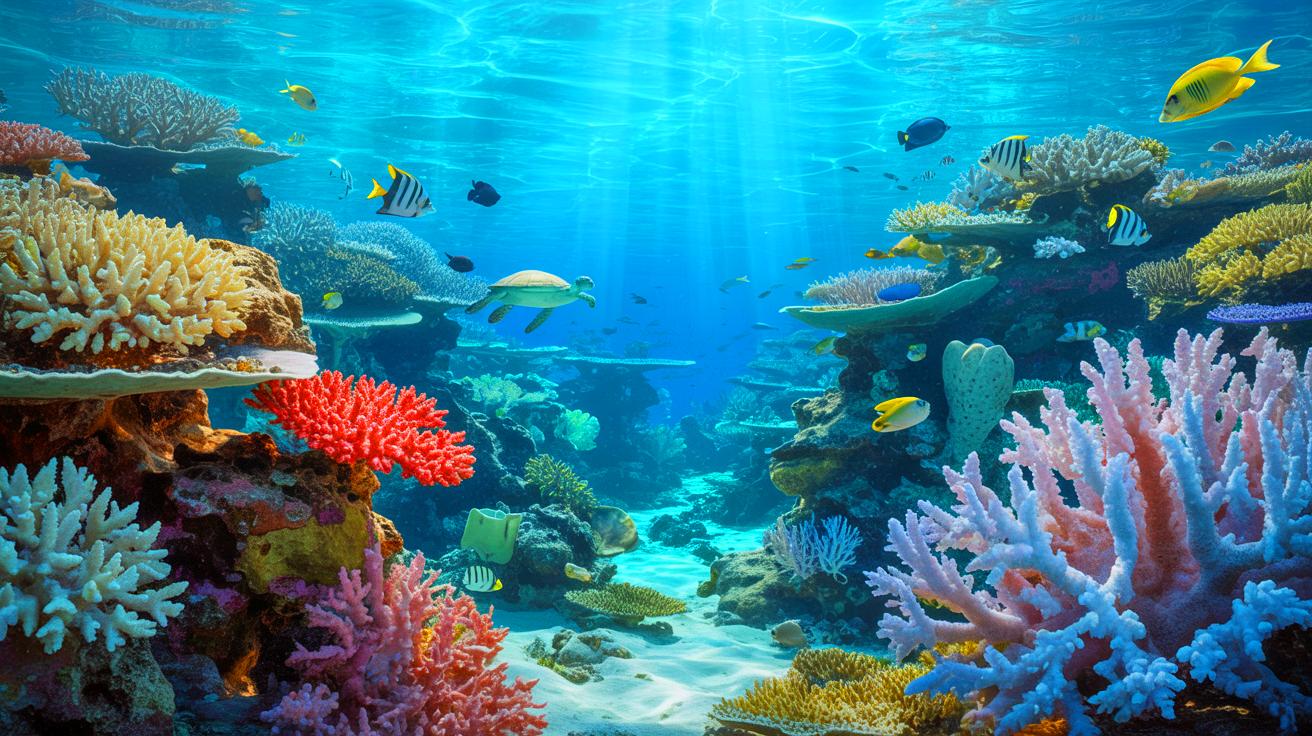
Coral reefs, often referred to as the “rainforests of the sea,” are experiencing unprecedented levels of destruction due to rising global temperatures. The 2025 Global Tipping Points Report, which involved 160 scientists from 23 countries, states that mass reef diebacks occur when global temperatures increase by approximately 1.2 degrees Celsius above preindustrial averages. This threshold has already been surpassed, leaving the world’s coral ecosystems in peril.
Notable reefs, such as Australia’s Great Barrier Reef and Florida’s Sombrero Reef, have suffered repeated mass bleaching events. In the past decade alone, the Great Barrier Reef has bleached multiple times, with significant events occurring in 2016, 2017, 2020, 2022, 2024, and 2025. These frequent bleaching events leave insufficient time for recovery, leading to the widespread death of corals and threatening the diverse marine life that depends on these habitats.
University of Exeter earth system scientist Tim Lenton highlighted the severity of the situation, noting that recent warming has resulted in marine heatwaves that have bleached 80 percent of the world’s reefs. The loss of these ecosystems jeopardizes the livelihoods of approximately half a billion people who rely on them for fishing, coastal protection, and other essential services.
Global Implications of Climate Tipping Points
The plight of coral reefs serves as a stark warning of the broader consequences of climate tipping points. As the report outlines, the collapse of these ecosystems is just the beginning. Other critical Earth systems, such as the West Antarctic and Greenland ice sheets, are also at risk. Their potential collapse would significantly accelerate sea-level rise, with far-reaching impacts on coastal communities worldwide.
The report emphasizes that coral reefs are merely an early indicator of the destructive potential of unchecked climate change. Each incremental increase in global temperatures pushes additional life-sustaining systems toward collapse. The potential loss of vital ecosystems such as the Amazon rainforest and crucial ocean currents would have catastrophic effects on global biodiversity and human society.
As WWF-UK chief scientist Mike Barrett explains, this situation serves as a wake-up call for humanity. Without decisive action, the world faces a future of environmental degradation and social upheaval. While uncertainties remain about the exact limits of these tipping points, the consequences of inaction are already being felt worldwide.
Exploring Positive Climate Tipping Points
Despite the grim outlook, the report also highlights opportunities for positive change. It identifies positive tipping points, where accumulated beneficial changes could lead to self-sustaining shifts in environmental practices. The transition to renewable energy sources, such as wind, solar, and battery storage, represents a critical area where substantial progress can be made.
The report argues that accelerating the energy transition is crucial. Identifying and triggering additional positive tipping points should be a priority at international climate talks, such as the upcoming COP30 conference. By focusing on these areas, the global community can work towards a more sustainable future.
Contributors to the report, including Lenton and University of Oslo sociologist Manjana Milkoreit, stress the importance of individual and collective action. Supporting policies and projects that promote climate resilience, such as reducing meat consumption and adopting clean technologies, can make a significant impact. Advocacy and awareness-raising efforts also play a vital role in driving change.
The Role of Individuals and Communities
In the face of these challenges, individuals and communities have a critical role to play in shaping the future of our planet. Milkoreit advocates for proactive engagement with elected representatives to champion ambitious climate policies. Supporting organizations that highlight existential climate risks and using one’s voice to raise awareness are essential actions to prevent further tipping points.
The report’s findings highlight that the risks posed by climate change are not abstract threats but present challenges to fundamental freedoms, wellbeing, and justice. By equipping citizens with knowledge, the report empowers them to hold leaders accountable for their actions or inactions regarding climate policy.
The path forward requires collective effort and resolve. As the world grapples with the realities of reaching climate tipping points, the question remains: How will we rise to the challenge and safeguard our planet for future generations?

Did anyone else get a little anxious reading this? The numbers are so scary! 📉
Is there any hope left for coral reefs, or have we passed the point of no return? 😢
I appreciate the focus on renewable energy transitions. We need more hope in these discussions!
Has there been any progress on artificial reefs to help mitigate this collapse?
Thanks for the article. It’s sad to see how much damage has been done already.
Is there a chance to reverse the damage to the reefs, or is it too late?
This article makes me want to learn more about marine biology. Fascinating stuff!
Why aren’t governments doing more to protect these vital ecosystems?
Are there any specific actions individuals can take to help save the reefs? 🐠
Why isn’t this headline news everywhere? The potential collapse of the ice sheets should worry everyone!
Could renewable energy really make a difference fast enough to save the reefs?
Great article, but I wish there was more focus on what governments are doing or not doing.
Feels like we’re on the Titanic, and the climate iceberg is just ahead. Anyone else? 🚢
If coral reefs are collapsing, what are the implications for marine biodiversity as a whole? 🐠
What are the potential economic impacts if coral reefs completely collapse?
Why do some people still think climate change isn’t a big deal? This is terrifying.