



| IN A NUTSHELL |
|
The latest report by international climate scientists paints a dire picture for our planet’s future, identifying critical climate tipping points that could have irreversible effects. These scientists caution that tropical coral reefs are already experiencing significant damage due to rising ocean temperatures. Additionally, some parts of the polar ice sheets may have crossed thresholds that lead to substantial sea level rise. This report highlights the urgent need for extraordinary measures to prevent further environmental degradation and suggests that we might be on the brink of systemic climate failures that could cascade, affecting multiple natural systems.
Understanding Climate Tipping Points
In recent years, the concept of climate tipping points has become a central focus in the study of global warming. Essentially, a tipping point is a threshold beyond which a small change in the climate can lead to drastic and often irreversible impacts on environmental systems. These systems include coral reefs, rainforests, and ocean currents, all of which play vital roles in maintaining ecological balance.
The Global Tipping Points Report 2025 describes these thresholds as levels of warming that, once crossed, cause natural systems to undergo self-reinforcing changes. For instance, tropical coral reefs may continue to degrade even if global warming is later stabilized. The interconnectedness of these systems means that the tipping of one can potentially trigger others, leading to widespread and catastrophic environmental consequences.
As the planet nears a global average temperature rise of 1.5°C above pre-industrial levels, many of these tipping points are closer than ever. This potential crossing of multiple thresholds could lead to rapid and profound changes in the Earth’s climate, urging immediate and effective action.
Scientists Warn of Cascading Climate System Failures
Nico Wunderling, a lead author of the Global Tipping Points Report 2025 and Professor of Computational Earth System Sciences, emphasizes the severe risks posed by these tipping points. He warns that surpassing the 1.5°C threshold could initiate a domino effect, where the tipping of one system accelerates the tipping of others. This interconnectedness increases the probability of a cascading failure among various climate systems.
Wunderling explains: “The devastating consequences that arise when climate tipping points are crossed pose a massive threat to our societies.”
The report identifies roughly two dozen parts of the global climate system that could reach tipping points. The critical areas include tropical coral reefs and polar ice sheets, which are already showing signs of having crossed their respective thresholds. The potential collapse of the Atlantic Meridional Overturning Circulation (AMOC) could further complicate global climate dynamics, leading to significant disruptions in temperature and weather patterns.
Tim Lenton, coordinating lead author of the report, underscores the importance of understanding these risks. With contributions from over 100 scientists worldwide, the report serves as a vital resource for assessing the potential impacts and benefits of both negative and positive tipping points in our climate system.
Case Studies: Coral Reefs, Rainforests, and Ocean Currents
The Global Tipping Points Report 2025 includes detailed examinations of key climate systems that are at risk of crossing their tipping points:
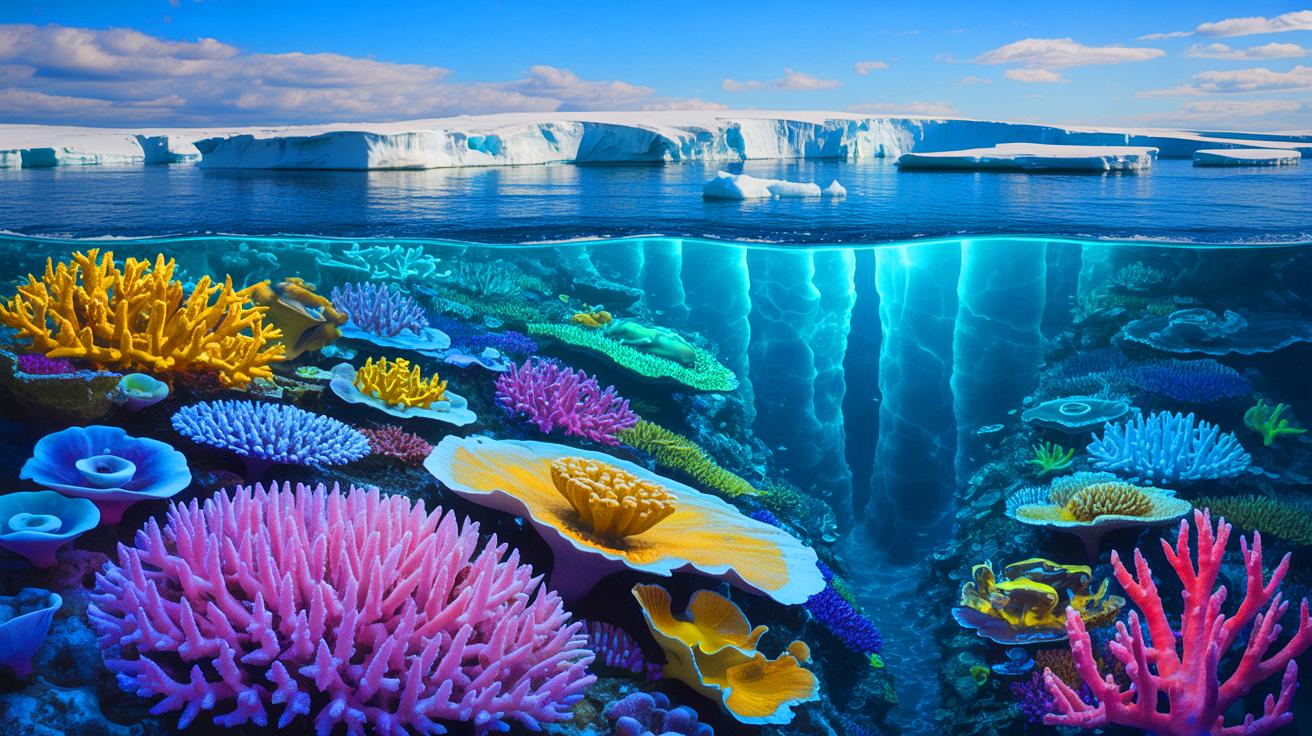
Coral Reefs: Record-breaking bleaching events have pushed tropical coral reefs past their thermal limits. With the current global warming level at approximately 1.4°C, these ecosystems have already surpassed their estimated tipping point of 1.2°C. This ongoing damage makes recovery unlikely unless global temperatures are significantly reduced.
Amazon Rainforest: Rising temperatures and deforestation are threatening to transform the Amazon rainforest into a savanna. This shift could occur between 1.5°C and 2°C of warming, further exacerbating global climate change due to the loss of this critical carbon sink.
Atlantic Meridional Overturning Circulation (AMOC): The AMOC, a crucial component of the global ocean conveyor belt, is at risk of collapsing with less than 2°C of warming. Such a collapse would lead to colder winters in northwestern Europe, disrupt monsoon patterns, and reduce agricultural productivity worldwide.
Positive Tipping Points Offer Hope
While much of the focus is on the negative impacts of climate tipping points, the report also highlights the potential for “positive tipping points” within human societies. These points could accelerate the transition towards sustainability and mitigate some of the adverse effects of climate change.
For example, renewable energy sources are now more cost-effective than fossil fuels in many areas, and the adoption of electric vehicles is increasing rapidly. These developments have the potential to become self-reinforcing, creating a momentum toward a more sustainable future.
Policymakers can further support this transition by promoting climate-friendly technologies and encouraging societal shifts in behavior. Such changes could include reducing meat consumption and altering travel habits, contributing to a more sustainable lifestyle overall. The concept of “social contagion” suggests that small groups can drive large-scale behavioral changes through these efforts.
The Global Tipping Points Report 2025 serves as both a warning and a guide, emphasizing the urgent need for action to prevent environmental catastrophe. By understanding and addressing both negative and positive tipping points, humanity has the opportunity to mitigate the worst impacts of climate change. How can societies worldwide come together to foster these positive changes and avert the looming climate crisis?

Wow, this is scary! 😱 How can we still be so ignorant about climate change?
Are there any solutions proposed in the report that are actually feasible in the short term?
Great article! Thanks for keeping us informed about such critical issues. 🙏
Isn’t it too late to do anything now that we’ve hit these tipping points?
Can someone explain what AMOC is in simpler terms?
Why do these reports always sound like doomsday scenarios? Is there any hope left?
It’s disappointing that the Amazon rainforest is still being destroyed. What can we do to stop this?