


| IN A NUTSHELL |
|
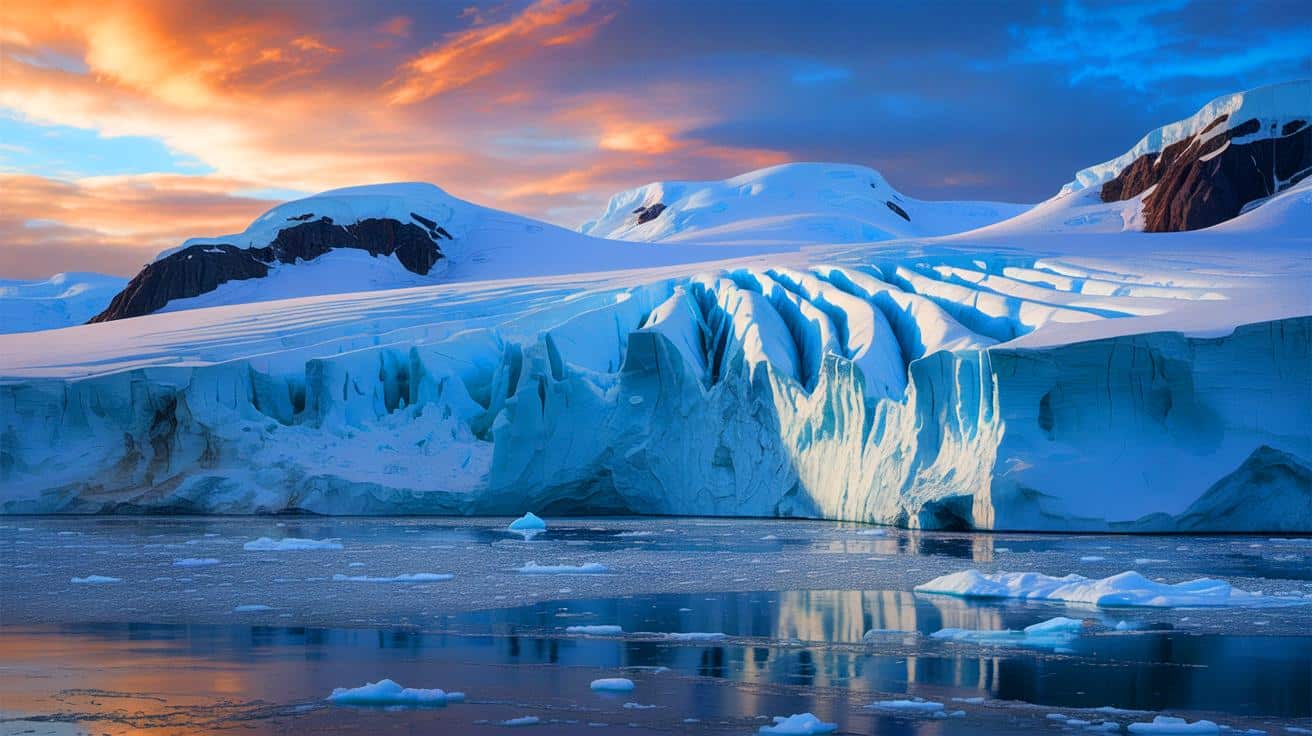
The Thwaites Glacier, ominously dubbed the “Doomsday Glacier,” is drawing global attention due to its accelerated disintegration. A recent study spearheaded by researchers at the University of Manitoba has shed new light on the gradual yet significant changes occurring in the Thwaites Eastern Ice Shelf (TEIS). Over the past two decades, this ice shelf has been steadily losing its grip on a critical stabilizing point, leading to increased ice flow and potential global sea-level implications. This research highlights the urgent need for a deeper understanding of Antarctic ice dynamics as climate change continues to pose unprecedented challenges.
Understanding the Thwaites Glacier’s Dynamics
The Thwaites Glacier is part of the West Antarctic Ice Sheet and is regarded as one of the most critical elements in predicting future sea-level rise. Its eastern ice shelf, the TEIS, plays a pivotal role in stabilizing the glacier. The recent study, published in the Journal of Geophysical Research: Earth Surface, provides a comprehensive account of the ice shelf’s structural changes over the past two decades. The research team, led by Debangshu Banerjee and supported by experts from various institutions, utilized satellite imagery and GPS data to track the expansion of fractures within the TEIS. These fractures have developed primarily in a major shear zone, which has contributed to the shelf’s destabilization.
The study revealed a four-stage process of structural weakening, beginning with the formation of long fractures aligned with ice flow. This was followed by shorter, transverse fractures that further compromised the shelf’s integrity. As these fractures expanded, the ice shelf’s connection to a crucial pinning point weakened, accelerating the flow of ice upstream. This not only destabilizes the shelf but also sets off a positive feedback loop, where increased ice flow leads to further fracturing.
From Stabilizing to Destabilizing: The Pinning Point’s Role
Historically, the pinning point at the northern edge of the TEIS served as a stabilizing force, anchoring the ice shelf and controlling its flow. However, the study highlights a concerning shift in this dynamic. As fractures around the shear zone have grown, the pinning point has transformed from a stabilizing force into a potential source of weakness. This transition underscores a broader pattern that may be emerging in other Antarctic ice shelves, raising alarms about their future stability.
Researchers emphasize that the structural decline observed in the TEIS could be a harbinger for other ice shelves, potentially leading to an accelerated contribution of the Antarctic Ice Sheet to global sea-level rise. The study’s findings emphasize the critical importance of monitoring these changes to better predict and mitigate the impacts of ice-shelf disintegration. The destabilization of the Thwaites Glacier could have far-reaching consequences, affecting coastal communities worldwide and altering oceanic and atmospheric circulation patterns.
Global Implications of Thwaites Glacier’s Changes
The potential collapse of the Thwaites Glacier poses significant risks beyond Antarctica. As one of the largest glaciers in West Antarctica, its disintegration could trigger a chain reaction affecting other ice shelves and glaciers in the region. This scenario could lead to a substantial increase in the rate of global sea-level rise, threatening low-lying coastal regions and island nations.
Experts caution that if the current trends continue, the Thwaites Glacier could contribute several feet to sea-level rise over the coming centuries. This would exacerbate existing challenges related to coastal erosion, storm surges, and habitat loss. The findings from the University of Manitoba’s study provide a critical wake-up call for policymakers and scientists alike, underscoring the need for immediate and sustained action to address the root causes of climate change and bolster resilience against its impacts.
The Role of International Collaboration in Addressing Ice-Shelf Instability
The study is part of the Thwaites-Amundsen Regional Survey and Network (TARSAN) project, a collaborative effort between the United States and the United Kingdom under the International Thwaites Glacier Collaboration (ITGC). This partnership aims to enhance our understanding of the forces driving changes in the Thwaites Glacier and develop strategies to mitigate its impacts.
Collaboration between nations is essential to address the complex challenges posed by Antarctic ice-shelf destabilization. By pooling resources, expertise, and data, international collaborations like the ITGC can accelerate research and innovation in polar science. These efforts are crucial for informing global policy decisions and developing adaptive strategies to protect vulnerable communities from the consequences of sea-level rise. As climate change continues to reshape the planet, the importance of such collaborative initiatives cannot be overstated.
The Thwaites Glacier’s destabilization offers a stark reminder of the urgent need for comprehensive climate action. As fractures in the TEIS deepen, so do the implications for global sea levels and coastal communities. The research calls for a renewed focus on understanding and mitigating the drivers of ice-shelf collapse. How can global collaboration be further strengthened to address the looming threats posed by climate change and safeguard our planet’s future?

Wow, the “Doomsday Glacier” sounds terrifying! 😨 How soon could this impact our coastal cities?
Wow, the “Doomsday Glacier” sounds terrifying! Are there any immediate actions we can take to slow down its collapse? 🌊
Thank you for this informative article. It’s alarming to see how quickly climate change is impacting our planet.
Great article, but I’m curious: how much sea-level rise are we really talking about in the next 50 years?
Is it too late to stop the glacier from collapsing? Or is there still hope? 🤔
So, are we basically doomed or is there still hope to reverse these changes? 🤔
Great article! I can’t believe the scale of this issue. What are the political barriers to international collaboration on this? 🌎
Can someone explain the “positive feedback loop” in simpler terms? This science stuff is tough!
Would be nice if the article provided more solutions rather than just highlighting problems.
Why isn’t this more widely covered in the news? Seems like a pretty big deal to me! 🌊