


| IN A NUTSHELL |
|
China’s recent breakthrough in nuclear fusion has captured global attention with its potential to revolutionize energy production. The Experimental Advanced Superconducting Tokamak (EAST), often referred to as the “artificial sun,” has achieved a significant milestone by sustaining plasma for an unprecedented 1,066 seconds. This advancement positions China at the forefront of nuclear fusion research, a field that promises a cleaner and more sustainable energy source. As the world grapples with the dual challenges of climate change and energy sustainability, the success of EAST brings renewed hope for harnessing fusion energy’s potential. However, this achievement is just one step in a complex journey toward making fusion a practical reality.
Understanding Nuclear Fusion and EAST
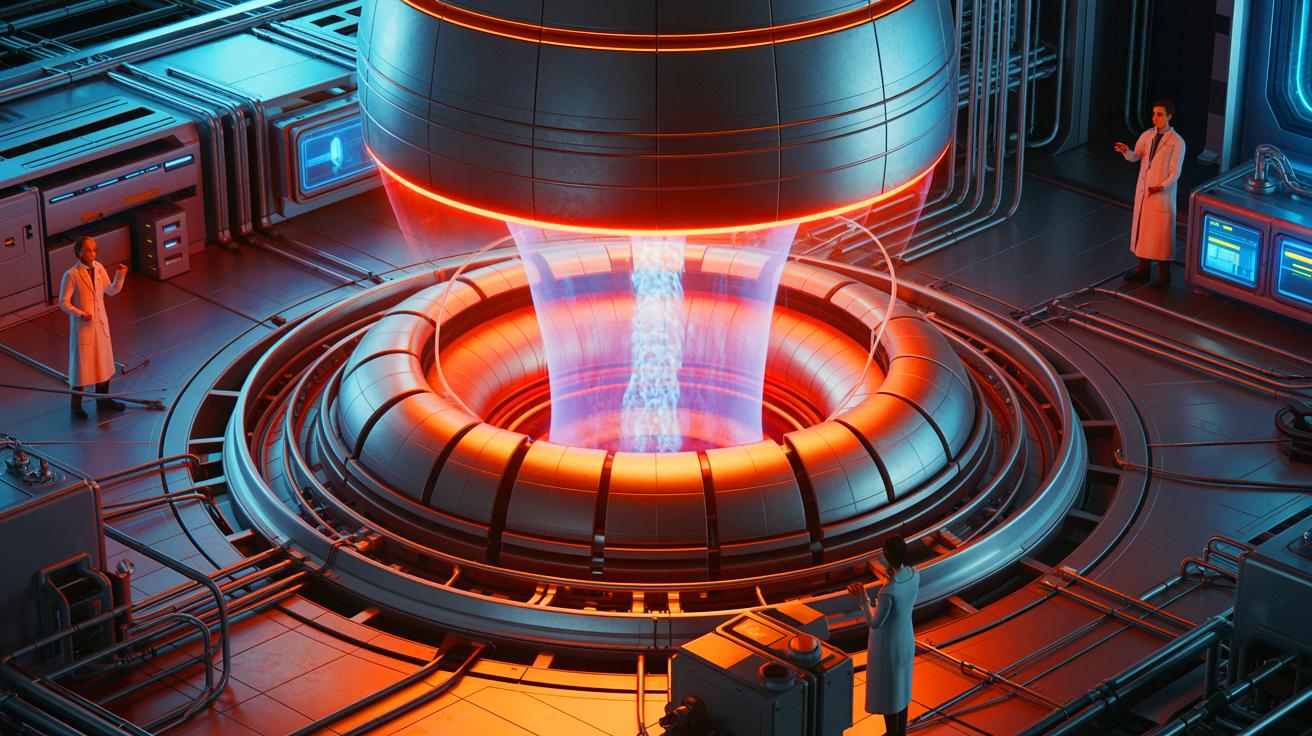
Nuclear fusion is the process of combining light atomic nuclei to form a heavier nucleus, a reaction that powers the sun and stars. This process releases a substantial amount of energy, and unlike nuclear fission, it generates minimal radioactive waste. The EAST reactor in Hefei, China, is designed to simulate these stellar conditions on Earth. It does so by confining incredibly hot plasma within a doughnut-shaped chamber, using powerful magnetic fields to maintain stability.
The goal of achieving sustainable nuclear fusion on Earth has long been a target for scientists worldwide. The success of EAST marks a significant advancement in this pursuit. By maintaining plasma for an extended duration, researchers have demonstrated the potential of magnetic confinement in achieving the necessary conditions for sustained fusion. This accomplishment not only underscores China’s technological capabilities but also sets a new benchmark for international fusion research.
The Recent Milestone
On January 20, 2025, EAST achieved a steady-state operation of high-confinement plasma for 1,066 seconds, reaching temperatures over 180 million degrees Fahrenheit. This is more than just a record-breaking event; it is a testament to the reactor’s enhanced stability and efficiency. Maintaining such extreme conditions is crucial for achieving a self-sustaining fusion reaction, a goal that scientists have pursued for decades.
The ability to sustain plasma for over 17 minutes highlights significant progress in understanding plasma behavior and improving reactor components. This achievement demonstrates the dedication of the scientific community to push the boundaries of fusion research. The insights gained from EAST’s success will be instrumental in developing future fusion power plants, bringing the vision of limitless clean energy closer to reality.
Implications for Clean Energy
Nuclear fusion has long been envisioned as a solution to the world’s growing energy demands. It offers the promise of an inexhaustible and environmentally friendly energy source. Unlike current nuclear reactors, which rely on fission, fusion produces minimal radioactive waste and carries a significantly lower risk of catastrophic accidents. The success of EAST is a critical step toward making fusion a viable alternative to fossil fuels.
As the global community strives to reduce carbon emissions and combat climate change, fusion energy presents a promising alternative. The potential to generate power without greenhouse gas emissions could transform the global energy landscape. However, achieving this potential requires overcoming significant technical challenges, particularly achieving a net positive energy output.
Global Implications and Challenges Ahead
China’s milestone with EAST positions it as a leader in the global race to develop fusion energy. The achievement of maintaining stable plasma conditions for extended periods is crucial for developing reactors capable of providing continuous power. This not only showcases China’s growing capabilities in scientific research but also contributes to international efforts to harness fusion energy as a sustainable power source.
Despite this progress, several challenges remain. Developing materials that can withstand the extreme temperatures and radiation in fusion reactors is essential. Achieving a net positive energy output, where the energy produced by fusion exceeds the energy required to sustain the reaction, remains a significant hurdle. The path to practical fusion energy is complex and demands continued international collaboration and innovation.
The insights gained from EAST’s experiments will inform future fusion projects, such as the International Thermonuclear Experimental Reactor (ITER) in France. As the world looks toward a sustainable future, the question remains: how quickly can we overcome the remaining challenges to make fusion energy a practical reality for all?

Wow, 100 million degrees! That’s hotter than my morning coffee! ☕️🔥
This really isn’t anything new or ground breaking. Wake me up when someone can hold it over a day.
Are there any environmental concerns with this kind of technology?
The world isnt struggling with climate change, climate change happens and the world reacts to the changes. If you mean the disproven lie of man made climate change thats a money making scheme thats taken freedom and wealth from the poor and middle class and made politicians money. With the Grand Solar Minimum major cycle starting 400, 1200, and the long cycle one all simultaneously, we already knew the global temps, ocean currents and weather would do what they have. The final signs are major uptick in seismology and volcanology followed by signs in the sky of twisting light patterns. Oh thats right we have that too already
This is the future of energy! Can’t wait to see more progress. 🚀
How does this compare to the progress being made at ITER?
The temperatures involved are insane. How do they manage to control it?
I hope this means lower energy bills in the future! 💸
Can this technology really replace fossil fuels in the near future?
How close are we to achieving a net positive energy output from fusion?
China leading the way again! What does this mean for global competition?
Wait, how do they even measure 100 million degrees? 🤔
Impressive achievement! What are the implications for global energy policies?
Sounds great, but how much more investment is needed for commercial fusion?
Go China! But let’s not forget collaborative efforts worldwide. 🌍
AI should be involved in monitoring these reactors, don’t you think? 🤖
Is this the kind of ‘nuclear’ we should be less worried about? 🤷♂️
All this talk of fusion and I’m still waiting for my flying car. 🚗💨
For all the technical jargon, can someone explain this in layman’s terms?
Is there a timeline for when fusion energy might become commercially available?
So exciting! What are the next steps after this achievement?
Can this technology be used on a smaller scale for individual cities?
Hope they keep safety in mind. We don’t need another Chernobyl! 😬
Fusion energy sounds promising, but how sustainable is it really?
What challenges are scientists facing in maintaining these extreme conditions?
China is really stepping up in fusion research. Are other countries keeping up?
This is amazing, but how soon can we expect fusion energy to power our homes?
So, when do we get our own personal suns in our backyards? 😜☀️
Is there any risk of these experiments going wrong? Safety first! 🧐
Thank you to all the scientists working tirelessly on this! 🙏
Why is sustaining plasma for 1,066 seconds such a big deal?
We all saw what happened to the Death Star, this could be really bad. What if someone hits the wrong button or direction?🤔