



| IN A NUTSHELL |
|
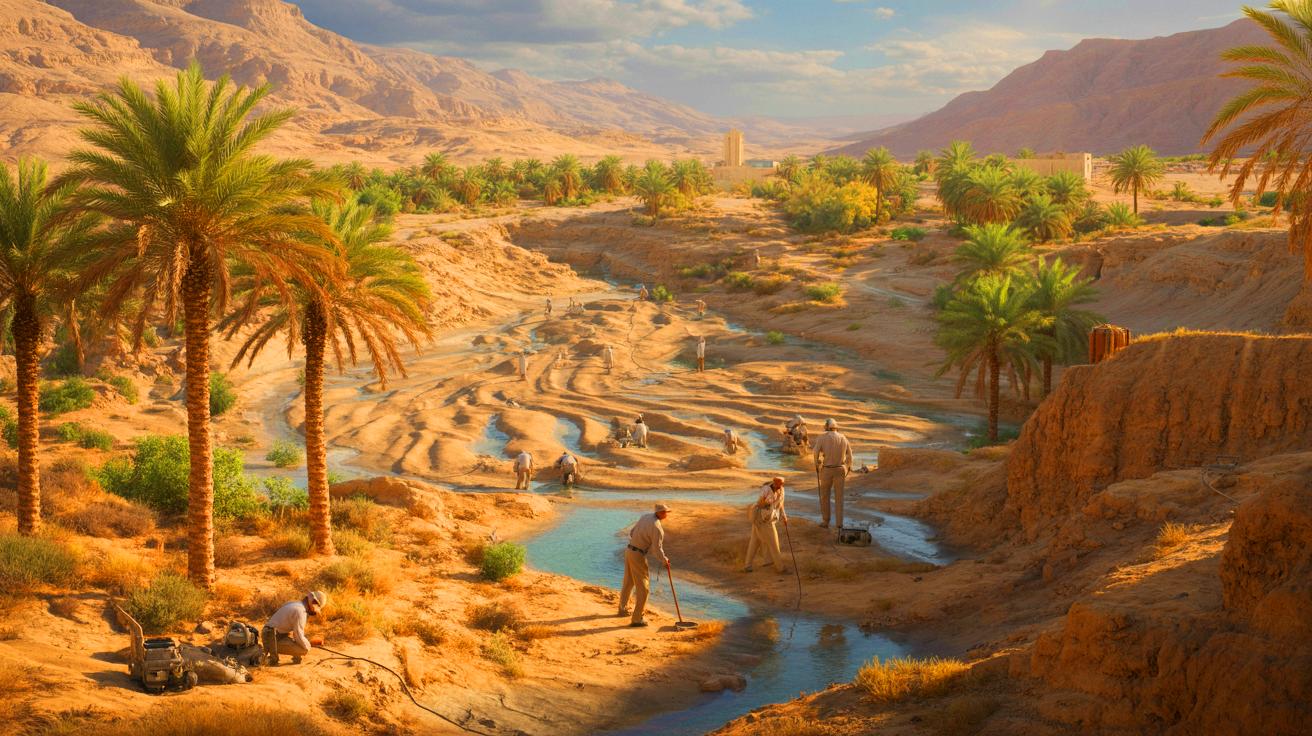
The enduring mystery of the Garden of Eden has captivated scholars and archaeologists for centuries. The biblical description of a river flowing out of Eden, dividing into four branches, including the Tigris and Euphrates, has fueled speculation about its possible real-world location. While some researchers seek tangible evidence in the ancient lands of the Near East, others view Eden as a symbolic representation of human longing for paradise. As exploration continues, the debate over Eden’s existence and location remains vibrant, challenging our understanding of history and myth.
The Symbolic Versus the Literal
For many experts, the biblical account of Eden transcends literal interpretation. They argue that Eden is more of a symbolic landscape than a geographic location. Historian Francesca Stavrakopoulou suggests that the authors of Genesis were inspired by the fertile lands of Mesopotamia. This region, known as the Fertile Crescent, was home to the earliest agricultural societies and cities. These flourishing landscapes might have fueled the imagination of those who penned the biblical narrative, embedding the idea of Eden in the cultural memory.
Despite the symbolic interpretation, the allure of finding Eden has led generations of archaeologists to search the region between the Tigris and Euphrates rivers. These expeditions aim to uncover evidence of the other two rivers mentioned in Genesis: the Pishon and the Gihon. Some researchers speculate these rivers may have been seasonal or have vanished over time. Others propose they were metaphorical or linked to distant mythical regions. The quest to pinpoint Eden’s location, whether symbolic or literal, continues to captivate the scientific community.
Exploring Underwater Theories
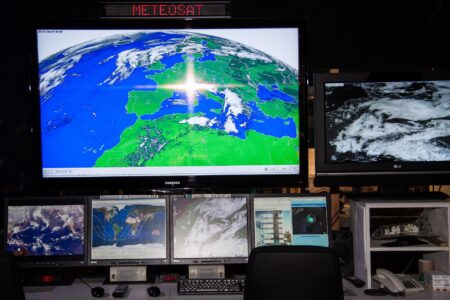
In the 1980s, archaeologist Juris Zarins proposed a bold hypothesis: the Garden of Eden now lies submerged under the Persian Gulf. According to Zarins, rising sea levels after the last glaciation might have drowned this fabled paradise. Satellite imagery showing ancient riverbeds leading to the Gulf adds intrigue to this theory. However, the absence of concrete artifacts or archaeological evidence makes this hypothesis contentious among scientists. The idea of an underwater Eden remains a tantalizing possibility, yet remains unproven.
Some researchers, however, pursue even more unconventional theories. Dr. Konstantin Borisov argues for Eden's location under the Pyramid of Giza in Egypt, referencing ancient maps and reinterpretations of Egyptian and Mesopotamian texts. Others suggest locations in Iran or even South America. These theories, while imaginative, often lack the empirical evidence needed to convince the broader archaeological community. Without definitive proof, the debate over Eden's true location persists, with each theory offering a unique perspective on this ancient enigma.
The Limitations of Archaeological Evidence
The search for Eden is often hindered by the scarcity of tangible evidence. Joel Baden, a theologian at Yale, acknowledges the challenges faced by researchers. Despite numerous expeditions, no discovery has definitively linked any site to the biblical paradise. Each proposed location offers compelling arguments but lacks the decisive evidence needed for universal acceptance. This absence of evidence suggests that perhaps the quest for Eden is more about the journey than the destination. The pursuit itself may hold more significance than the discovery of physical remnants.
For a new generation of researchers, Eden represents a literary creation rather than a historical reality. Mark Leutcher, an expert in ancient Judaism, views Eden as a symbol of the known world at the time, stretching from the Mediterranean to the borders of Assyria and Babylon. This perspective suggests that the biblical account serves more as a cultural reflection than an archaeological roadmap. Understanding Eden as a literary construct allows for a broader interpretation of its significance, beyond the confines of historical geography.
Eden's Enduring Mystique
Despite the diverse theories and ongoing debates, Eden remains an elusive concept. Whether sought in Mesopotamia, Egypt, or beneath the ocean, Eden continues to be a symbol of human longing for an unattainable paradise. Its legacy endures in our cultural consciousness, prompting questions about the intersection of myth and history. The search for Eden, though perhaps unresolvable, reflects humanity's enduring curiosity and desire to connect with our origins.
As scholars and archaeologists continue to explore the mysteries of Eden, we are left to ponder the true nature of this legendary paradise. Is it a real place waiting to be uncovered, or a powerful symbol of our collective aspirations? The answer may lie not in the discovery of Eden itself but in the questions it raises about our understanding of history, myth, and human longing.



Wow, so it’s under the Persian Gulf? That’s wild! 🌊
Wow, this is mind-blowing! Could the Garden of Eden really be under the Persian Gulf? 🌊
Isn’t it more likely that the Garden of Eden is just a myth? 🤔
Why would religious leaders hide the location if it’s true?
Thank you for sharing this fascinating article! I’m intrigued by the underwater theories.
Interesting theory, but without artifacts, it seems more like a myth than reality.
How do they plan to find evidence if it’s under water? Seems impossible!
Thank you for sharing such a fascinating perspective on the Garden of Eden! 🙏
This is just another conspiracy theory. Show me the evidence!
If Eden is under the Persian Gulf, does this mean we need scuba gear to visit paradise? 😂
Why would religious leaders hide this information?
As someone who loves ancient history, I find this incredibly intriguing! More evidence, please!
Is anyone else reminded of Atlantis reading this? 😂
Isn’t it more likely that Eden is a metaphorical concept rather than a real place? 🤔
I’m skeptical, but it’s a cool idea. Do they have any artifacts to prove it?