




| IN A NUTSHELL |
|
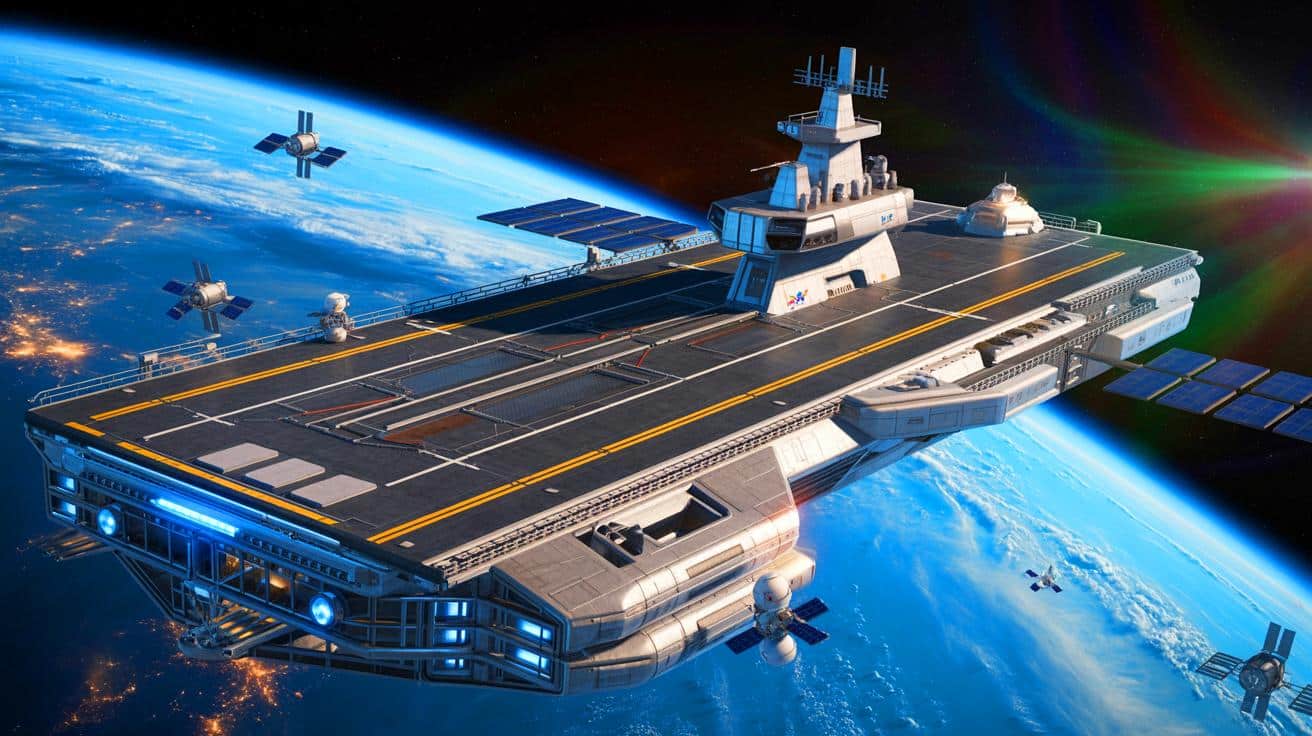
The United States is embarking on a transformative journey in space technology, with the development of an orbital aircraft carrier by the startup Gravitics. This project marks a pivotal moment for satellite deployment strategies, highlighting the strategic importance of space as a critical domain. As the collaboration between private companies and national defense entities intensifies, the U.S. aims to secure its leadership in space amidst rising global tensions. This initiative is not only a testament to innovation but also a strategic move to maintain dominance in the rapidly evolving space landscape.
The Vision Behind the Orbital Aircraft Carrier
Gravitics is setting a new benchmark in satellite deployment with its orbital aircraft carrier project. Funded by a $60 million investment from the U.S. Space Force, this initiative seeks to revolutionize how satellites are launched. By enabling direct satellite deployment from Earth’s orbit, the carrier offers a quicker and more flexible approach to addressing national security threats. This concept eliminates the constraints of traditional rocket launches, providing a strategic advantage to the military.
The orbital carrier is a reflection of the U.S. military’s commitment to establishing a strong presence in space. With the potential onset of a space arms race, having a robust platform in orbit ensures that the U.S. can respond to security threats promptly. The ability to deploy satellites on demand is a significant leap forward, demonstrating the nation’s dedication to maintaining leadership in space technology.
Enhancing Space Security and Superiority
The innovative design of the orbital aircraft carrier by Gravitics ensures the protection of satellites against the harsh realities of space. By maintaining an unpressurized environment, the carrier safeguards sensitive electronics and batteries from potential damage. This protection is crucial in an era where electronic warfare and cyber threats are prevalent. The ability to shield satellites effectively enhances the U.S.’s space security capabilities.
Moreover, the carrier’s capacity to conceal satellites from adversaries offers a tactical edge. Gravitics CEO Colin Doughan refers to the carrier as a “game-changer” that perfectly aligns with the Space Force’s mission for orbital dominance. This development not only bolsters military capabilities but also sets a foundation for future technological advancements in space exploration.
Public-Private Partnerships and Their Impact
The creation of the orbital aircraft carrier underscores the importance of public-private partnerships in the space industry. Gravitics, in collaboration with Axiom Space, is also developing a pressurized space module, demonstrating its commitment to both defense and commercial ventures. This dual focus aligns with the Department of Defense’s objectives and highlights Gravitics’s growth potential.
Such collaborations are vital for integrating cutting-edge technologies into defense strategies. By partnering with private companies, government entities can enhance the U.S.’s position in space while fostering technological advancements with potential civilian applications. The success of these partnerships could lead to new market opportunities and further progress in space technology.
The Future of Space Exploration
With the advent of technologies like the orbital aircraft carrier, a new era of space exploration is dawning. This advancement has the potential to redefine security, surveillance, and communication, impacting both military operations and private sector endeavors. The implications of this shift are profound, altering how space is utilized and governed.
As the U.S. Space Force and companies like Gravitics gear up for future challenges, questions about international space cooperation emerge. How will these innovations shape diplomatic relations between nations? More importantly, how can space remain a domain of shared peace and progress, benefiting all of humanity?
The orbital aircraft carrier is a testament to the innovation and strategic foresight of the U.S. in the realm of space technology. As these developments unfold, they pose significant questions about the future of international collaboration and governance in space. How will nations navigate the complexities of a rapidly evolving space landscape while ensuring that it remains a domain of shared human progress?




Wow, an orbital aircraft carrier! Are we living in a sci-fi movie now? 🚀
How much taxpayer money is being spent on this? 🤔
This is a great step forward for space security. Kudos to Space Force and Gravitics!
This is so stupid. I’m laughing my ass off. Good job whoever reported this in sustainability times. Y’all keep drinking the Kool-Aid.
Gravitics sounds like a name from a comic book. Hope they have superhero-like results! 💪
What happens if a satellite breaks on this carrier? Do we have space mechanics? 🚀🔧
The public-private partnership model seems to be working well. Hope it sets a trend!
How will this impact international relations and cooperation in space?
Isn’t this just escalating the arms race into space? Concerned about where this is heading…
Great article, but a bit worried about the militarization of space.
Can other countries build their own orbital carriers, or is the U.S. way ahead?
This sounds like a space race 2.0! Who else is involved?
Is there any public oversight on these projects? Transparency is key.
Can’t wait to see the first launch! Please keep us updated. 🚀
Warship in the sky? What a time to be alive! 😆
How do they plan to keep these carriers safe from space debris?
Sounds like an expensive project. Hope it’s worth the investment!
Interesting read, but where are the environmental considerations?
Should we be worried about space wars? Seems a bit unsettling. 😧
I’m all for technological advancement, but at what cost to global peace?
This could be a game-changer, but let’s not forget about peaceful uses of space.
Are there any international regulations governing these orbital carriers?
Can this technology be adapted for peaceful purposes, like space exploration or science? 🌌
Thanks for the detailed explanation. Makes me think about the future of space travel!
How do you ensure that these carriers don’t become targets themselves?
Is there any collaboration with other space agencies on this project?
Love the innovation, but hope we’re also thinking about long-term consequences. 🤔
Does this mean we’ll have space battles soon? Sounds like Star Wars is becoming real.
Thanks for the article! Learned something new today. 😊
Mega Target money pit