



| IN A NUTSHELL |
|
In a groundbreaking discovery, researchers from the University of Colorado Boulder have identified the presence of medium chain chlorinated paraffins (MCCPs) in the air over Lamont, Oklahoma. This marks the first detection of MCCPs in the Western Hemisphere, raising significant environmental and health concerns. MCCPs, which are used in industrial processes such as metalworking fluids and flame retardants, have previously been found in polar regions and parts of Asia but never before in the Americas. This finding challenges existing assumptions about chemical pollution and underscores the importance of ongoing environmental monitoring and regulatory scrutiny.
The Discovery: A Surprising Find in Oklahoma’s Air
For many years, the environmental community has been aware of the dangers posed by short-chain chlorinated paraffins (SCCPs), which were banned in the United States in 2009 due to their harmful properties. However, the recent detection of MCCPs, compounds with slightly longer chains, has caught researchers off guard. According to Daniel Katz, the study’s lead author and a PhD student at the University of Colorado Boulder, this unexpected discovery was made using advanced chemical ionization mass spectrometry (CIMS). This technique allowed researchers to detect MCCPs at parts per quadrillion levels, revealing concentrations thousands of times higher than typical background levels.
The presence of MCCPs in Oklahoma air prompts a reevaluation of the U.S.’s role in distributing chemical pollutants globally, raising questions about the potential presence of similar pollutants in other regions. The elevated concentrations suggest a closer source of these pollutants than previously thought. This is particularly alarming as MCCPs had never before been identified in the Western Hemisphere, despite being detected elsewhere in the world. The discovery highlights the need for increased vigilance in monitoring and regulating chemical pollutants that may have far-reaching environmental impacts.
The Role of Biosolid Fertilizers in Chemical Contamination
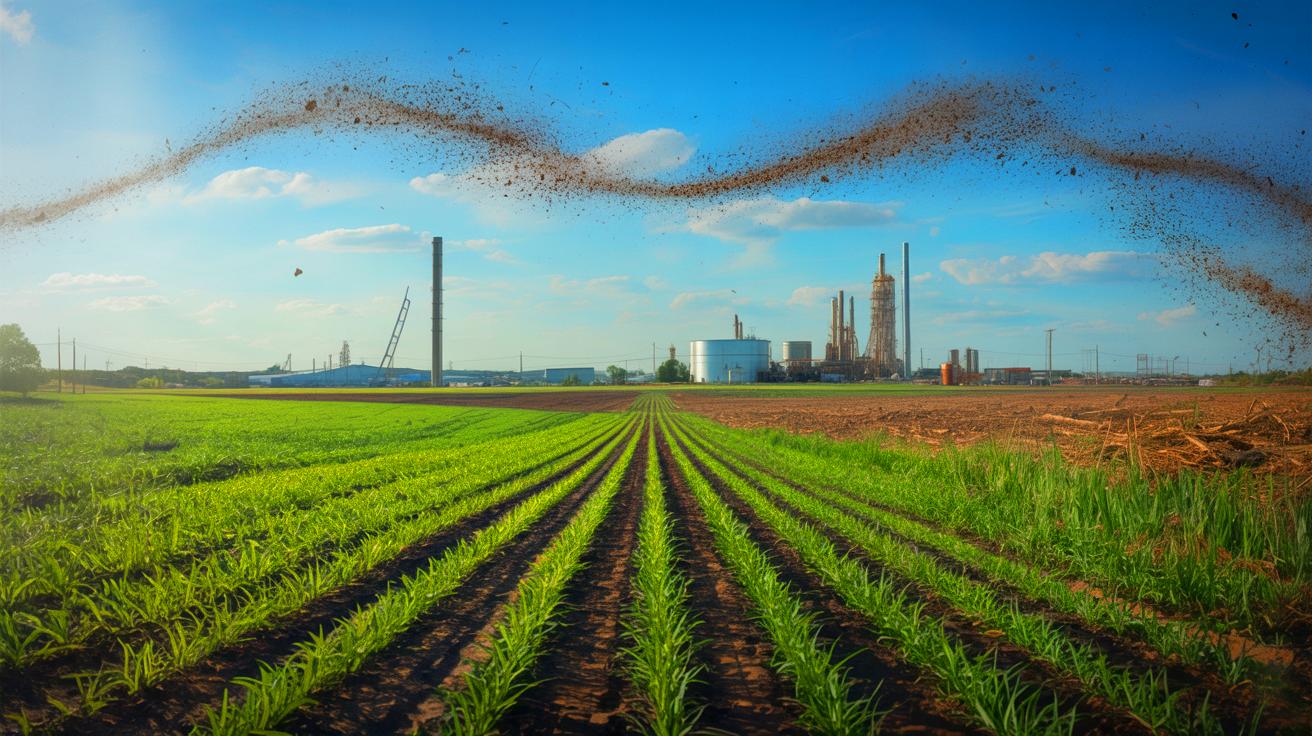
The study suggests that biosolid fertilizers, derived from municipal wastewater treatment plants, may be a significant source of airborne MCCPs. Often applied to agricultural fields to enhance soil fertility, these fertilizers could be releasing toxic chemical pollutants into the atmosphere. “When sewage sludges are spread across the fields, those toxic compounds could be released into the air,” Katz explained. This potential pathway raises significant concerns about the environmental and health impacts of biosolid fertilizers, which are widely used to improve soil conditions.
MCCPs are particularly persistent in the environment, and their chemical properties make them prone to becoming airborne. Once biosolid fertilizers are applied, wind can lift fine particles containing MCCPs, allowing them to evaporate and accumulate in the atmosphere. The process is influenced by daily temperature fluctuations, with higher concentrations observed during warmer periods. This finding serves as a reminder of the potential environmental hazards associated with everyday agricultural practices, especially when toxic chemicals are involved.
The Unintended Consequences of Chemical Regulation
The discovery of MCCPs also highlights the unintended consequences of chemical regulations. When the U.S. banned the production of SCCPs in 2009, manufacturers turned to MCCPs as a substitute in various industrial applications. Eleanor Browne, a CIRES fellow at CU Boulder, noted, “We always have these unintended consequences of regulation, where you regulate something, and then there’s still a need for the products that those were in.” This transition underscores the complexities of chemical regulation, where the banning of one harmful compound can lead to the introduction of another.
The widespread substitution of SCCPs with MCCPs in industrial products such as plastics, paints, and lubricants has raised concerns about the effectiveness of current regulations. The need for more comprehensive, forward-thinking regulatory frameworks is evident, as is the importance of exploring safer alternatives to harmful chemicals. Environmental scientists are advocating for more proactive approaches in regulating industrial chemicals to prevent similar scenarios in the future.
Health Risks and Regulatory Gaps
The health implications of long-term exposure to MCCPs remain unclear, though studies on chlorinated paraffins indicate potential risks. These chemicals have been linked to liver stress, endocrine disruption, and developmental harm in animal studies. Human data is limited, but there is evidence that exposure to similar compounds can result in toxin accumulation in human blood, particularly in industrial areas with high emissions. The persistence of MCCPs in the environment, similar to “forever chemicals” like PFAS, is particularly concerning due to their tendency to bioaccumulate and move up the food chain.
Currently, there are no federal air quality standards for MCCPs, and monitoring of personal exposure is infrequent. This regulatory gap poses a significant risk to public health, emphasizing the need for stringent guidelines and more thorough monitoring of toxic chemical spread. Katz stressed the importance of having governmental agencies capable of evaluating and regulating these chemicals for public health and safety.
The Path Forward: Monitoring and Policy Changes
In light of these findings, the research team plans to continue investigating the seasonal and regional variations of MCCPs to understand their environmental behavior better. They aim to track the journey of MCCPs from wastewater treatment plants to agricultural fields by sampling local soils and biosolid sludge. This research could reveal potential hotspots of contamination and inform future regulatory actions.
The discovery is prompting discussions among state lawmakers about tightening regulations on biosolid land applications. Some states are considering stricter controls to limit biosolid use, particularly in areas where MCCPs have been detected. As public awareness grows, there is increasing pressure on policymakers and scientists to enhance monitoring and regulation of toxic chemicals. Meanwhile, manufacturers are exploring alternative compounds to replace harmful additives in industrial processes.
As this research unfolds, it raises critical questions about the long-term impact of industrial pollutants on the environment and public health. How will policies evolve to address the challenges posed by emerging contaminants like MCCPs?




Wow, just when you think you’ve heard it all, they find something new! What’s next, toxic unicorns? 🦄
Wow, first time I’m hearing about MCCPs. Should we all be worried? 🤔
Interesting read! Are there any plans to monitor MCCPs in other states?
Is there any advice for residents in Oklahoma to minimize exposure to these chemicals?
This is why I always say regulation needs to be proactive, not reactive. 🤦♂️
How did these chemicals go undetected in the U.S. for so long?
Should farmers in Oklahoma be concerned about using biosolid fertilizers?
Can MCCPs be removed from the environment once they’re detected?
Love this kind of investigative reporting. Keep it up! 👍
Are there any known alternatives to MCCPs for industrial use?
It’s surprising to see these chemicals getting into the air. Didn’t expect that.
Who is responsible for allowing these chemicals to be used without proper regulation?
Can someone explain what biosolid fertilizers are? I’m not familiar with them.
Is this just an Oklahoma problem, or could it spread to other states?
What a mess! It seems like every time we solve one problem, another pops up. 🥴
Why is it always after the fact that we discover these dangerous chemicals? 🤔
This is the first time I’m hearing about MCCPs. How long have they been around?
I’m not sure how to feel about this article. Is the situation as bad as it sounds?
Is there any data on how MCCPs affect human health over long periods?
Are there any steps being taken to alert the public about these chemicals?
Thank you for shining a light on this issue. It’s important that people know!
Why aren’t these chemicals being tested regularly if they pose such a risk?
Thank you for the informative article! It’s alarming to learn about these chemicals in Oklahoma.
Are there any immediate steps being taken to address this issue?
Can anyone provide tips on how to improve air quality at home?
Thanks for the informative article. We need more awareness about these hidden dangers.
So we’re replacing one harmful chemical with another… sounds like a game of whack-a-mole. 😒
So, we banned one harmful chemical only to replace it with another? Sounds like a classic case of “out of the frying pan, into the fire!” 🔥
Why aren’t there already federal standards for MCCPs? This seems like a big oversight.
Can local authorities in Oklahoma do anything to monitor or reduce MCCP levels?
Grate article, but what are the immediate health risks for people living in Oklahoma?
Not surprised at all. We’ve been ignoring environmental warnings for decades. 🤦♂️