



| IN A NUTSHELL |
|
Recent research has shed light on a volcanic eruption that has puzzled historians and archaeologists for decades. Occurring on the Greek island of Thera, now known as Santorini, this eruption stands as one of the most significant volcanic events of the last 10,000 years. While the exact timing of the eruption has been the subject of much debate, new findings have emerged that offer a fresh perspective on its place within ancient Egyptian history. Researchers from Ben-Gurion University and the University of Groningen have provided radiocarbon dates that challenge previous timelines, suggesting the eruption occurred before the start of Egypt’s New Kingdom.
New Radiocarbon Sampling From Key Egyptian Artifacts
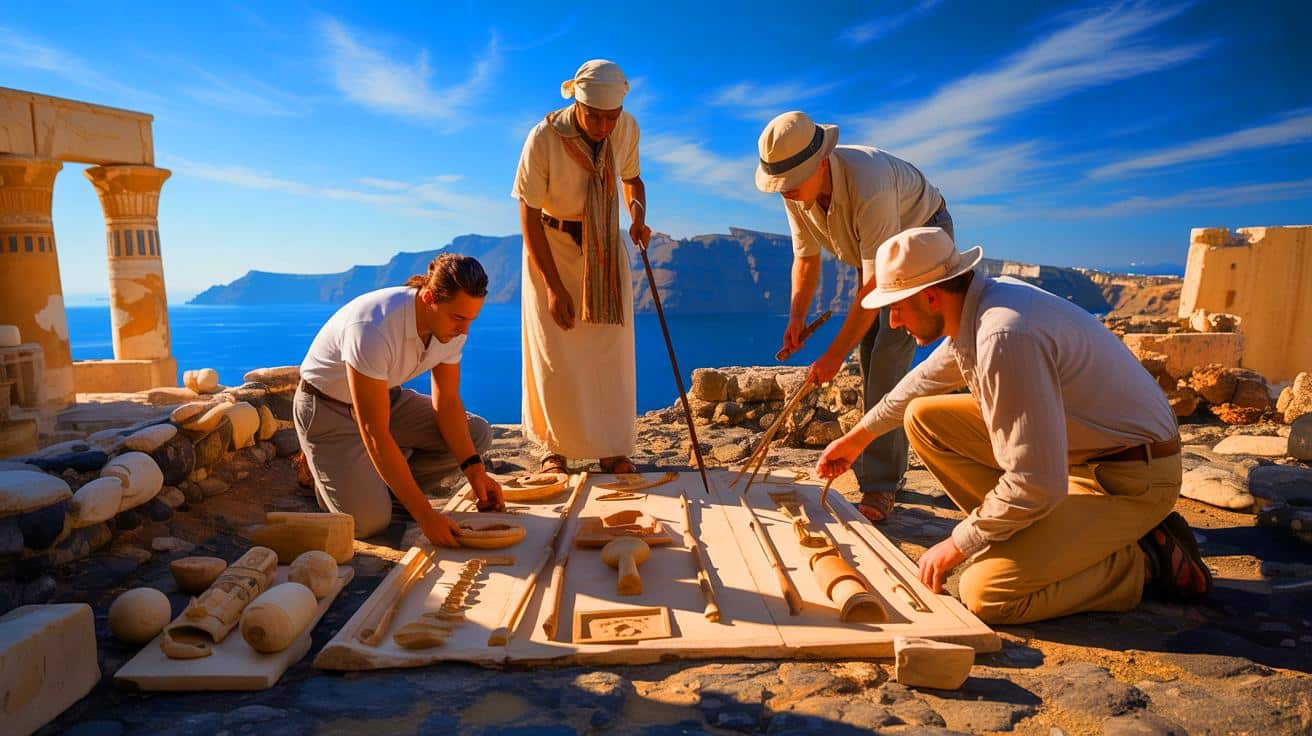
Professors Hendrik J. Bruins and Johannes van der Plicht spearheaded a groundbreaking study by obtaining access to invaluable Egyptian artifacts. With the cooperation of the British Museum and the Petrie Museum in London, they collected samples for radiocarbon dating. Among these artifacts was a mudbrick from the Ahmose Temple at Abydos, a linen burial cloth linked to Satdjehuty, and six wooden stick shabtis from Thebes. This meticulous sampling process was conducted under strict supervision to ensure the integrity and preservation of the artifacts.
The radiocarbon dating of these items offered new insights into the timeline of ancient Egyptian history. The artifacts, which are intimately connected with King Ahmose and the early 18th Dynasty, provided crucial data. This data has the potential to redefine historical narratives, particularly concerning the interactions between Egypt and surrounding cultures during the Second Intermediate Period. The collaboration between the two universities highlights the importance of interdisciplinary research in solving historical puzzles.
Revised Timeline for the Santorini Eruption and Early Dynasties
Radiocarbon analyses of the collected samples indicate that the Santorini eruption did not coincide with Egypt’s New Kingdom, as previously thought. Instead, the evidence points to an earlier occurrence during the Second Intermediate Period. This revelation challenges the long-standing chronology that placed the eruption within the same timeframe as the early years of the New Kingdom. The findings suggest that the Second Intermediate Period was longer than traditionally believed, which has significant implications for understanding the transitions between Egyptian dynasties.
“Our findings indicate that the Second Intermediate Period lasted considerably longer than traditional assessments, and the New Kingdom started later,” states Prof. Hendrik J. Bruins. By placing the eruption earlier, the research offers a new perspective on the interactions between ancient civilizations during this era. This revised timeline not only affects Egyptian history but also influences our understanding of the broader historical context in the eastern Mediterranean.
Implications for Egyptian Chronology and Archaeological Studies
The new timeline proposed by the research team has the potential to influence a wide range of archaeological studies. By redefining the chronology of the Second Intermediate Period and the start of the New Kingdom, historians may need to reassess the cultural and political relationships between Egypt and its neighbors. The implications of this research extend beyond Egypt, affecting our understanding of the entire ancient Mediterranean world.
This new framework also opens the door to further investigation into the socioeconomic and political factors that characterized the transition between the Second Intermediate Period and the New Kingdom. As researchers continue to explore this pivotal time in history, they may unearth additional evidence that could further adjust our historical timelines. This study exemplifies how scientific advancements, such as radiocarbon dating, can transform our understanding of ancient history.
Future Directions for Historical Research
The findings from this study underscore the importance of revisiting historical timelines with new technologies and methodologies. As radiocarbon dating techniques continue to improve, they offer more accurate and reliable data for historians and archaeologists. This study sets a precedent that may inspire future research efforts aimed at refining historical chronologies across different regions and eras.
Moving forward, collaboration between international institutions and the integration of interdisciplinary approaches will be essential in uncovering further historical truths. The new timeline of the Santorini eruption invites scholars to reconsider other significant events in ancient history. What other long-held historical assumptions might be challenged by emerging scientific techniques and evidence?



This is fascinating! Can’t believe how much history can change with new findings. 🤯
Wow, this really turns history on its head! What will they discover next? 🤔
Can someone explain how radiocarbon dating can be so different from previous methods?
So, does this mean we need to rewrite history books again? 😆
Looks like history textbooks need a major update! 📚
How do these findings impact our understanding of the relationship between Egypt and Greece?
Are there any plans to re-examine other ancient timelines using these new methods?
Thank you for this enlightening article. It’s amazing to see science challenging long-held beliefs.
So when exactly did the Santorini eruption happen according to this new timeline?
Could this revised timeline affect the dating of other historical events, like the Trojan War?