


| IN A NUTSHELL |
|
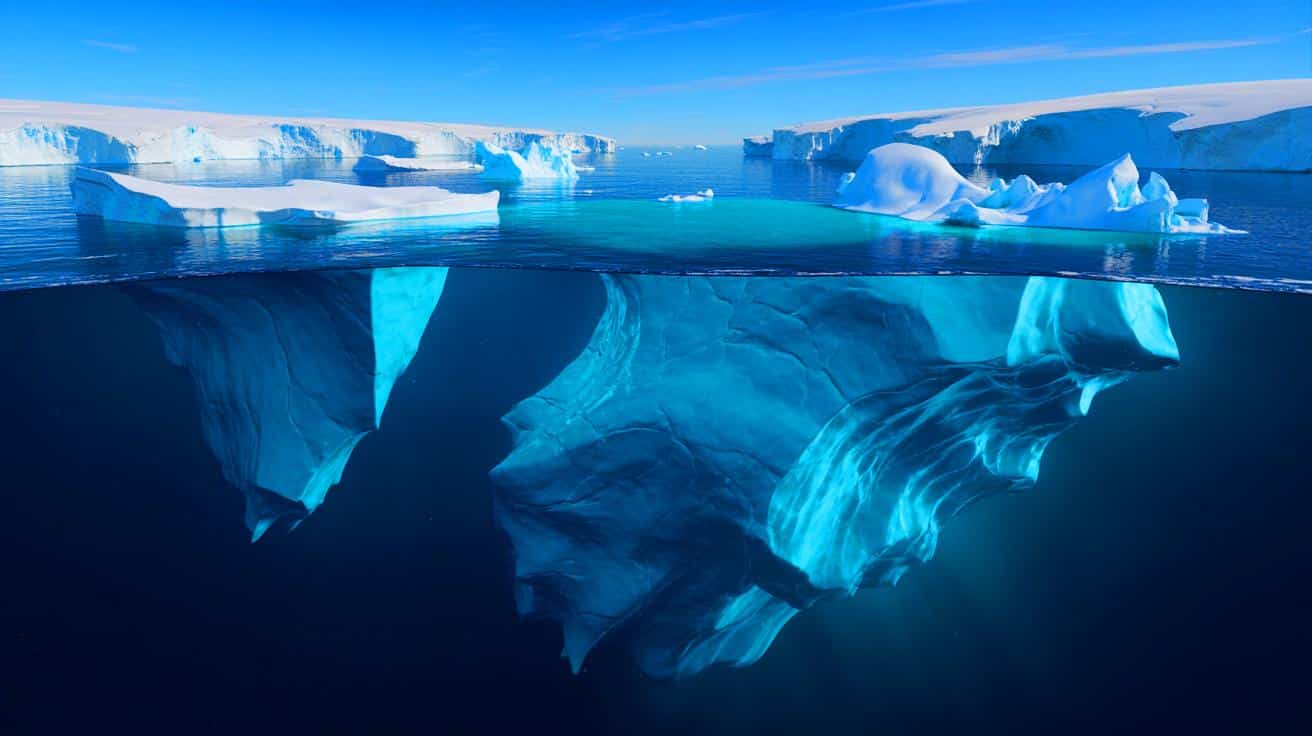
The conclusion of the last Ice Age about 12,000 years ago marked a significant shift in Earth’s climatic history. During this period, the Southern Ocean around Antarctica played a critical role in driving global climate transitions. A new study published in Nature Geoscience reveals that Antarctic Bottom Water (AABW) contributed significantly to these changes. Scientists, including Dr. Huang Huang and Dr. Marcus Gutjahr, have reconstructed the influence of AABW over the past 32,000 years. Their findings shed light on how this cold and dense water mass affected global carbon cycles, thereby influencing the climate. This study offers new insights into the mechanisms of past climate changes and their relevance to today’s environmental challenges.
The Role of Sediment Cores in Climate Reconstruction
To delve into the past climate mechanisms, researchers turned to sediment cores from the deep sea. These cores act as time capsules, preserving chemical fingerprints that offer a glimpse into historical ocean conditions. Dr. Huang Huang and his team collected nine sediment cores from the Atlantic and Indian sectors of the Southern Ocean, ranging from depths of 7,200 to 16,400 feet. By analyzing these cores, they aimed to understand how AABW influenced the global carbon cycle during the last deglaciation.
The key to their analysis lay in the isotopic composition of neodymium, a trace metal found in seawater. Neodymium’s isotopic signature helps identify the origin and movement of deep-water masses. Earlier studies had suggested that the modern composition of these isotopes only appeared around 12,000 years ago. This discovery prompted researchers to question the origins of exotic isotopic signatures found in sediments from the last Ice Age. The stagnant nature of deep waters during this period allowed for distinct isotopic imprints, shedding light on past oceanic conditions.
Stagnant Deep Waters and Carbon Storage During the Ice Age
During the Ice Age, the Southern Ocean was vastly different from today. The Antarctic Bottom Water, which is now prevalent, did not spread as widely back then. Instead, the deep Southern Ocean was filled with carbon-rich waters originating from the Pacific. This glacial precursor to today’s Circumpolar Deep Water (CDW) played a crucial role in maintaining low atmospheric CO2 levels. As these waters circulated in isolation, they stored significant amounts of dissolved carbon.
The transition out of the Ice Age saw a shift in this dynamic. As global temperatures rose and ice sheets retreated between 18,000 and 10,000 years ago, AABW expanded in two notable phases. These expansions coincided with warming events in Antarctica, leading to increased vertical mixing in the Southern Ocean. This mixing brought carbon-rich deep waters closer to the surface, releasing stored carbon into the atmosphere. This process contributed to the rise in atmospheric CO2 levels, marking a significant climate transition.
Wolf DNA Found in Most Dogs, Revealing Surprising Genetic Connection with Their Wild Ancestors
Shifts in Deep-Water Circulation and Climate Impact
Previously, scientists believed that changes in the North Atlantic, particularly the formation of North Atlantic Deep Water (NADW), were the primary drivers of shifts in deep-water circulation in the South Atlantic. However, the new findings suggest a more nuanced picture. The formation and expansion of Antarctic Bottom Water played a pivotal role in reshaping oceanic conditions at the end of the last Ice Age. This change disrupted the existing water-mass structure, facilitating exchanges between deep and surface waters.
As warming reduced sea-ice cover around Antarctica, more meltwater entered the Southern Ocean. The resulting AABW was less dense, allowing it to spread further. This dynamic destabilized the ocean’s stratification, leading to significant shifts in global carbon cycles. Understanding these historical shifts offers valuable insights into how modern climate systems might respond to ongoing environmental changes.
Implications for Today’s Climate Challenges
The Southern Ocean’s role in climate regulation extends beyond historical contexts. Its vast size and unique circulation patterns make it a critical player in today’s climate dynamics. Over the past five decades, waters deeper than about 3,280 feet around Antarctica have warmed significantly faster than other oceanic regions. This rapid deep-ocean warming has implications for the ocean’s ability to absorb and release carbon dioxide.
Paleoclimate data obtained from sediment cores continue to be invaluable for understanding past climates that were warmer than today. By tracing changes in Antarctic Bottom Water over the millennia, scientists can better predict future changes in the Antarctic Ice Sheet’s mass. This knowledge is crucial for improving climate models and projections, offering a clearer picture of how Earth’s climate might evolve in the coming years.
The insights gained from studying the Southern Ocean’s past offer a window into understanding today’s climate challenges. As Antarctic ice shelves continue to melt, the dynamics of ocean circulation and carbon storage remain vital areas of research. How can these historical lessons inform our approach to mitigating climate change and its impacts on a rapidly warming world?


Wow, this article is fascinating! Who knew the Southern Ocean was so critical to our climate? 🌊
Fascinating read! But how exactly do sediment cores help us predict future climate changes? 🤔
Great article! I never knew the Antarctic Bottom Water played such a crucial role. Thanks for sharing!
Isn’t it ironic how the “bottom of the world” plays such a top role in global warming?
So we’re basically sitting on a ticking carbon time bomb in Antarctica? 😮
This is really interesting, but I’m curious how reliable are these sediment cores in tracing climate changes? 🤷♂️
Thank you for this detailed analysis! The role of Antarctic Bottom Water is clearer now. 🙏
I love how this article connects past climate changes with today’s challenges. Keep up the good work!
So, are we doomed if the Antarctic keeps releasing carbon? Asking for a friend…
Wait, so does this mean our understanding of global warming could change again? 😅
Can’t help but wonder if this research will influence current climate policy. Anyone know? 🌍
If only we could send all the carbon back to the Ice Age, that’d be great. 🤔
Isn’t it amazing how much we can learn from deep sea sediments? Truly mind-blowing! 🤯
I’m skeptical about the conclusions. How accurate are these sediment core readings anyway?
How do scientists collect these sediment cores? Seems like a daunting task!