




| IN A NUTSHELL |
|
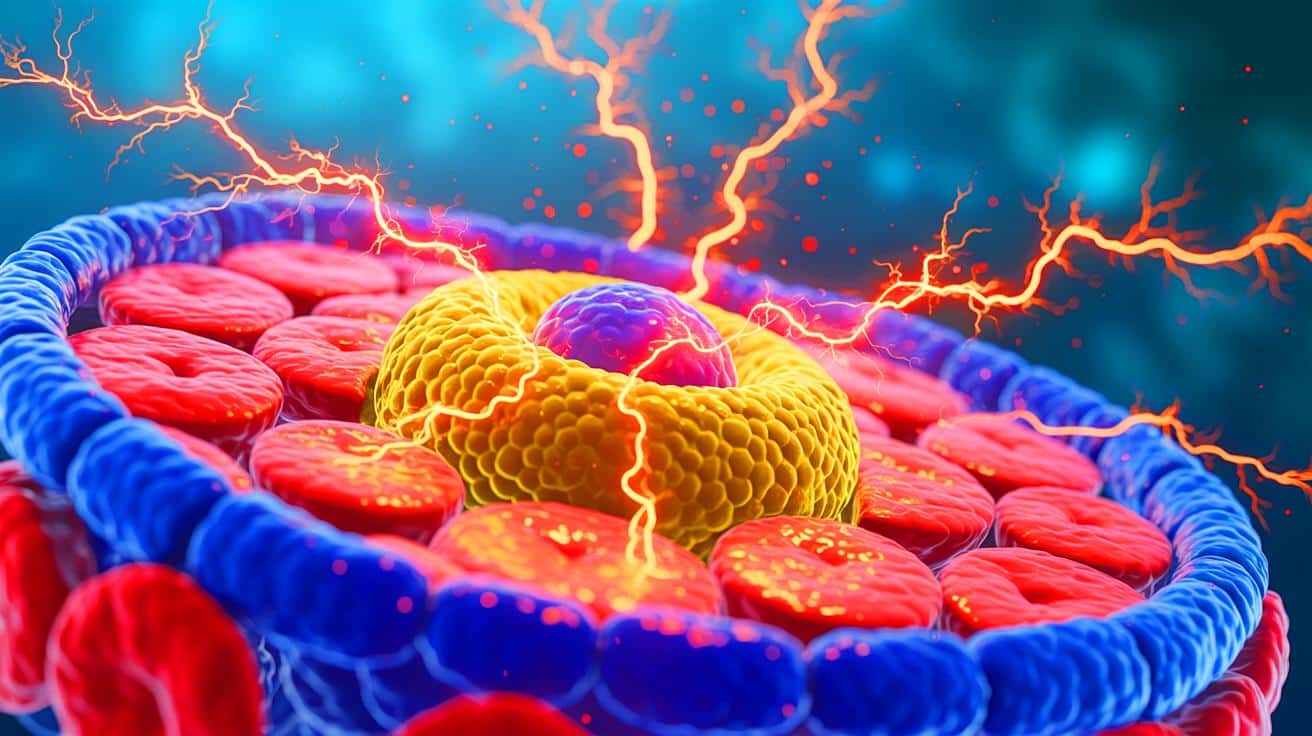
In a groundbreaking study, scientists have unveiled a theoretical framework that explains how living cells can generate electricity autonomously. Central to this revelation is the cell membrane, a dynamic boundary that not only protects but also facilitates communication within the cell. This new understanding posits that the constant motion and reshaping of the cell membrane can produce significant electrical effects. The research, led by Pradeep Sharma and his team, uses a mathematical model to illustrate how cellular physical forces interact with biological processes, potentially transforming our understanding of cellular communication and energy generation.
The Science Behind Cellular Electricity
The study highlights the intricate processes within living cells that contribute to electrical generation. At the core of this phenomenon is the cell membrane, a flexible structure that constantly undergoes movement due to various biological activities. Proteins within the cell are in perpetual motion, altering shapes, interacting with molecules, and engaging in chemical reactions. These activities are driven by ATP hydrolysis, a process where cells break down adenosine triphosphate to release energy. This biological activity exerts pressure on the cell membrane, causing it to bend and ripple.
This ongoing movement of the membrane leads to a phenomenon known as flexoelectricity. Flexoelectricity occurs when the deformation of a material results in an electrical response. In living cells, the bending of the membrane creates an electrical difference between the cell’s interior and exterior. This discovery provides a new perspective on how living cells might harness internal energy, opening doors for further research into cellular electricity generation.
Voltage Levels Comparable to Neural Signals
One of the most intriguing aspects of the study is the magnitude of the electrical voltages generated across the cell membrane. The framework reveals that these voltages can reach up to 90 millivolts, a level similar to the voltage changes observed in neurons during electrical signaling. This similarity suggests a potential link between the physical processes in regular cells and the communication methods used by nerve cells.
Notably, the timing of these voltage shifts aligns closely with the typical action potential curves seen in neurons, occurring within milliseconds. This correlation hints at the possibility that the same physical principles underlying cellular electricity could also influence neural communication. Such insights could revolutionize our understanding of how nerve cells convey information and interact within the nervous system.
Ion Movement and Membrane Dynamics
The implications of the study extend to how ions, which are electrically charged atoms, move within cells. Normally, ions travel along electrochemical gradients, flowing from areas of high concentration to low concentration. However, the new model predicts that the electrical voltages generated by membrane movements can drive ions in the opposite direction, defying natural gradients.
This counterintuitive ion movement is linked to specific properties of the membrane, including its stretchiness and response to electric fields. These properties dictate the direction ions move and the type of charge they carry. Such insights could have profound implications for understanding cellular signaling and maintaining cellular balance, potentially influencing future research in cell biology and medical science.
Expanding the Framework to Tissues and Materials
The researchers propose that this framework is not limited to individual cells but can be expanded to encompass tissues. By applying the principles of cellular electricity to groups of cells, scientists can explore how coordinated membrane activity might lead to larger-scale electrical patterns across tissues. This could offer a physical foundation for understanding complex biological processes like sensory perception and neuronal firing.
Moreover, the study suggests that these mechanisms might inspire the development of bio-inspired materials and technologies. By mimicking the electrical behavior of living tissue, researchers could design systems that replicate the dynamic and intelligent properties of biological organisms. This intersection of biology and material science holds the potential to revolutionize fields ranging from neuroscience to material engineering, paving the way for innovative applications in medicine and technology.
The discovery of electricity generation within living cells could transform our understanding of cellular functions and communication. By unraveling the intricate processes that drive cellular electricity, scientists have opened new pathways for research in biology, neuroscience, and material science. The potential applications of this knowledge are vast, from advancing our comprehension of neural activity to inspiring the design of intelligent materials. As researchers delve deeper into these phenomena, what other mysteries of cellular life might they uncover, and how could these insights shape the future of science and technology?



Wow, this is mind-blowing! Cells generating electricity? What’s next, turning lemons into batteries? 🍋🔋
Wow, cells generating electricity? What’s next, solar-powered cats? 😸
This is fascinating! How long until we see practical applications in medicine?
Are there any potential health risks associated with this cellular electricity generation?
Does this mean our bodies are tiny power plants? 🤔
Great article! Very informative. Thank you for sharing this groundbreaking research!
Thank you for such an enlightening article! It’s fascinating to learn how much we still don’t know about our own cells.
Can this electricity generation process be replicated outside living cells?
I’m skeptical. How can we be sure these electrical effects aren’t just theoretical?
Are there any potential drawbacks or risks associated with this discovery?
Is this the beginning of human batteries like in The Matrix? 😂
Does this mean we might someday charge our phones with a handshake? 🤝📱
Will this new understanding of cellular electricity impact neurological studies?