



| IN A NUTSHELL |
|
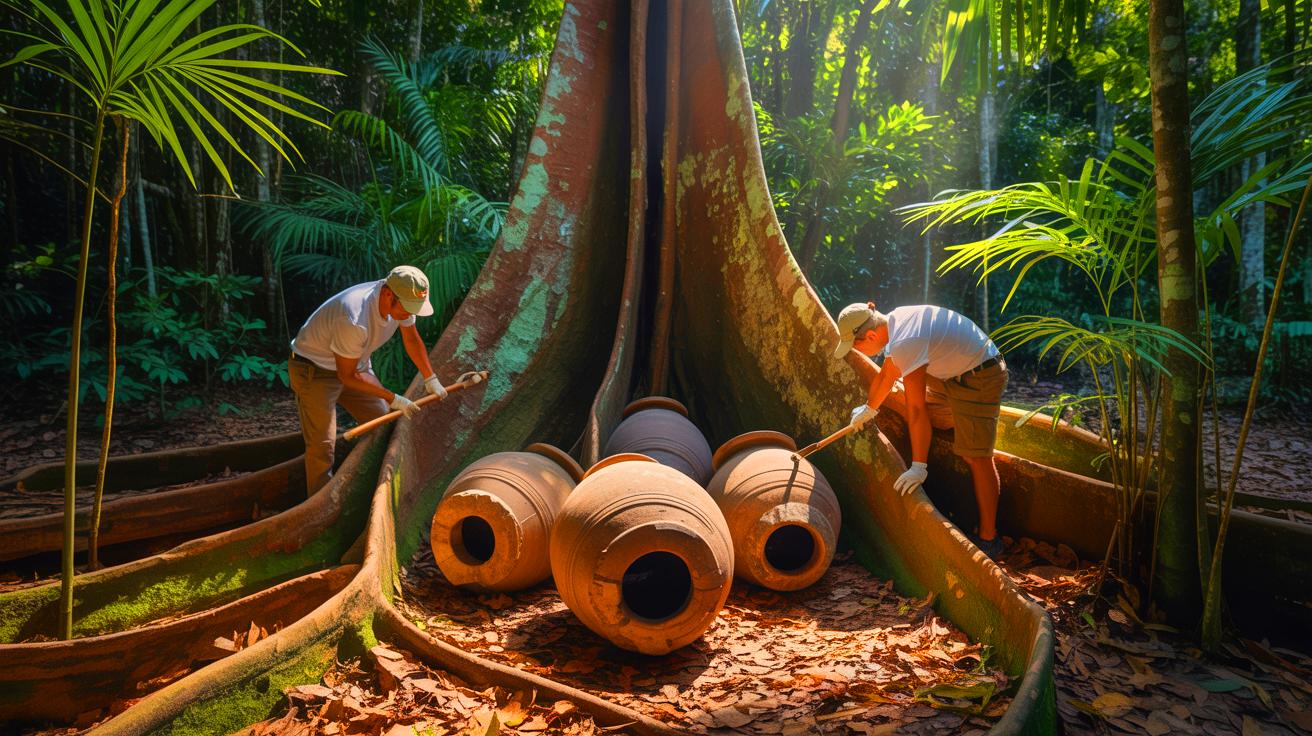
The discovery of seven massive ceramic urns in the Brazilian Amazon has captivated archaeologists and historians alike, offering a unique glimpse into the lives of ancient Indigenous communities. Unearthed beneath the roots of a fallen tree near Fonte Boa, Brazil, these urns contain human remains along with fish and turtle bones, indicating complex funerary practices. This extraordinary find, led by a team from the Mamirauá Institute for Sustainable Development, challenges previous perceptions of Amazonian life and highlights the profound connection these communities had with their environment. As the research unfolds, these urns continue to reveal the rich cultural heritage of the Amazon.
The Discovery of Ancient Ceramic Urns
The unearthing of the seven ceramic urns in the Brazilian Amazon marks a significant milestone in archaeological research. These urns, some reaching three feet in diameter and weighing up to 770 pounds, were found buried 16 inches beneath the surface of a floodplain. The discovery challenges existing narratives about Amazonian societies, shedding light on their funerary customs and daily lives. Led by archaeologist Márcio Amaral, the team from the Mamirauá Institute meticulously uncovered the urns, revealing their intricate craftsmanship and the potential use of organic materials for sealing.
Geórgea Layla Holanda, a researcher on the team, noted that the urns were likely situated beneath domestic floors rather than in designated cemeteries. This suggests that the urns played a vital role in the everyday life and cultural practices of the ancient communities. The lack of visible ceramic lids further indicates that organic materials, now decomposed, were used to cover these urns. This practice underscores the importance of these artifacts in understanding the social and cultural dynamics of the Amazon’s ancient inhabitants.
The Strategic Location: Floodplains and Elevated Settlements
The location of the urns in a region characterized by raised platforms or artificial islands is of particular significance. Indigenous peoples in this area created these platforms to elevate their homes above seasonal floods, a practice known as the Polychrome Tradition. These elevated settlements, observed along the Solimões and Negro rivers, provided protection from rising waters and a stable base for community activities. The discovery of the urns in such a setting highlights the advanced environmental understanding and strategic planning of these ancient societies.
Archaeologists have long recognized the importance of these elevated settlements, which reflect a harmonious relationship with the environment. The urns’ burial at a depth matching domestic floors suggests a seamless integration of funerary practices into daily life. This finding reinforces the idea that the Amazon was not just a wilderness but a well-managed and inhabited region, where communities adapted to and shaped their surroundings with remarkable ingenuity.
The Challenging Process of Extraction and Preservation
The extraction of these fragile urns was a complex and collaborative effort. Due to their size and delicate nature, the team employed meticulous strategies to ensure their preservation. Archaeologist Márcio Amaral described the extraction process as an unprecedented endeavor, requiring scaffolding made of wood and vines to carefully reach the urns nestled within the tree’s root ball. The team’s precision and patience were crucial in preventing damage during the extraction.
Once stabilized with plaster bandages and wooden cradles, the urns were transported to the Mamirauá Institute’s laboratory in Tefé, approximately 118 miles away. This careful operation exemplifies the dedication of the research team to preserving these cultural treasures for future study. The successful extraction and preservation of the urns ensure that they remain intact for further analysis, offering invaluable insights into the ancient societies that once thrived in the Amazon.
Insights into Funerary Practices and Rituals
The contents of the urns provide a fascinating window into the funerary practices of the ancient Amazonian people. Alongside human remains, the presence of fish and turtle bones suggests the possibility of ritual offerings or feasting as part of the funeral rites. In many South American Indigenous cultures, such offerings were believed to assist the deceased in their journey to the afterlife, highlighting the interconnectedness of individuals and their communities.
This discovery sheds light on a multistep funerary process, where bones were often cleaned and reburied after initial exposure. The inclusion of animal remains points to a complex ritualistic practice, potentially involving symbolic gestures to honor the deceased and emphasize the continuity of life. These insights contribute to a broader understanding of the cultural and spiritual beliefs that shaped the lives of Amazonian societies.
A Unique Blend of Amazonian Ceramic Traditions
The ceramic urns found at this site represent a distinctive blend of Amazonian ceramic traditions. Unlike typical regional urns with angular designs, these are rounder and lack visible ceramic lids. The use of a rare greenish clay raises intriguing questions about the possibility of an undocumented local ceramic tradition or a unique community style within a broader network of trade and cultural exchange.
Amazonian ceramics have evolved over time, reflecting shifts in social, cultural, and environmental contexts. The polychrome styles popularized around A.D. 750 are characterized by intricate painted designs, with some features shared by the Cochila urns. However, the distinctiveness of these urns suggests a localized tradition that may not align with established phases of Amazonian ceramic history. This discovery invites further exploration into the diverse artistic and cultural expressions of ancient Amazonian societies.
As archaeologists continue to analyze the ceramic urns and their contents, the significance of this discovery becomes increasingly evident. The urns offer a unique perspective on the lives and beliefs of ancient Amazonian societies, challenging existing narratives and deepening our understanding of the region’s cultural heritage. How will this remarkable find reshape our knowledge of the Amazon’s past and its enduring influence on present-day cultural practices?



Wow, 770 pounds! How did they even manage to move those urns without breaking them? 🤯
Wow, 770 pounds is massive! How did they manage to move these urns without breaking them? 🤯
Could the lack of lids on these urns imply something significant about their burial customs?
Thank you for sharing this fascinating discovery. It’s amazing how much we can learn from ancient cultures.
This is a fascinating discovery! It’s amazing to think about the cultural practices of ancient Amazonian societies. Thanks for sharing!
I’m curious about the greenish clay. Is it found elsewhere in the Amazon?
Did they carbon date the urns to determine their exact age?
Are there any plans to display these urns in a museum? I’d love to see them in person!
They found turtle bones in the urns? Sounds like a unique burial tradition!
Is it possible these urns were part of a larger ritual site yet to be discovered?
Could the presence of animal bones indicate some form of sacrificial ritual? 🤔
Discovery beneath a tree? Just goes to show that nature still holds many secrets! 🌳
I wonder if these urns were used over multiple generations.
Great article! The history of the Amazon is richer than I imagined.
Great article, but I wish there were more images of the urns. Visuals would really help bring the story to life!
Why are they calling them “death urns”? Sounds so ominous! 😬