




| IN A NUTSHELL |
|
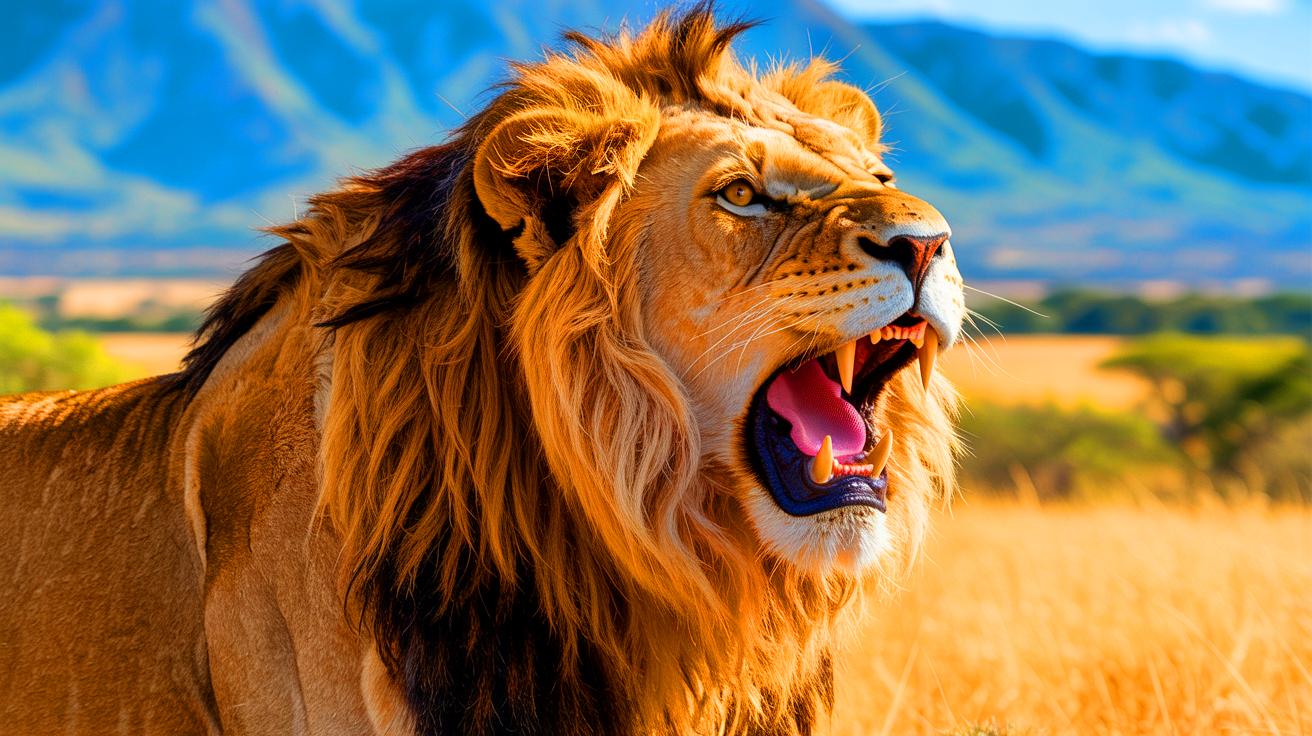
Recent discoveries have unveiled that African lions possess a vocal repertoire more complex than previously understood, utilizing two distinct types of roars. This breakthrough, achieved through the application of artificial intelligence (AI), has the potential to significantly enhance the methods conservationists use to study and protect these majestic creatures. Researchers at the University of Exeter have identified a unique “intermediary roar” that complements the well-known full-throated roar. This finding marks a pivotal moment in lion conservation efforts, offering new insights into the communication and monitoring of these big cats.
Revolutionizing Lion Monitoring with AI
The University of Exeter’s groundbreaking study, published in the journal Ecology and Evolution, represents the first successful application of AI to categorize lion roars. The AI system demonstrated an impressive 95.4 percent accuracy rate, setting a new standard for objectivity in animal monitoring. Prior to this, the identification of lion roars heavily depended on expert judgment, which could introduce human biases. By reducing subjective interpretations, AI offers a more reliable tool for conservationists.
This technological advancement is particularly significant given the precarious status of lion populations. The International Union for Conservation of Nature (IUCN) lists lions as vulnerable, with current estimates indicating that only 20,000 to 25,000 wild lions remain in Africa. This number has halved over the past 25 years, highlighting the urgent need for more effective conservation strategies. By enabling more accurate tracking of individual lions, AI can play a crucial role in efforts to halt and reverse this decline.
Unraveling the Complexity of Lion Roars
The newly identified “intermediary roar” significantly alters previous perceptions of lion vocalizations. For years, the full-throated roar was thought to be the sole vocal expression of lions. The recognition of a second type of roar not only enriches our understanding of lion communication but also aligns with similar findings in other large carnivores, such as spotted hyenas. These discoveries underscore the expanding role of bioacoustics in ecological research.
Bioacoustics, the study of sound production and perception in animals, proves invaluable as researchers push the boundaries of ecological science. By identifying individual animals through their unique vocal signatures, bioacoustics provides a non-invasive method for monitoring wildlife populations. As the field advances, it holds promise for improving conservation efforts across various species, not just lions.
Implications for Conservation Practices
With the advent of machine learning, the research team at the University of Exeter has advanced the ability to distinguish individual lions by their roars. This automated approach streamlines passive acoustic monitoring, offering a more dependable alternative to traditional methods like spoor surveys or camera trapping. Such techniques are often labor-intensive and subject to environmental limitations.
Lead author Jonathan Growcott emphasized the need for a paradigm shift in wildlife monitoring, advocating for large-scale adoption of passive acoustic techniques. As bioacoustics technologies evolve, they are expected to become vital tools in the conservation of lions and other threatened species. The ability to accurately identify and monitor individual animals can inform conservation strategies, enabling targeted actions to protect vulnerable populations.
Collaboration and Support Behind the Breakthrough
This study was a collaborative effort involving the University of Exeter, the Wildlife Conservation Unit at the University of Oxford, Lion Landscapes, the Frankfurt Zoological Society, TAWIRI (Tanzania Wildlife Institute for Research), and TANAPA (Tanzania National Parks Authority). Computer scientists from both Exeter and Oxford played a key role in developing the AI system.
Funding for the project was provided by the Lion Recovery Fund, WWF Germany, the Darwin Initiative, and the UKRI AI Centre for Doctoral Training in Environmental Intelligence. These partnerships and financial support underscore the importance of interdisciplinary collaboration in advancing conservation science. By pooling resources and expertise, these organizations aim to create sustainable solutions for protecting lions and other wildlife.
The unveiling of the intermediary roar marks a significant leap forward in understanding lion communication and monitoring. This discovery, powered by AI, promises to reshape conservation practices, providing more accurate and efficient methods for tracking these iconic animals. As bioacoustic technologies continue to advance, they hold the potential to transform how we approach wildlife conservation. What other hidden aspects of animal behavior could AI help uncover in the future?



Wow, who knew lions had such complex vocal chords? 🦁
Wow, AI is helping lions now? That’s roarsome! 🦁
How do they know the AI accuracy is 95.4%? Seems oddly specific. 🤔
Is it possible that AI could misidentify other animal sounds as lion roars? 🤔
Does this mean we might find similar vocal patterns in other big cats?
Great article! This could really change conservation strategies. 🌍
This is groundbreaking. Thank you for sharing such insightful research!
Is this AI tool accessible for other conservation efforts?
Fascinating study! I had no idea lions could have more than one type of roar.
Great article! But how does the AI actually distinguish between the roars?
95.4% accuracy? That’s impressive, but what about the other 4.6%?
The lion’s intermediary roar sounds like an epic middle note in a song!
Will this technology be used in zoos too?
I wonder if this tech could be applied to other animals like elephants or dolphins?
AI is everywhere these days, even in the jungle! 🌿
This study must have cost a fortune! Who funded it?
Why did it take so long to discover a new roar? Haven’t we been studying lions forever?