



| IN A NUTSHELL |
|
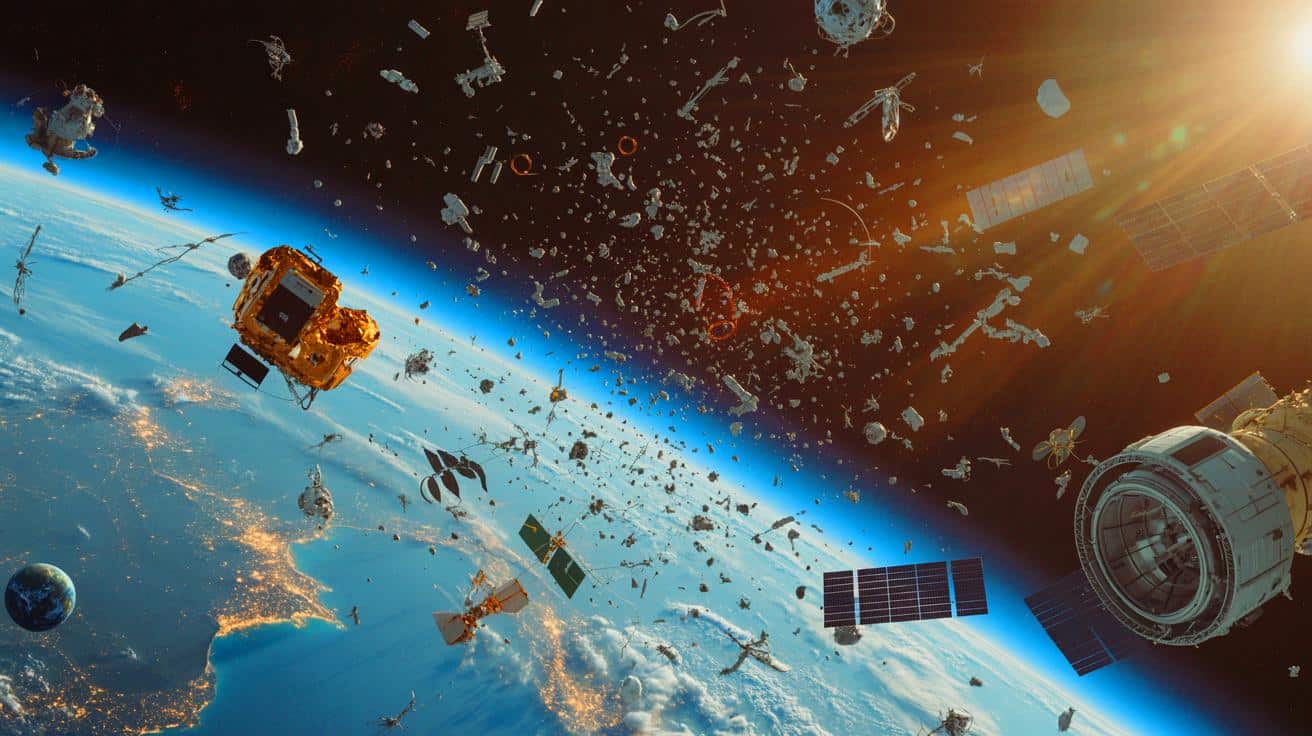
As humanity’s fascination with space exploration continues to grow, so does the unintended consequence of our ventures beyond Earth. The terrestrial orbit is rapidly becoming a vast, uncontrolled landfill. The remnants of seven decades of space exploration now circle our planet at breakneck speeds exceeding 15,500 miles per hour. These include everything from rocket fragments to defunct satellites and miscellaneous space debris. The European Space Agency tracks over 40,000 pieces larger than four inches, yet countless smaller fragments drift uncontrolled. This accumulation of debris poses a significant threat to current and future space operations, raising the crucial question: can we reclaim control over Earth’s orbit, or is it too late?
Space: The Growing Orbital Junkyard
Earth’s orbit has become an enormous, weightless junkyard. While some of these materials eventually burn up upon re-entering the Earth’s atmosphere, those located over 620 miles above the surface may remain for centuries. This presents a significant hazard, even to the International Space Station (ISS), which operates at approximately 250 miles altitude. NASA reports that the ISS has had to adjust its trajectory over 30 times since 1999 to avoid potential collisions with debris, a frequency that is only increasing.
The challenge is exacerbated by the absence of operational cleanup methods that match the urgency of the situation. Although several debris removal projects are underway, even the largest space agencies find themselves overwhelmed by the scale of the problem. These initiatives are often costly and risky, leading to growing interest in remote solutions that can decelerate or deorbit debris without physical contact. However, the current lack of effective measures highlights the pressing need for international cooperation and innovation in addressing this escalating issue.
“They’ve Been Hiding This Monster”: Student Discovers 23 Foot Killer Dinosaur In Museum Storage
Japan’s Innovative Solution to Orbital Debris
One promising approach to the debris problem comes from Japan. Kazunori Takahashi, a researcher at Tohoku University, has proposed an innovative concept involving a small debris-cleaning satellite. This satellite is equipped with a bidirectional plasma engine capable of emitting two opposing jets of ionized gas. The first jet exerts a gentle push on the debris, slowing it down and guiding it into the lower atmosphere for destruction. The opposite jet creates an equal force to maintain the satellite’s trajectory, preventing it from being knocked off course.
Although still in the experimental phase, Takahashi’s prototype has demonstrated effectiveness in a vacuum chamber simulating space conditions. While the concept is theoretically feasible, it requires years of testing, funding, and in-orbit validation before it can be deployed. This technology represents a critical step toward addressing the safety and ethical concerns of space operations, especially as the number of orbital launches is set to increase. The urgency of implementing such solutions cannot be overstated, as the risk of reaching a point of no return looms large.
F-Sync Wins 2025 Red Dot Design Award in Brands & Communication Category
The Perils of Inaction
The implications of failing to address space debris are profound. As Donald J. Kessler warned in 1978, the cascading effect of collisions can render certain orbits unusable for decades or even centuries. This “Kessler Syndrome” would not only jeopardize future space missions but could also impact the growing megaconstellations of satellites, such as SpaceX’s Starlink and Amazon’s Project Kuiper. The continued expansion of space activities highlights the urgency for a coordinated international effort to mitigate orbital pollution.
Despite ongoing research and innovative proposals, the lack of immediate, large-scale solutions means that the problem continues to escalate. If left unchecked, the increasing debris could pose insurmountable challenges to the exploration and commercialization of space. The responsibility lies with both government and private entities to prioritize the development and implementation of effective debris management strategies. The time to act is now, before the opportunity for remediation is lost.
Challenges and the Path Forward
The path to a sustainable orbital environment is fraught with challenges. High costs, technological hurdles, and international coordination are just a few of the obstacles that must be overcome. However, the potential benefits of addressing the debris crisis are immense. Developing and deploying effective cleanup technologies could safeguard critical infrastructure, protect valuable satellites, and ensure the continued exploration of space.
While solutions like Takahashi’s plasma propulsion system are promising, they represent just one piece of a complex puzzle. A comprehensive approach involving policy changes, technological innovation, and global collaboration is essential. As we look to the stars, the question remains: how will humanity rise to the challenge of preserving the final frontier for future generations?
As our reliance on satellite technology grows, so does the necessity of managing the space debris crisis. The risks associated with inaction are too great to ignore. Will the global community come together to safeguard the future of space exploration, or will we allow the orbital environment to become an insurmountable barrier? The answer will determine the future trajectory of humanity’s journey beyond Earth.




Wow, I had no idea space junk was such a big issue! 🚀 Thanks for shedding light on this.
Wow, I had no idea space was becoming such a junkyard! Is there any realistic hope for cleaning it up? 🤔
Great article! It’s alarming to think about the long-term effects of all that trash in orbit. Thanks for raising awareness!
Isn’t this just another scare tactic to get funding for space agencies? 🤔
If the space debris issue is so severe, why isn’t there more international collaboration to address it?
This sounds like a plot from a sci-fi movie. Are we really at risk of losing access to space because of junk?
Great article! How can individuals contribute to solving the space debris problem?
Why aren’t more governments stepping up and funding these cleanup projects?
Are there any international agreements currently in place to tackle space junk?
So what happens if we reach the point of no return? Is it game over for space exploration? 😨
Interesting read. But how feasible are these plasma propulsion satellites in the grand scheme of things?
This is terrifying! Are we really at risk of losing access to space?
Is it possible to recycle some of that space debris and put it to good use?