


Close Menu
  • Last News
    • Cities
    • Climate
    • Energy
    • Impact
    • Markets
    • Opinions
    • Policy
    • Reports
    • Research
  • About Us
  • Advertise
  • Contact Us

Subscribe to Our Newsletter

News, investigations, and analysis — our top stories every morning to start your day right.

Trending
learn effective methods to measure your personal sustainability impact and make mindful choices for a greener future.
How to measure your personal sustainability impact
explore the growth of sustainable investments and green finance, highlighting their impact on the global economy and the shift towards environmentally responsible financial practices.
The rise of sustainable investments and green finance
Region Trade Bank Strengthens Governance as Sustainable Finance Places Greater Emphasis on Institutional Integrity
Facebook X (Twitter) LinkedIn YouTube TikTok
Sustainability Times
Facebook X (Twitter) LinkedIn YouTube TikTok
Subscribe
  • Featured
  • Cities

    The Hidden Carbon Cost of Construction Projects (And Why Better Planning Matters More Than You Think)

    05/13/2026
    explore the future of sustainability in urban development, focusing on innovative strategies and technologies shaping eco-friendly and resilient cities.

    The future of sustainability in urban development

    02/24/2026
    Illustration of a vertical farm in Beijing showcasing sustainable urban agriculture practices.

    “China Just Built Farm Skyscraper”: Beijing Greenhouse Grows Food In 37,673 Square Feet While Solar Panels Power Vertical Agriculture Revolution

    09/30/2025
    Illustration of Trojena Ski Resort's futuristic design in the Saudi Arabian desert.

    “We’re Building Winter Olympics in Pure Desert”: Saudi Arabia’s Trojena Ski Resort Hosts 2029 Asian Games Without Natural Snow

    09/09/2025
    Illustration of the historic Kiruna Church being relocated on self-propelled transporters to its new site in Sweden.

    “Sweden Moved a 700-Ton Church”: Historic Kiruna Building Traveled 3.1 Miles on Robot Transporters While King Watched the Journey

    09/03/2025
  • Climate

    The Hidden Carbon Cost of Construction Projects (And Why Better Planning Matters More Than You Think)

    05/13/2026
    explore the vital link between sustainability and climate change, understanding how sustainable practices can help mitigate environmental impact and promote a healthier planet.

    The connection between sustainability and climate change

    04/07/2026

    How to Turn ESG Commitments into Real Results in Oil & Gas: Mikhail Zubkov on Implementing Practical Solutions

    02/24/2026

    Sustainability in Action—How Straight Six Auto Parts Is Revolutionising Automotive Recycling

    01/05/2026
    Illustration of glaciers retreating due to rising global temperatures.

    New Forecast Reveals When Thousands of Glaciers Will Disappear, Highlighting Urgent Need for Climate Action

    12/20/2025
  • Energy

    How bio-LNG is transforming the maritime sector

    06/29/2026
    explore how technology is accelerating sustainability innovations, driving eco-friendly solutions and creating a greener future for our planet.

    How technology is driving sustainability innovations

    03/24/2026

    How to Turn ESG Commitments into Real Results in Oil & Gas: Mikhail Zubkov on Implementing Practical Solutions

    02/24/2026
    explore the vital role of renewable energy in promoting sustainability and reducing environmental impact for a greener future.

    The role of renewable energy in achieving sustainability

    01/27/2026

    How Ilnar Iakhin’s Practical Field Innovations Are Reducing the Environmental Footprint of Gas Production

    12/19/2025
  • Impact
    learn effective methods to measure your personal sustainability impact and make mindful choices for a greener future.

    How to measure your personal sustainability impact

    07/14/2026

    Region Trade Bank Strengthens Governance as Sustainable Finance Places Greater Emphasis on Institutional Integrity

    06/30/2026
    explore sustainable packaging options designed to reduce environmental impact and promote eco-friendly practices for a greener future.

    Sustainable packaging options to reduce environmental impact

    06/30/2026
    explore how circular economy models promote sustainability by reducing waste, conserving resources, and fostering eco-friendly innovation.

    How circular economy models support sustainability

    06/23/2026
    discover practical tips and actions individuals can take at home to support sustainability and contribute to a greener planet.

    What individuals can do to support sustainability at home

    06/09/2026
  • Markets
    explore the growth of sustainable investments and green finance, highlighting their impact on the global economy and the shift towards environmentally responsible financial practices.

    The rise of sustainable investments and green finance

    07/07/2026
    Switzerland’s regulated online gambling ecosystem is built on strict licensing rules, ensuring that only ESBK-approved casinos tied to land-based establishments can legally operate.

    Are Online Casinos Legal in Switzerland? Understanding the Current Regulatory Framework

    11/21/2025
    Illustration of the abrupt halt of a major lithium mine in China impacting global markets.

    “One Mine Shut Down and Prices Exploded”: CATL Halts Major Chinese Lithium Operation Sending Global Markets Into Chaos

    09/11/2025
    Illustration of the massive iron ore deposit discovered in the Pilbara region of Western Australia.

    Geologists Iron Find Worth $6 Trillion Sparks Geopolitical Firestorm As US-China Trade Rivalry Reaches Unprecedented Flashpoint

    08/24/2025
    Illustration of a colossal 55 billion-ton iron ore deposit discovery in Western Australia. Image generated by AI.

    Worldwide Panic as Monumental Geological Find Disrupts Global Trade and Triggers Market Turmoil on Every Continent

    06/04/2025
  • Opinions
    discover the essentials of sustainability and corporate social responsibility, exploring their impact on businesses and society for a better future.

    Sustainability and corporate social responsibility explained

    04/21/2026

    The Hidden Risks of Nepotism and Conflicts of Interest in Corporate Governance

    03/19/2026

    Sustainability, Family Offices, and Private Equity: A Powerful Alignment for Long-Term Impact

    08/05/2025

    Preserving Heritage While Innovating: How AI is Reshaping Design for a Sustainable Future

    07/23/2025

    Factories Without Real-Time Carbon Data Are Flying Blind: Why MES Must Become the Carbon Control Tower

    07/23/2025
  • Policy
    explore the crucial role of governments in advancing sustainability policies to protect the environment, promote social equity, and ensure economic growth for future generations.

    Role of governments in promoting sustainability policies

    06/16/2026
    explore effective strategies to promote sustainability through education, empowering communities to adopt eco-friendly practices and foster environmental awareness.

    Ways to promote sustainability through education

    03/10/2026
    Illustration of the NUMO Ground Robot Deployed by Ukraine for Military Operations.

    “It’s Doing the Dangerous Work for Us”: This Ukrainian Combat Robot Redefines the Battlefield (and It’s Already Saving Soldiers’ Lives)

    10/15/2025
    Illustration of NATO aircraft participating in the Steadfast Noon nuclear deterrence exercise.

    “You Can Feel the Tension in the Air”: This NATO Nuclear Exercise Sparks Unease Across Europe (and Leaders Call It ‘Routine’)

    10/15/2025
    Illustration of China's newly constructed underground military command center near Beijing.

    “Analysts Warn of Escalation”: Satellite Images Expose China Building World’s Largest Underground Military Command Hub To Counter US Power And Regional Rivals

    10/03/2025
  • Reports
    explore the latest trends and innovative solutions driving sustainability in the food industry, from eco-friendly practices to cutting-edge technologies reshaping the future of food production.

    Sustainability in the food industry: trends and solutions

    06/02/2026

    New Study Finds Drip Irrigation Can Cut Coffee’s Carbon Footprint by Nearly 60%

    05/13/2026
    explore the top sustainable development goals to prioritize in 2026 and learn how to make a meaningful impact towards a greener, more equitable future.

    Top sustainable development goals to focus on in 2026

    04/28/2026

    MFC Asset Management Steps Up Its ESG Agenda

    09/24/2025
    Illustration of naval aviators in training during the Top Gun program.

    “We Push Them Until They Break”: Top Gun Training Forces Pilots Through 7.5 Gs While National Geographic Films

    09/21/2025
  • Research
    Illustration of ancient marine super predators dominating the complex food chains of the Cretaceous period.

    Ancient Super Predators Ruled Oceans: New Discoveries Challenge Our Understanding of Marine Life’s Evolutionary Past

    12/20/2025

    How Ilnar Iakhin’s Practical Field Innovations Are Reducing the Environmental Footprint of Gas Production

    12/19/2025
    Illustration of the body's distinct molecular systems for detecting cold on the skin and internally.

    Your Body’s Cold Sensations: Revealing the Dual Ways Temperature Affects Us and What It Means for Comfort

    12/19/2025
    Illustration of the digital reconstruction of a 1.5-million-year-old Homo erectus face from the DAN5 fossil.

    Scientists Reveal 1.5-Million-Year-Old Human Face, Unveiling New Clues to Our Ancient Ancestry

    12/18/2025
    Illustration of ancient pottery featuring plant motifs reflecting early mathematical thinking.

    Ancient Art Reveals How Early Humans Used Math Concepts 8,000 Years Ago Without Numbers

    12/18/2025
Sustainability Times
Home - Climate - Marine life is fleeing the equator to cooler waters. Mass extinction could follow

Marine life is fleeing the equator to cooler waters. Mass extinction could follow

Eirwen WilliamsEirwen Williams04/12/20210
Share Twitter Facebook LinkedIn Telegram WhatsApp Email Copy Link
Follow Us
Google News
(photo: PxHere)
Share
Twitter Facebook LinkedIn WhatsApp Email Copy Link

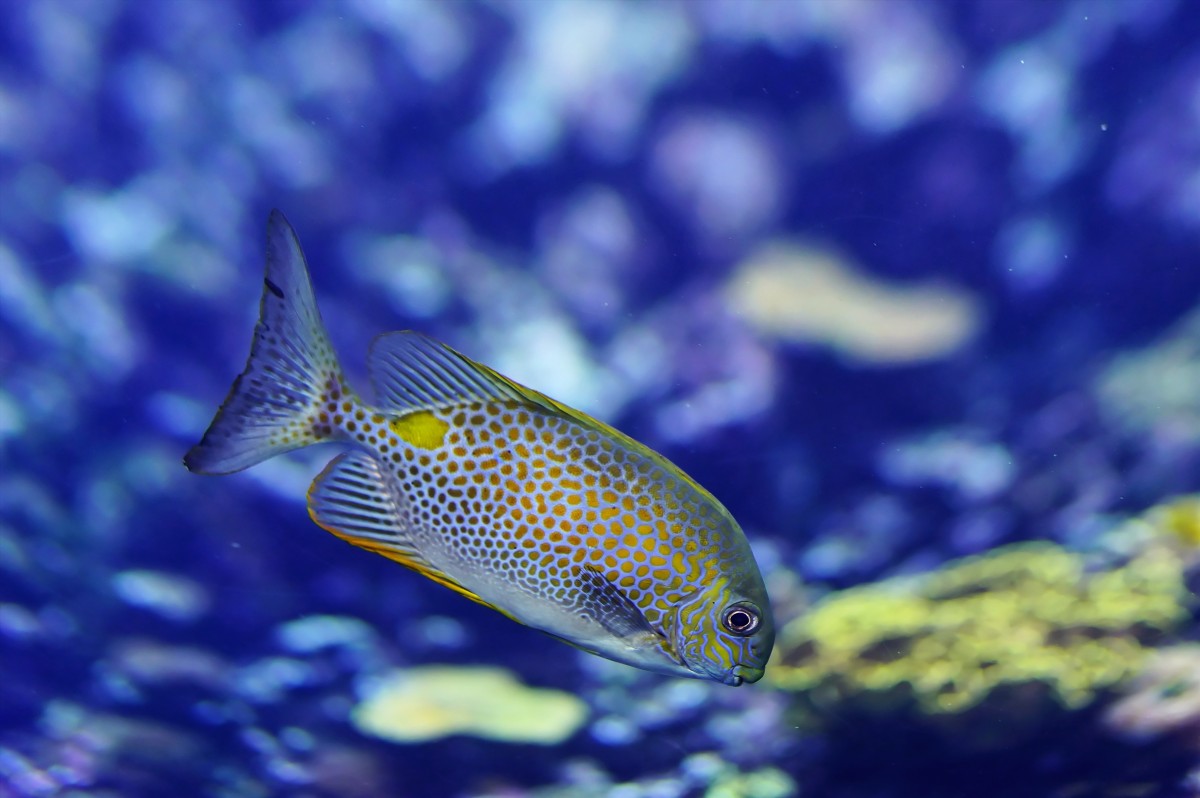
The tropical water at the equator is renowned for having the richest diversity of marine life on Earth, with vibrant coral reefs and large aggregations of tunas, sea turtles, manta rays and whale sharks. The number of marine species naturally tapers off as you head towards the poles.

Ecologists have assumed this global pattern has remained stable over recent centuries — until now. Our recent study found the ocean around the equator has already become too hot for many species to survive, and that global warming is responsible.

In other words, the global pattern is rapidly changing. And as species flee to cooler water towards the poles, it’s likely to have profound implications for marine ecosystems and human livelihoods. When the same thing happened 252 million years ago, 90% of all marine species died.

The bell curve is warping dangerously

This global pattern — where the number of species starts lower at the poles and peaks at the equator — results in a bell-shaped gradient of species richness. We looked at distribution records for nearly 50,000 marine species collected since 1955 and found a growing dip over time in this bell shape.
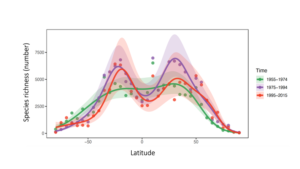
If you look at each line in this chart, you can see a slight dip in total species richness between 1955 and 1974. This deepens substantially in the following decades. (image: Anthony Richardson)

So, as our oceans warm, species have tracked their preferred temperatures by moving towards the poles. Although the warming at the equator of 0.6℃ over the past 50 years is relatively modest compared with warming at higher latitudes, tropical species have to move further to remain in their thermal niche compared with species elsewhere.

As ocean warming has accelerated over recent decades due to climate change, the dip around at the equator has deepened. We predicted such a change five years ago using a modelling approach, and now we have observational evidence.

For each of the 10 major groups of species we studied (including pelagic fish, reef fish and molluscs) that live in the water or on the seafloor, their richness either plateaued or declined slightly at latitudes with mean annual sea-surface temperatures above 20℃.

Today, species richness is greatest in the northern hemisphere in latitudes around 30°N (off southern China and Mexico) and in the south around 20°S (off northern Australia and southern Brazil).

This has happened before

We shouldn’t be surprised global biodiversity has responded so rapidly to global warming. This has happened before, and with dramatic consequences.

252 million years ago…

At the end of the Permian geological period about 252 million years ago, global temperatures warmed by 10℃ over 30,000-60,000 years as a result of greenhouse gas emissions from volcano eruptions in Siberia.

A 2020 study of the fossils from that time shows the pronounced peak in biodiversity at the equator flattened and spread. During this mammoth rearranging of global biodiversity, 90% of all marine species were killed.

125,000 years ago…

A 2012 study showed that more recently, during the rapid warming around 125,000 years ago, there was a similar swift movement of reef corals away from the tropics, as documented in the fossil record. The result was a pattern similar to the one we describe, although there was no associated mass extinction.

Authors of the study suggested their results might foreshadow the effects of our current global warming, ominously warning there could be mass extinctions in the near future as species move into the subtropics, where they might struggle to compete and adapt.

Today…

During the last ice age, which ended around 15,000 years ago, the richness of forams (a type of hard-shelled, single-celled plankton) peaked at the equator and has been dropping there ever since. This is significant as plankton is a keystone species in the foodweb.

Our study shows that decline has accelerated in recent decades due to human-driven climate change.

The profound implications

Losing species in tropical ecosystems means ecological resilience to environmental changes is reduced, potentially compromising ecosystem persistence.

In subtropical ecosystems, species richness is increasing. This means there’ll be species invaders, novel predator-prey interactions, and new competitive relationships. For example, tropical fish moving into Sydney Harbour compete with temperate species for food and habitat.
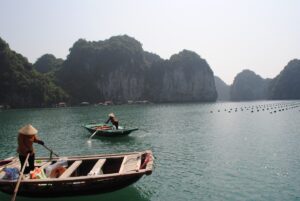
The migration of wish from warmer waters could have grave impacts for fisheries in tropical nations. (photo: PxHere)

This could result in ecosystem collapse — as was seen at the boundary between the Permian and Triassic periods — in which species go extinct and ecosystem services (such as food supplies) are permanently altered.

The changes we describe will also have profound implications for human livelihoods. For example, many tropical island nations depend on the revenue from tuna fishing fleets through the selling of licenses in their territorial waters. Highly mobile tuna species are likely to move rapidly toward the subtropics, potentially beyond sovereign waters of island nations.

Similarly, many reef species important for artisanal fishers — and highly mobile megafauna such as whale sharks, manta rays and sea turtles that support tourism — are also likely to move toward the subtropics.

The movement of commercial and artisanal fish and marine megafauna could compromise the ability of tropical nations to meet the Sustainable Development Goals concerning zero hunger and marine life.

Is there anything we can do?

One pathway is laid out in the Paris Climate Accords and involves aggressively reducing our emissions. Other opportunities are also emerging that could help safeguard biodiversity and hopefully minimise the worst impacts of it shifting away from the equator.

Currently 2.7% of the ocean is conserved in fully or highly protected reserves. This is well short of the 10% target by 2020 under the UN Convention on Biological Diversity.

But a group of 41 nations is pushing to set a new target of protecting 30% of the ocean by 2030.

This “30 by 30” target could ban seafloor mining and remove fishing in reserves that can destroy habitats and release as much carbon dioxide as global aviation. These measures would remove pressures on biodiversity and promote ecological resilience.

Designing climate-smart reserves could further protect biodiversity from future changes. For example, reserves for marine life could be placed in refugia where the climate will be stable over the foreseeable future.

We now have evidence that climate change is impacting the best-known and strongest global pattern in ecology. We should not delay actions to try to mitigate this.

This article was written by Anthony Richardson, a professor at the University of Queensland; Chhaya Chaudhary, an expert at the University of Auckland; David Schoeman, professor of global-change ecology at the University of the Sunshine Coast; and Mark John Costello, a professor at the University of Auckland. It is republished from The Conversation under a Creative Commons license. Read the original article.

Subscribe to Our Newsletter

News, investigations, and analysis — our top stories every morning to start your day right.

Climate Change Fisheries Natural preservation
Follow on Google News Follow on X (Twitter)
Share. Facebook Twitter LinkedIn Telegram WhatsApp Email Copy Link
Previous ArticleOne sip can kill: The new battles over paraquat pesticides
Next Article The built-in resilience of corals could help them survive climate change
Eirwen Williams
  • X (Twitter)

Eirwen Williams is a New York-based journalist at Sustainability Times, covering science, climate policy, sustainable innovation, and environmental justice. With a background in journalism acquired through a specialized program in New York, he explores how cities adapt to a warming world. With a focus on people-powered change, his stories spotlight the intersection of activism, policy, and green technology. Contact : [email protected]

Keep Reading

The Hidden Carbon Cost of Construction Projects (And Why Better Planning Matters More Than You Think)

discover the essentials of sustainability and corporate social responsibility, exploring their impact on businesses and society for a better future.

Sustainability and corporate social responsibility explained

explore the vital link between sustainability and climate change, understanding how sustainable practices can help mitigate environmental impact and promote a healthier planet.

The connection between sustainability and climate change

Add A Comment

Comments are closed.

Subscribe to Our Newsletter

News, investigations, and analysis — our top stories every morning to start your day right.

Trending
learn effective methods to measure your personal sustainability impact and make mindful choices for a greener future.
How to measure your personal sustainability impact
explore the growth of sustainable investments and green finance, highlighting their impact on the global economy and the shift towards environmentally responsible financial practices.
The rise of sustainable investments and green finance
Region Trade Bank Strengthens Governance as Sustainable Finance Places Greater Emphasis on Institutional Integrity
News by category
  • Featured
  • Cities
  • Climate
  • Energy
  • Impact
  • Markets
  • Opinions
  • Policy
  • Reports
  • Research
Information
  • About Us
  • Meet the Team
  • Advertise
  • Contact Us
  • Legal Mentions
  • Privacy Policy

Subscribe to Our Newsletter

News, investigations, and analysis — our top stories every morning to start your day right.

Facebook X (Twitter) LinkedIn YouTube TikTok
© Sustainability-Times.com. All rights reserved.

Type above and press Enter to search. Press Esc to cancel.