




| IN A NUTSHELL |
|
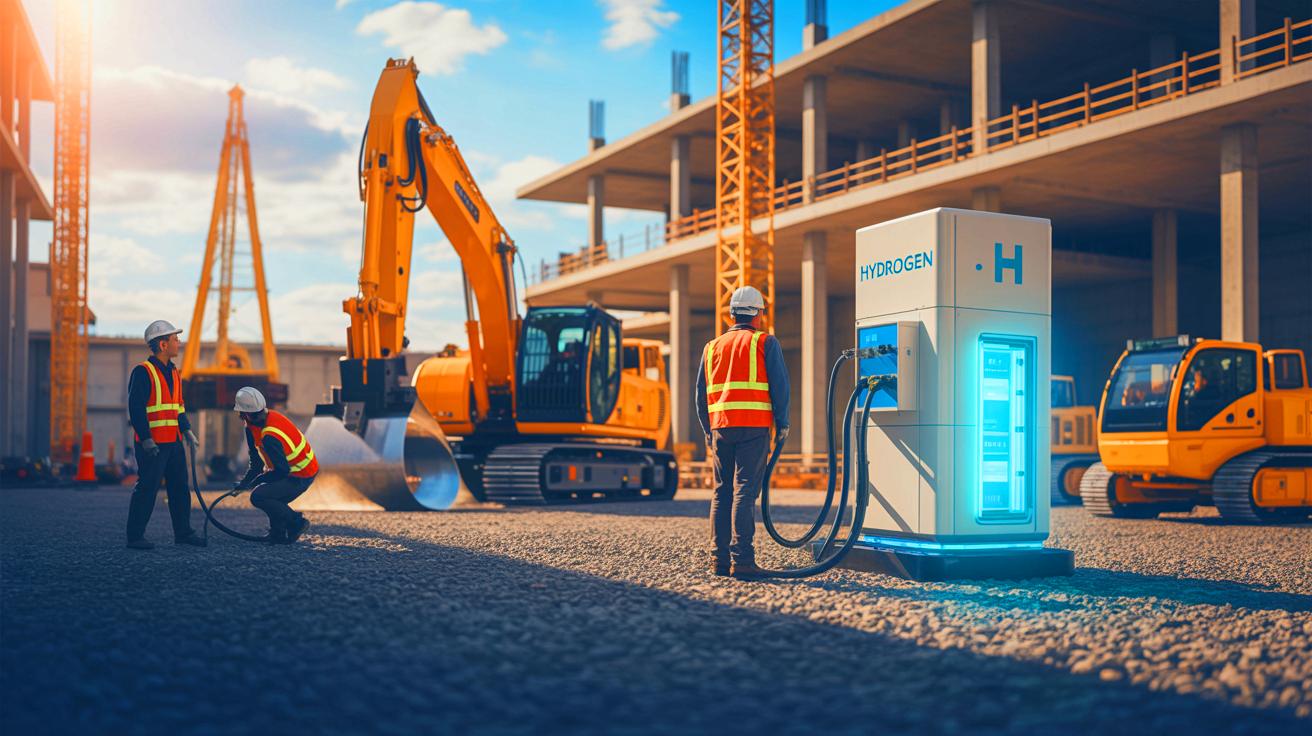
The construction industry is undergoing a significant transformation as it seeks to reduce its environmental impact. At the forefront of this change is the adoption of hydrogen fuel cells, which promise a cleaner alternative to diesel generators traditionally used on construction sites. The HS2 project in the United Kingdom serves as a prime example of this shift, demonstrating the potential of hydrogen technologies to transform the sector. As companies like GeoPura lead the charge in renewable hydrogen production, the industry faces both promising opportunities and significant challenges. This article explores the rise of hydrogen fuel cells in construction, their innovative applications, and the economic hurdles that must be overcome.
The Rise of Hydrogen Fuel Cells in Construction
Hydrogen fuel cells are emerging as a viable alternative to conventional energy sources in the construction sector. Pioneered by companies such as GeoPura, these fuel cells aim to replace diesel generators, known for their high carbon emissions. By offering a clean and efficient energy source, hydrogen fuel cells have the potential to significantly decarbonize one of the world’s most polluting industries. However, the transition has not been straightforward. The year 2024 saw several hydrogen-focused companies facing financial difficulties, casting doubt on the scalability of this technology.
Despite these setbacks, the HS2 project in the United Kingdom offers a beacon of hope. As a massive infrastructure endeavor, it utilizes hydrogen fuel cells to power its construction sites, showcasing the potential for integrating these technologies into large-scale projects. The environmental benefits of hydrogen are clear, but widespread adoption depends on overcoming economic and logistical challenges. As the industry navigates these hurdles, the promise of a cleaner future remains compelling.
Innovative Energy Solutions at the HS2 Site
The HS2 Victoria Road construction site in London exemplifies the potential of hydrogen fuel cells as an energy solution. At this site, two seemingly modest white containers house hydrogen fuel cells that power the entire construction operation. This setup represents a revolutionary approach to achieving emission-free construction. Hydrogen, often heralded as the fuel of the future, is the most abundant element in the universe and offers three times more energy than gasoline. When burned, it releases only water, making it an ideal candidate for powering heavy industries like construction.
Hydrogen’s role in the HS2 project illustrates its viability in real-world settings, providing a glimpse into a sustainable future for construction.
https://www.sustainability-times.com/energy/us-officials-admit-cranes-blot-out-the-sun-as-europes-hydrogen-megaproject-surges-ahead-to-become-largest-construction-zone-on-the-planet/
As the construction sector seeks to reduce its carbon footprint, the adoption of hydrogen fuel cells at sites like HS2 could pave the way for broader implementation across the industry. The potential for hydrogen to revolutionize construction practices is immense, but it will require continued innovation and investment.
GeoPura’s Vision and Business Model
GeoPura, in collaboration with Siemens Energy Ventures, is leading the charge in hydrogen innovation. Established in 2019, the company focuses on producing renewable hydrogen in the UK and supplying it to hydrogen power units (HPUs) for use at construction sites and events. GeoPura’s ambitious plan includes expanding its fleet to 3,600 HPUs by 2033 and investing in green hydrogen production facilities.
This strategy underscores GeoPura’s dedication to fostering a zero-emission construction industry. The company’s business model centers on the efficient production and distribution of hydrogen, making it accessible for various applications. As the costs associated with hydrogen production continue to decrease, the economic feasibility of these solutions becomes more apparent. By driving down costs and increasing accessibility, GeoPura is helping pave the way for a cleaner construction landscape.
Economic Challenges and Future Prospects
Despite the promise of hydrogen, its deployment in the construction sector faces substantial economic hurdles. One of the main obstacles is the high cost of hydrogen compared to traditional diesel generators. Additionally, the logistics involved in hydrogen production and distribution add layers of complexity to its adoption. However, these challenges are not insurmountable. Initiatives like those led by GeoPura are working to reduce production costs, and ongoing technological advancements are paving the way for a less polluting construction industry.
As hydrogen technologies advance, the construction sector may soon experience a green revolution.
The critical question is how quickly these changes can be implemented and what impact they will have on the industry’s carbon footprint. The potential for hydrogen as a clean energy source is undeniable, but the path to widespread adoption will require overcoming significant economic and logistical challenges.
The potential of hydrogen as a clean energy source for construction is undeniable. With projects like HS2 leading the way, the industry is gradually shifting towards more sustainable practices. However, the road to widespread hydrogen adoption is fraught with challenges, particularly economic ones. As we look to the future, the question remains: will hydrogen fuel cells transform the construction industry, and what new innovations will emerge along the way?


Wow, I never thought hydrogen could be used like this! 🚀
How will the high costs of hydrogen production be overcome?
GeoPura’s vision sounds ambitious. Can they really pull it off?
This is exciting! When can we expect hydrogen to become more mainstream in construction?
Wouldn’t it be easier to improve battery storage technology instead? 🤔
Great article, thanks for sharing this insightful information!