



| IN A NUTSHELL |
|
The construction industry is undergoing a significant transformation as it seeks to reduce its environmental impact. Hydrogen fuel cells are emerging as a viable alternative to diesel generators, offering a cleaner and more sustainable energy source. The HS2 project in the United Kingdom is a prime example of how hydrogen technology is being integrated into large-scale construction efforts. However, despite its promise, the adoption of hydrogen in construction faces economic and logistical hurdles that must be addressed. This article explores the rise of hydrogen fuel cells, the innovations at the HS2 site, GeoPura’s vision, and the economic challenges that lie ahead.
The Rise of Hydrogen Fuel Cells in Construction
Hydrogen fuel cells are becoming increasingly popular in the construction industry as companies seek to reduce their carbon footprint. Unlike diesel generators, which emit significant amounts of carbon dioxide, hydrogen fuel cells offer a clean alternative. Pioneered by companies like GeoPura, these cells are designed to power construction sites without the harmful emissions associated with traditional generators. However, the path to widespread adoption has not been easy. In 2024, several hydrogen-focused companies faced challenges, sparking concerns about the technology’s scalability.
Despite these setbacks, the HS2 project in the UK demonstrates the potential of hydrogen fuel cells in large-scale construction. This ambitious project uses hydrogen technology to power its construction sites, showcasing how such innovations can be integrated into major infrastructure efforts. The promise of hydrogen in the construction sector is vast, but its success depends on overcoming economic and logistical barriers.
Innovative Energy Solutions at the HS2 Site
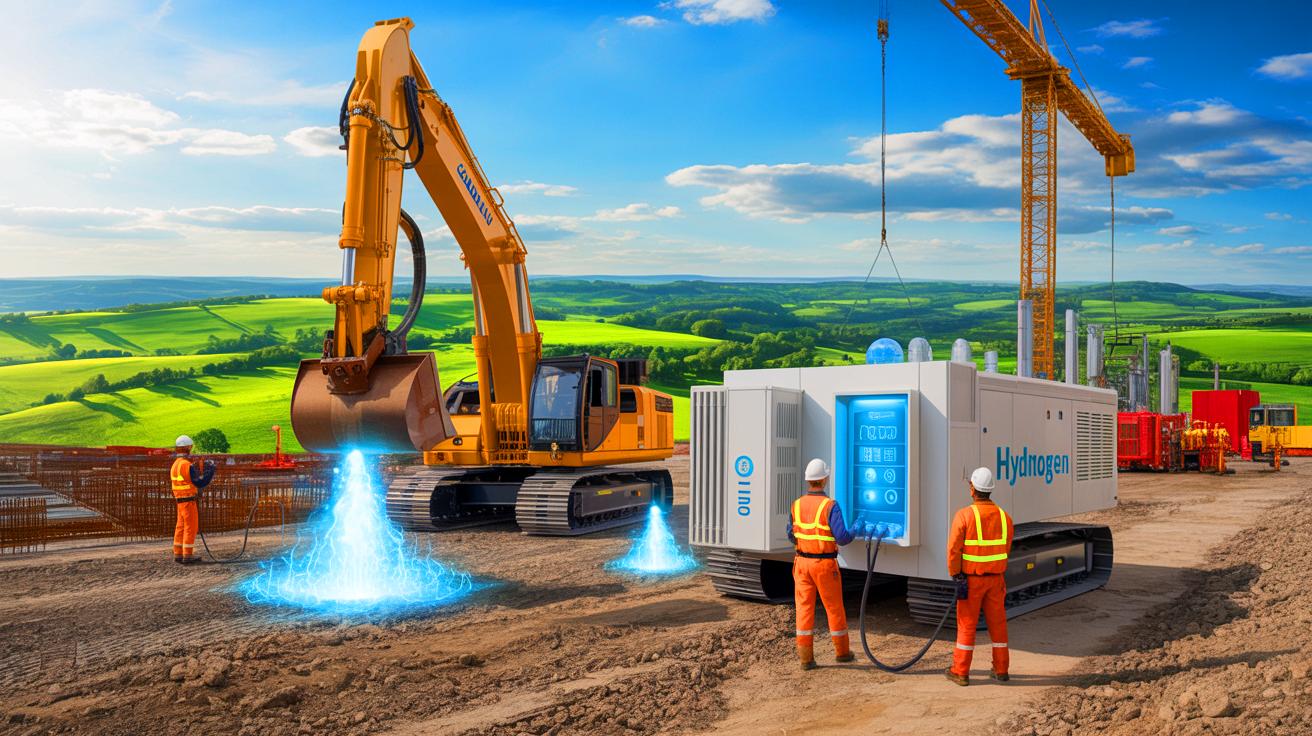
The HS2 Victoria Road construction site in London is a pioneering example of hydrogen fuel cells in action. Beneath a web of conveyor systems, two white containers quietly supply the site’s energy needs. These containers house hydrogen fuel cells, offering a revolutionary energy solution that could lead to emission-free construction. Hydrogen, being the most abundant element, offers three times more energy than gasoline and releases only water when combusted, making it a prime candidate for heavy industries.
The HS2 project illustrates the practical application of hydrogen technology, providing a glimpse into a future where construction is sustainable and environmentally friendly. As the industry moves toward cleaner practices, hydrogen fuel cells are poised to play a crucial role in powering construction activities while minimizing environmental impact.
GeoPura’s Vision and Business Model
GeoPura, alongside Siemens Energy Ventures, is leading the charge in hydrogen innovation. Established in 2019, GeoPura focuses on producing renewable hydrogen in the UK and supplying it to hydrogen power units (HPUs) used in construction and events. With ambitious plans to expand its fleet to 3,600 HPUs by 2033, the company is committed to promoting a zero-emission construction industry.
GeoPura’s business model emphasizes efficient hydrogen production and distribution, making it more accessible for various applications. As hydrogen production costs decrease, the economic viability of these solutions becomes clearer, bringing the construction industry closer to a cleaner, more sustainable future.
Economic Challenges and Future Prospects
Despite its potential, hydrogen adoption in construction faces significant economic challenges. The high cost of hydrogen compared to diesel remains a primary barrier. Additionally, the logistics of hydrogen production and distribution add complexity to its implementation. However, these obstacles are not insurmountable. Companies like GeoPura are driving down production costs, and ongoing innovations are paving the way for a greener construction industry.
As more companies invest in hydrogen technologies, the sector may soon experience a green revolution. The critical question is how quickly these changes can be implemented and their impact on the industry’s carbon footprint. The future of hydrogen in construction is promising, but it requires continued investment and innovation to overcome the challenges ahead.
The potential of hydrogen as a clean energy source for construction is undeniable. With projects like HS2 leading the way, the industry is steadily shifting toward more sustainable practices. Yet, the journey to widespread hydrogen adoption is fraught with challenges, particularly economic ones. As we look to the future, the question remains: will hydrogen fuel cells transform the construction industry, and what new innovations will emerge along the way?

Wow, $134 billion! That’s a lot of money for a hydrogen project. Is it really worth it? 🤔
How can other countries replicate the UK’s hydrogen success?
This sounds like a game-changer for the construction industry. 🔧
Can hydrogen really replace diesel on such a large scale?
The economic challenges sound daunting. Will they be overcome?
GeoPura’s strategy is impressive. Hope they succeed! 💪
It’s about time we see a shift towards sustainable energy in construction.
How long until we see hydrogen fuel cells in everyday construction sites?
I’m skeptical. How reliable is hydrogen compared to diesel?
With such a project in Europe, how will the U.S. respond?
Love the focus on reducing carbon footprints. 🌱
Are there any safety concerns with using hydrogen on construction sites?
Awesome initiative! Way to go, Europe! 🇪🇺
When will the U.S. catch up with such innovative energy solutions?
GeoPura’s vision sounds ambitious. Can they really achieve zero-emission construction by 2033?
GeoPura and Siemens seem like a powerful partnership. Can they lead the hydrogen revolution?
What are the logistical hurdles mentioned in the article?
Is this the beginning of the end for fossil fuels in construction?
The sheer scale of this project is mind-blowing! 😲
I’m curious how these hydrogen fuel cells work exactly. 🤔
Hope to see more projects like HS2 around the world soon.
This is a bold move. How long until we see results?
Great article! More awareness on hydrogen tech is needed. 👏
How do hydrogen fuel cells compare to solar or wind energy for construction?
What role does government policy play in the adoption of hydrogen?
Hydrogen might be the future, but is it the present? 🤷♂️
How sustainable is the production of hydrogen itself?
Are there any environmental downsides to using hydrogen?
The potential is enormous, but will it live up to the hype?
I’m hopeful but cautious about this hydrogen megaproject. 😬
I’m all for clean energy, but how will they address the high cost of hydrogen?
Looking forward to seeing how this impacts global construction trends.
Europe leads the way again! Will others follow? 🌍
Finally, some good news for the environment! 🌍
Does this mean diesel generators will become obsolete soon?
What are the potential risks associated with hydrogen fuel cells?
Thank you for shedding light on this groundbreaking project!
Why is the U.S. in shock? Shouldn’t we have seen this coming already?
Hydrogen fuel cells seem too good to be true. What’s the catch?
I’m excited to see how the HS2 project unfolds. 🚄