


| IN A NUTSHELL |
|
In the quest for clean energy, hydropower dams stand out as potential powerhouses when paired with floating solar technology. However, the fluctuating water levels of reservoirs present a significant challenge to the stability and efficiency of these solar installations. Enter the Tension Buoy, a self-adjusting mooring system developed by Fred. Olsen 1848. This innovative design offers a promising solution to the longstanding issue of maintaining consistent tension in mooring lines, potentially unlocking vast amounts of renewable energy capacity from hydropower reservoirs worldwide.
Revolutionizing Floating Solar Stability
The integration of solar panels on bodies of water is not a novel concept, but the execution has often been fraught with technical difficulties. Traditional mooring systems used to anchor floating solar platforms have struggled to adapt to the dynamic nature of water levels in reservoirs. As water levels rise and fall, these systems can become either too taut or too slack, leading to inefficiencies and potential damage.
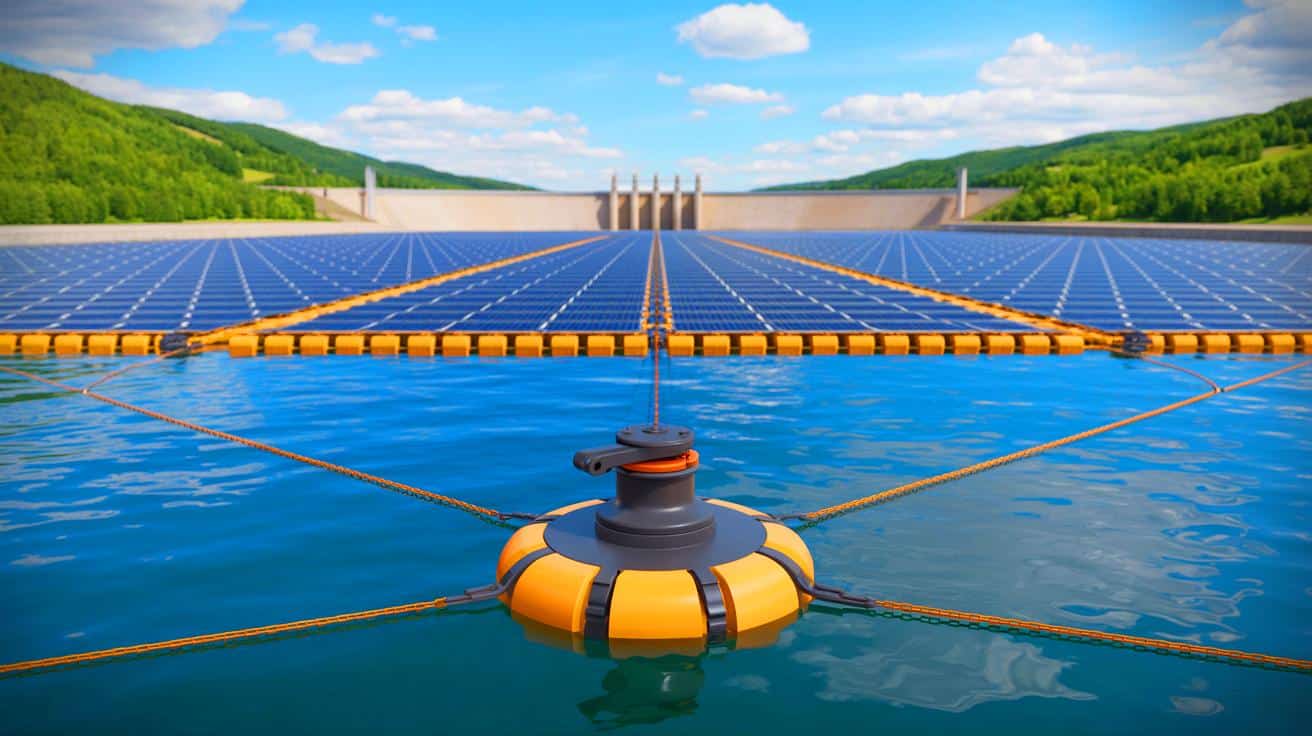
The Tension Buoy addresses this challenge head-on. Its design includes a compact winch mechanism that automatically adjusts the length of the mooring chain. This ensures that the tension remains constant despite fluctuations in water level. By routing the chain through the buoy and using a gypsy wheel, the system maintains a balance that prevents unnecessary strain or slack.
The simplicity of the Tension Buoy’s design is one of its most striking features. It eliminates the need for manual adjustments and reduces maintenance demands, making it a practical solution for long-term use. This innovation not only stabilizes floating solar installations but also extends their operational lifespan and efficiency.
Unlocking Potential on Hydro Reservoirs
Hydropower reservoirs are abundant and offer vast surfaces for solar arrays, yet they have remained underutilized due to engineering challenges. The Tension Buoy system changes this narrative by allowing solar installations to adapt to the water’s ebb and flow seamlessly. This adaptability is crucial in maintaining the stability and efficiency of solar platforms.
With the Tension Buoy, floating solar arrays can remain securely anchored, minimizing downtime and reducing the risk of component damage. This innovation enables the installation of solar panels in locations previously deemed unsuitable. It also offers the opportunity to maximize energy output by combining solar generation during daylight with hydropower at night or during cloudy conditions.
The potential synergy between solar and hydropower on a single site is significant. It presents a more balanced and reliable renewable energy solution, capable of providing consistent power supply regardless of weather conditions. This hybrid approach could significantly contribute to global renewable energy goals by making better use of existing hydropower infrastructure.
Enhancing Global Renewable Energy Adoption
The introduction of the Tension Buoy could accelerate the global adoption of floating solar technologies. By overcoming one of the sector’s most pressing challenges, this system encourages the deployment of solar arrays on hydropower reservoirs, transforming them into productive clean-energy assets.
Fred. Olsen 1848’s innovation represents a crucial step forward in renewable energy technology. By ensuring that mooring systems can automatically adjust to changing water levels, the Tension Buoy enhances the resilience and reliability of solar-hydro hybrid projects. This is particularly important in regions where water levels are subject to significant seasonal changes.
Moreover, the Tension Buoy supports the broader goal of integrating different renewable energy sources. By facilitating the coexistence of solar and hydropower, it helps create more flexible and sustainable energy systems. This integration is essential for meeting the increasing global demand for clean energy while reducing reliance on fossil fuels.
A Look Toward the Future
The successful implementation of the Tension Buoy system could pave the way for other innovations in renewable energy. As more regions adopt this technology, it will be important to monitor its impact on energy production and infrastructure stability. The potential for this system to transform underutilized water surfaces into energy-generating sites is immense.
As the world continues to seek sustainable energy solutions, the Tension Buoy’s role in enhancing the viability of floating solar installations cannot be overstated. Its ability to adapt to changing environmental conditions makes it a vital tool in the transition to cleaner energy sources. The question remains: How will this technology continue to evolve, and what other innovations might it inspire in the quest for a more sustainable future?

Wow, this is a game-changer! 🌞 How soon can we expect this tech to be widely adopted?
Wow, this is a game changer for renewable energy! 🌞
Interesting read, but how does it hold up in extreme weather conditions? 🌩️
How does the Tension Buoy handle extreme weather conditions?
I love the idea of combining solar and hydropower. Truly innovative!
This sounds promising, but what about the cost implications? 💸
Does this mean we might see solar panels on more lakes and reservoirs soon?
I’m skeptical. What’s the cost comparison between this system and traditional solar farms?
Finally, a solution for fluctuating water levels! Kudos to Fred. Olsen 1848.
Finally something that makes floating solar panels practical. Thank you, Fred. Olsen 1848!
Can this be applied to all types of hydropower dams?
Can these buoys be retrofitted to existing solar installations? 🤔