



| IN A NUTSHELL |
|
In the quiet countryside of southern France, a monumental project is taking shape, poised to redefine the future of energy. The ITER project, an international collaboration dedicated to exploring nuclear fusion, has recently installed a powerful magnet — the Central Solenoid. This magnet is not just any ordinary piece of technology; it is capable of generating a magnetic field strong enough to lift an aircraft carrier. However, its true purpose transcends physical feats, aiming instead to unlock a clean and nearly limitless source of energy. As the world grapples with climate change and energy security, ITER’s success could signal a turning point for sustainable energy.
The Ambition of ITER: Recreating the Energy of Stars
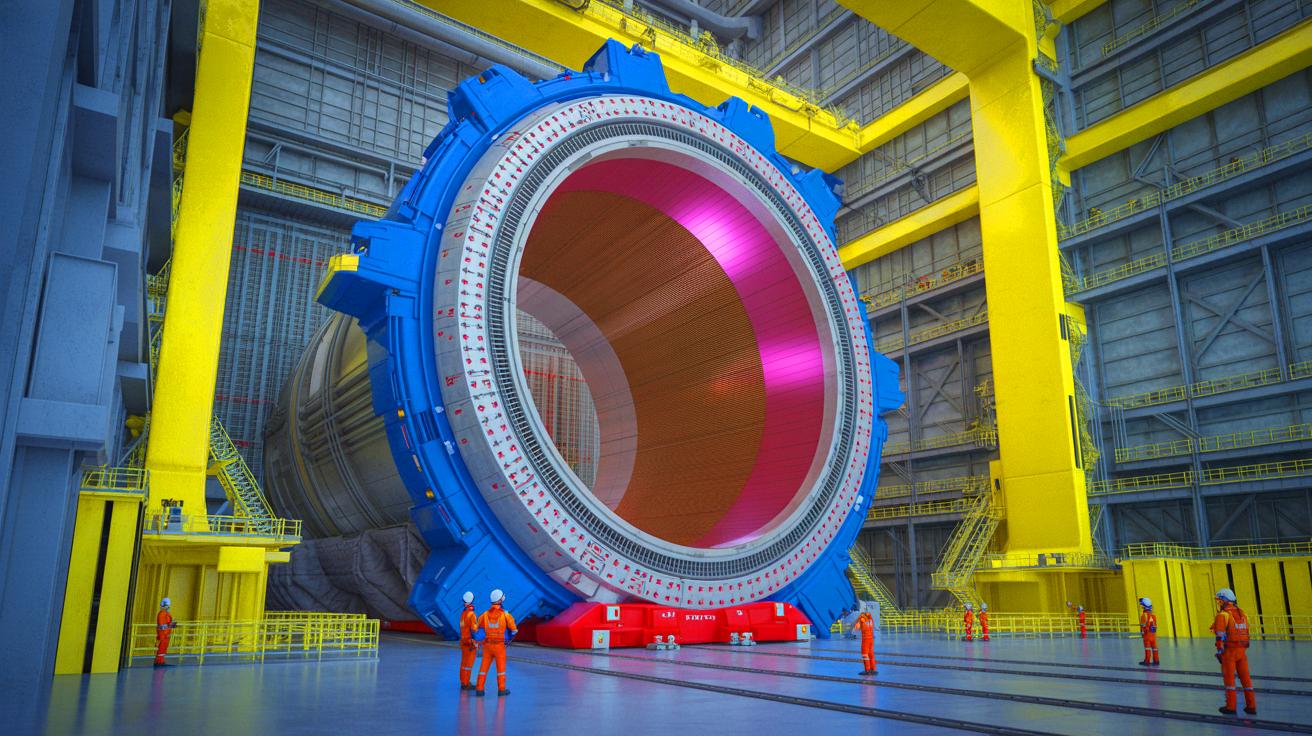
The Central Solenoid is an 18-meter-long cylinder weighing nearly 2.2 million pounds. It generates a magnetic field of 13 teslas, which is approximately 280,000 times the strength of Earth’s magnetic field. This magnet is the heart of the ITER experimental reactor located in Cadarache. It is designed not for military or industrial use but for a far more ambitious mission: containing a plasma heated to millions of degrees. The installation of this solenoid marks a significant milestone in ITER’s construction, a project that has been in the making for several decades.
ITER aims to replicate the nuclear fusion process that powers the sun. Unlike nuclear fission, which is used in current power plants and produces highly radioactive waste, fusion promises a safer, virtually limitless energy source. It relies on abundant fuels such as deuterium and tritium. The Central Solenoid acts as a massive "starter," generating the necessary current to initiate and sustain the plasma inside the tokamak, a donut-shaped vessel where hydrogen atoms collide and fuse. Success in this venture could mark a new era in energy production, significantly reducing our reliance on fossil fuels.
A Global Technological Feat
The realization of ITER's Central Solenoid would not have been possible without global cooperation. The magnet's components were manufactured in the United States by General Atomics and then transported to France for assembly. Each module weighs as much as a commercial airliner and required extreme precision to position. The result is an unprecedented confinement system, marking a first in the history of energy research. According to Phys.org, this project underscores the vital role of international scientific cooperation, with each partner country contributing unique expertise.
This collaboration is a testament to what can be achieved when nations unite for a common goal. The successful integration of these technological components from different parts of the world highlights the importance of shared knowledge and resources. With such cooperation, the ITER project stands as a beacon of hope for future energy solutions, demonstrating the power of collective human ingenuity.
Why This Magnet Is Crucial for the Future
Beyond the technical marvel, the stakes are incredibly high: securing a clean energy source for future generations. While nuclear fusion remains experimental, ITER seeks to demonstrate its feasibility on a large scale. If successful, this technology could, by the latter half of the century, revolutionize electricity production. It offers a future with no coal, no oil, reduced pollution, and diminished energy dependency. As Gamestar notes, this solenoid is the "beating heart" of the future reactor. It is not merely a magnet but a technological key that could open the door to a world where the energy of the stars becomes accessible.
The potential impact on global energy infrastructure is profound. A successful fusion reactor could alleviate many environmental concerns associated with traditional energy sources. By reducing greenhouse gas emissions and fostering energy independence, fusion energy represents a sustainable path forward. As the world faces increasing energy demands, ITER's mission becomes all the more crucial.
The Road Ahead for Fusion Energy
The journey toward practical fusion energy is fraught with challenges, but the potential rewards are immense. As ITER continues to make strides, the world watches with anticipation. The project's success could lay the groundwork for future reactors and a new era of energy production. However, significant technical hurdles remain, and the timeline for achieving commercial fusion energy is still uncertain. As scientists and engineers work tirelessly to overcome these obstacles, the question remains: Can we harness the power of the stars to fuel our future?

Wow, this is like something straight out of a sci-fi movie! 🌟
Wow, a magnet 280,000 times stronger than Earth? That’s some serious power! 🚀
How does the Central Solenoid actually help in achieving nuclear fusion?
How long do scientists predict it will take before fusion energy becomes commercially viable?
Finally, a chance to power my flux capacitor! 😂
This sounds promising, but what are the potential risks involved with using such a powerful magnet? 🤔
This is amazing! But how long until we can actually use this energy in our homes?
What are the environmental impacts of constructing such a massive facility?
Is there any risk of this magnet causing unintended consequences on Earth?
Sounds promising, but I remain skeptical about the timelines. 🤔
Why is it taking so long to make fusion a reality?
Thanks to the team behind this project for pushing the boundaries of what’s possible in energy tech! 🙌
I hope this doesn’t end up being another expensive scientific endeavor with no practical outcome. 😅
How does the collaboration between countries work on a project like this?
Does anyone know how this compares to other fusion projects around the world?
OMG, this could change EVERYTHING! 🌍
The potential is huge, but what’s the catch? There has to be a catch, right?
Can this technology really replace fossil fuels entirely?
Thanks for the article! I’m so excited about the possibilities of fusion energy! ⚡
Did I read that right? A magnet that can lift an aircraft carrier? Incredible!
Great article, but I wonder if this tech will ever be affordable for everyone.
When can we expect the first real-world applications of this technology?
Seems like a long shot, but worth pursuing for the sake of future generations.
Can this be used for military purposes, or is it strictly for energy?
Great, more reasons for people to worry about magnets now. 🤦♂️
Will this finally solve the world’s energy crisis?
The international cooperation aspect is really inspiring. 🌐
Are there any health risks associated with such strong magnetic fields?
It’s exciting but also a bit scary to think about the power we’re dealing with here.
Is there a backup plan if this project doesn’t achieve its goals?
Thanks for the update on ITER! I’ve been following this project for years.
How does nuclear fusion differ from nuclear fission in terms of safety?
What are the chances of this project being completed on time and within budget? 🤨
With all these advancements, should we still invest in renewable energy sources like solar and wind?
How do we ensure that the benefits of this technology reach developing countries?
Can fusion energy help reduce global warming, or is it too late? 🌡️
Exciting stuff! But let’s also hope it doesn’t get into the wrong hands. 🤞
Isn’t nuclear fusion what they used in Spider-Man 2? Hope this doesn’t end the same way! 😅
Thank you for the detailed explanation of the ITER project. Very informative!