




| IN A NUTSHELL |
|
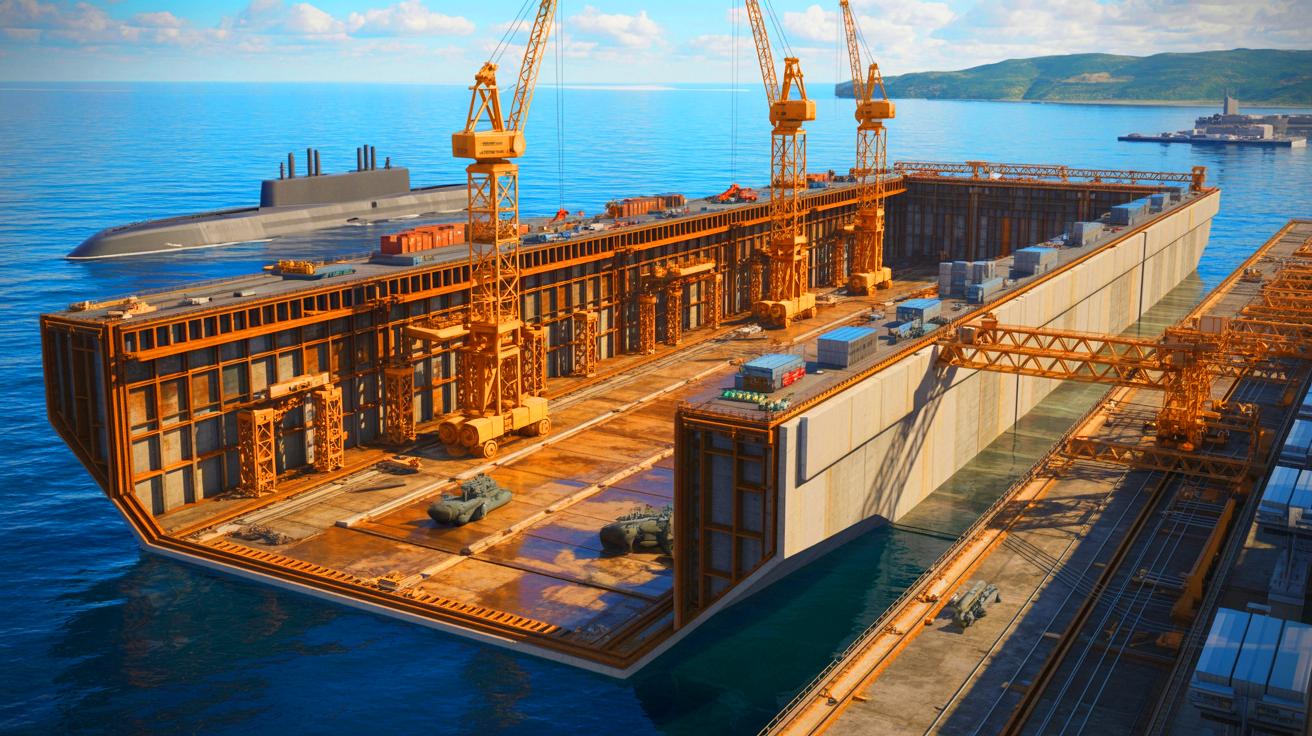
Pearl Harbor, a site etched in American history, is undergoing a significant transformation. The United States Navy is investing $3.4 billion in a new dry dock at the Pearl Harbor Naval Shipyard, aiming to maintain its competitive edge against an increasingly formidable Chinese navy. This project, already one-third complete, represents a crucial upgrade to handle modern nuclear-powered submarines. Set to be completed by 2027, the new Dry Dock 5 is designed to accommodate the latest Virginia-class attack submarines, marking a pivotal shift in naval readiness within the Pacific region. As the U.S. continues to grapple with the strategic challenges posed by global naval powers, this development underscores a renewed commitment to military preparedness.
Pearl Harbor’s WWII Dock: A Legacy and a Transformation
What was once a pivotal component of World War II naval strategy is now being reimagined for the 21st century. The Pearl Harbor Naval Shipyard’s Dry Dock 3, constructed during the Second World War, no longer meets the spatial and structural demands of modern naval vessels. At just 497 feet in length, it cannot accommodate the Navy’s current Virginia-class submarines, which require more robust facilities. In its place, the new Dry Dock 5 emerges, offering a length of 657 feet and a lifespan projected at 150 years. This advanced infrastructure will support the Navy’s newest submarines, ensuring they remain operational and ready for deployment.
The dry dock functions as a three-sided basin where submarines can be serviced. Water is drained from the basin, allowing maintenance crews to access the vessel’s hull. Once repairs are complete, the basin is re-flooded, and the submarine returns to service. This upgrade is part of the Navy’s broader Shipyard Infrastructure Optimization Program, which aims to modernize facilities and enhance operational capabilities across all naval shipyards.
Most Advanced Nuclear Submarines: A Strategic Imperative
As global naval dynamics shift, the United States finds itself in an intense strategic competition with China, whose navy is now the largest in the world by hull count. The urgency for modern infrastructure like Dry Dock 5 is underscored by the need to support America’s nuclear-powered fleet, stationed predominantly at four public shipyards, including Pearl Harbor. These shipyards serve as critical nodes in maintaining the Navy’s operational readiness.
The Virginia-class submarine, a cornerstone of this fleet, measures 377 feet and displaces 7,800 tons. It represents a leap in technological capability compared to its predecessor, the Los Angeles-class submarine. With China rapidly expanding its shipbuilding capacity, the U.S. Navy’s decision to enhance its maintenance facilities at Pearl Harbor is strategic. It ensures that the United States remains capable of sustaining its forward-deployed submarine force, crucial for maintaining a balance of power in the Pacific.
Strategic Location: Pearl Harbor’s Role in U.S. Naval Strategy
Pearl Harbor’s geographical position makes it an indispensable hub for the U.S. Navy. Situated in the central Pacific, it serves as a critical point for submarine operations on the island chain that extends from Alaska to New Zealand. The shipyard’s expansion reflects its strategic importance in the region, supporting both Virginia- and Los Angeles-class submarines that operate from this location.
The expansion of Dry Dock 5 at Pearl Harbor is not merely an infrastructural upgrade; it is a strategic necessity. As tensions mount in the Pacific, the ability to maintain and deploy submarines quickly and efficiently is paramount. This new facility will enhance the U.S. Navy’s operational capabilities, ensuring that it can respond effectively to potential threats from rival navies in the region.
The Future of Naval Readiness
The construction of Dry Dock 5 is a testament to the Navy’s foresight and commitment to maintaining its operational readiness. As global naval powers continue to evolve, the U.S. must remain vigilant and prepared. This investment in infrastructure is a proactive measure to ensure that the Navy’s fleet remains fit for purpose, capable of defending national interests and maintaining peace in volatile regions.
As this new facility takes shape, it prompts broader questions about the future of naval warfare and the strategies needed to adapt to emerging geopolitical challenges. What role will technological advancements play in future naval conflicts, and how will nations balance military readiness with diplomatic efforts to prevent escalation?

Wow, $3.4 billion is a lot! Is this really necessary? 🤔
How many jobs will this new base create? 🤔
Isn’t $3.4 billion a bit too much? What else could we spend that on?
It’s fascinating to see how history evolves. Pearl Harbor’s transformation is a testament to that.
Seems like we’re getting ready for a sci-fi movie plot! 🚀
I’m glad to see the Navy investing in modernizing its infrastructure. It’s about time! 👍
What are the environmental impacts of building such a massive dry dock in Pearl Harbor?
So, when can I visit this new secret base? 🤷♂️
Why keep it secret if we’re announcing it in articles?
Strategic importance aside, shouldn’t we focus more on diplomatic solutions rather than military upgrades?
Does this mean more taxes for us? 😅
The strategic location makes sense. The Pacific is a hotspot these days.
Thanks for the informative article! It’s crucial to stay updated on national defense strategies.
Is this really necessary, or is it just another way to flex military muscles?