




| IN A NUTSHELL |
|
The potential homeporting of China’s Fujian aircraft carrier in the South China Sea is generating significant attention among military analysts and geopolitical observers. As the third and most advanced carrier in the People’s Liberation Army (PLA) Navy, the Fujian’s deployment is seen as a strategic move in China’s efforts to assert its influence in the region. With its recent journey through the Taiwan Strait and its current operations in the South China Sea, the carrier’s stationing in the Southern Theatre Command base in Sanya could mark a pivotal moment in the balance of naval power in Asia. The implications of this deployment are vast, impacting regional security dynamics and international maritime strategies.
China’s Strategic Naval Expansion
China’s decision to potentially homeport the Fujian aircraft carrier in the South China Sea aligns with its broader strategy of expanding its naval capabilities. This move reflects China’s intent to project power and secure its maritime interests in a region marked by complex territorial disputes. The South China Sea is a vital waterway for global trade, and control over this region provides China with considerable influence over international shipping routes.
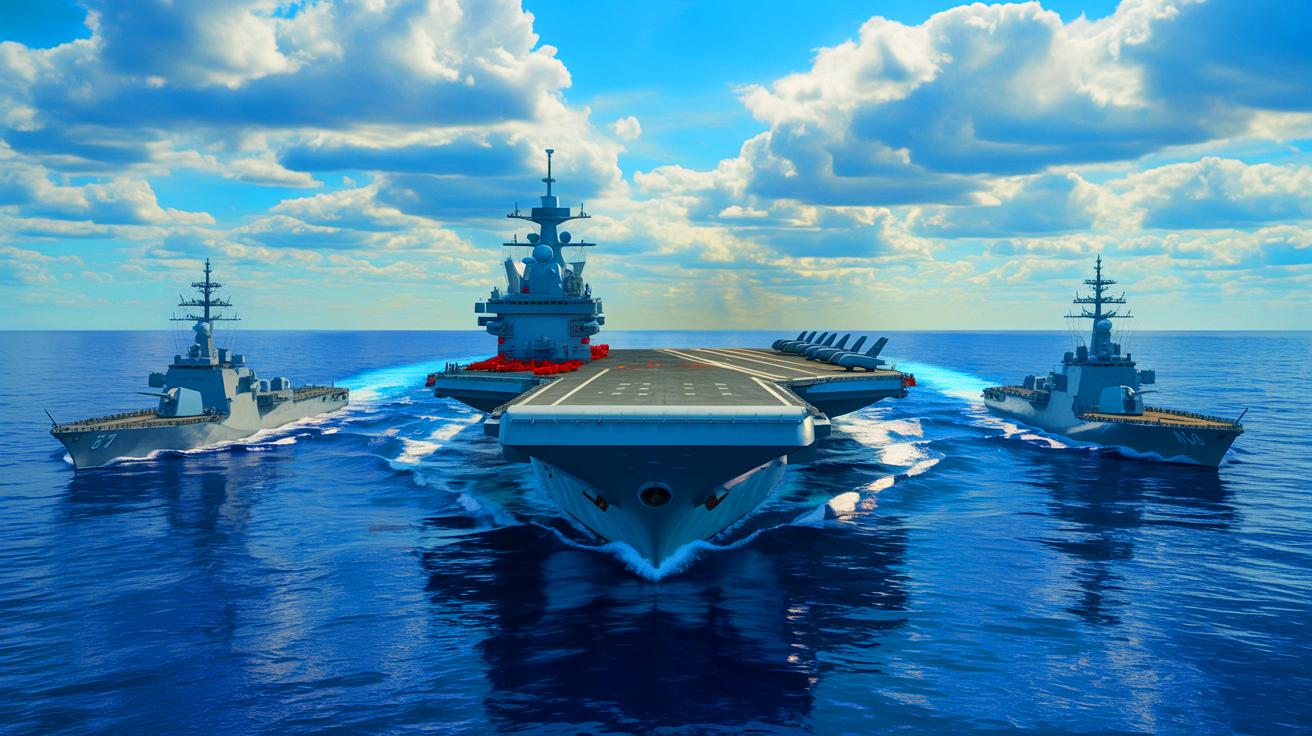
The Fujian, touted as the world’s largest conventionally powered warship, enhances China’s naval capabilities. It is equipped with the latest technology, enabling it to conduct a range of military operations. The deployment of such a formidable vessel in the South China Sea underscores China’s commitment to strengthening its military presence and deterring potential adversaries. As the region becomes increasingly militarized, the presence of the Fujian could contribute to heightened tensions and strategic rivalry among global powers.
Implications for Regional Security
The potential stationing of the Fujian in Sanya raises critical questions about the future of regional security in Southeast Asia. The Southern Theatre Command base, already home to the Shandong carrier, serves as a strategic hub for the PLA Navy. By concentrating significant naval assets in this area, China can rapidly respond to conflicts or emergencies in the South China Sea.
This development is likely to prompt reactions from neighboring countries and other global powers with vested interests in the region. Nations such as Vietnam and the Philippines, which have competing territorial claims with China, may perceive the Fujian’s deployment as a direct threat. Meanwhile, the United States and its allies could view the move as an escalation, necessitating a reassessment of their own military strategies in the Asia-Pacific region.
The Role of the Fujian in China’s Naval Doctrine
The Fujian’s deployment is a testament to China’s evolving naval doctrine, which emphasizes power projection and strategic deterrence. As China continues to modernize its military, the role of aircraft carriers becomes increasingly central to its defense strategy. Carriers like the Fujian provide China with the capability to extend its reach beyond its immediate shores, playing a crucial role in both offensive and defensive operations.
The carrier’s presence in the South China Sea is not only a demonstration of military strength but also a signal of China’s intentions to safeguard its interests in contested waters. The PLA Navy’s focus on scientific research experiments and training missions suggests a commitment to refining its operational capabilities. These exercises are crucial for integrating the Fujian into China’s broader naval operations, ensuring that the carrier is fully equipped to meet the demands of modern warfare.
Potential Impact on International Relations
The strategic positioning of the Fujian in the South China Sea is likely to influence international relations and maritime diplomacy. As tensions rise, diplomatic efforts to manage conflicts and establish rules of engagement become increasingly important. The presence of such a significant military asset may complicate negotiations, as countries seek to balance their national interests with regional stability.
International reactions to China’s naval expansion will vary, with some nations advocating for increased cooperation and dialogue, while others may adopt a more cautious approach. The deployment of the Fujian serves as a reminder of the complexities inherent in global power dynamics and the need for effective communication and conflict resolution mechanisms. As global powers navigate these challenges, the Fujian’s role in shaping the future of maritime security remains a critical topic of discussion.
The deployment of the Fujian aircraft carrier in the South China Sea represents a significant shift in regional power dynamics. As China continues to assert its influence, the world watches closely, contemplating the implications for global security. How will the presence of this formidable vessel impact future maritime strategies and the delicate balance of power in the Asia-Pacific region?




Wow, I didn’t realize China’s Fujian was such a game-changer! 🚢
Is this article exaggerating the threat? The US Navy is still pretty massive, right?
Could the US really be falling behind in naval power? Seems hard to believe!
Wow, the Pentagon admitted inferiority? That’s a headline you don’t see every day! 😂
So, what does this mean for the US Navy? Time to step up their game?
Thank you for the detailed analysis. It’s crucial to understand these geopolitical shifts. 🌍
The South China Sea is getting crowded. Are we looking at another Cold War scenario?
So, what does this mean for Taiwan and other allies in the region?
Isn’t this just typical media hype? Seems like an exaggeration to me.
Why does the US always have to play catch-up with China’s military advancements? 🤔
Fujian sounds impressive, but how does it actually compare to US carriers in terms of technology?
Great article, but I think it misses how the US might respond strategically to this.
Great article! Thanks for the insights. 🙏
The South China Sea is definitely heating up. Hope this doesn’t lead to conflict!
This is worrying. How will this impact trade routes in the region?
The Pentagon admitting inferiority? That’s a first! 🤔
Does the Fujian have any new tech that the US doesn’t know about?
China’s naval strategy is fascinating. Are there any books you recommend on this topic?
Are these developments likely to spark an arms race in the Pacific?
What exactly is China’s endgame here? Just regional dominance or more?
It’s amazing how quickly China is advancing its military capabilities. 😮
Does anyone else feel like we’re being left in the dark about these developments?
Time for the US to invest more in its Pacific fleet, don’t you think?
This article raises more questions than it answers.
Should we be worried about the US falling behind? Or is this just a temporary setback?
Isn’t this just the beginning of China’s maritime dominance?
Thanks for the detailed analysis in the write-up. Very informative!
How reliable are these sources? Can we trust the information?
What are the potential diplomatic solutions to ease these tensions?
Why doesn’t the US just build more carriers? Problem solved! 😆
Does this mean the US needs to rethink its entire naval strategy?
Interesting read, but I’m skeptical about the Pentagon’s claims.
With all this happening, how should neighboring countries react?
What role will allies like Japan and Australia play in this scenario?
China’s ambition is clear, but what are the risks involved for them?
Love the way you broke down the complexities of the situation! 👏