


| IN A NUTSHELL |
|
In the arid northwestern region of China, an ambitious solar farm is transforming both the landscape and the local ecological balance. Spanning hundreds of square miles, this vast array of photovoltaic panels not only harnesses the sun’s rays to generate electricity but also mitigates soil erosion, encourages grass growth, and attracts herds of sheep that help maintain this new ecosystem. By altering the environment in such profound ways, the solar farm is creating a ripple effect that extends beyond its immediate energy output.
Solar Energy’s Role in Desert Stabilization
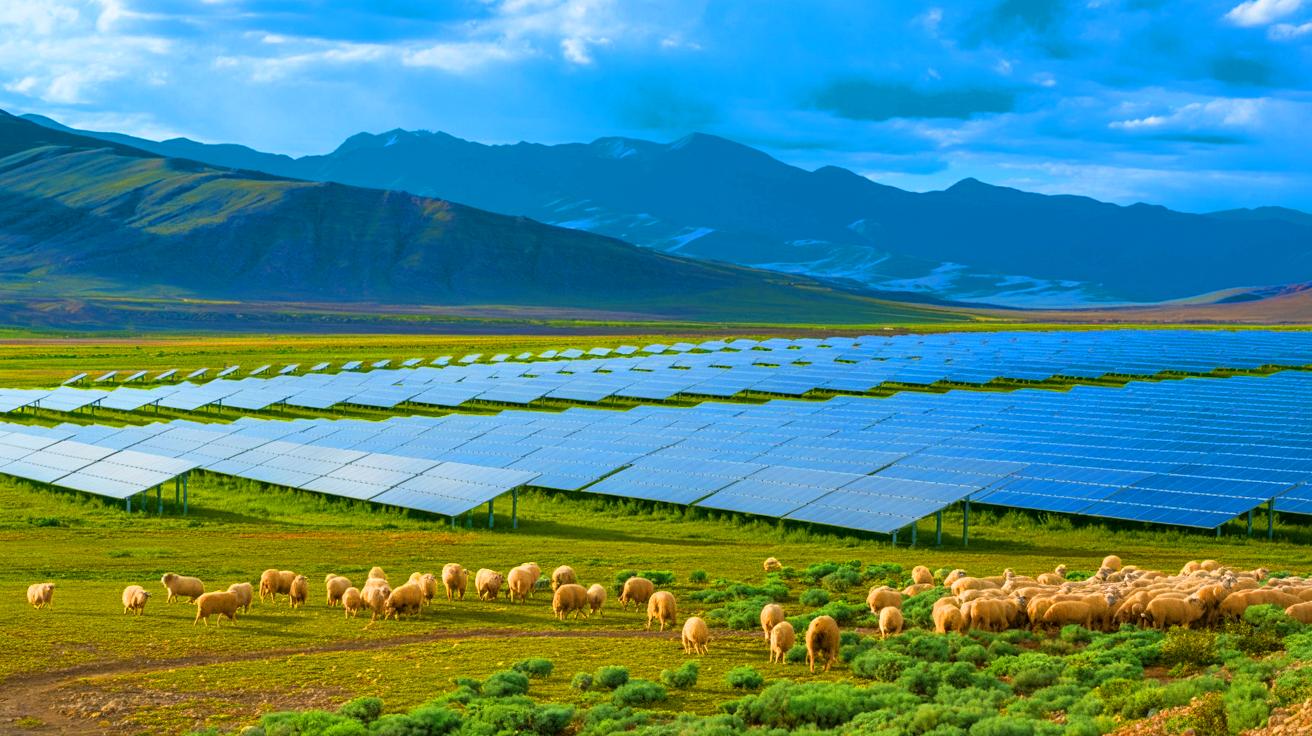
In Qinghai province, a groundbreaking energy project is reshaping a landscape long defined by aridity. On 235 square miles of the Tibetan Plateau, uninterrupted rows of solar panels now constitute the world’s largest photovoltaic farm. This vast installation, set to house over seven million modules, will ultimately generate electricity for five million households. The sheer scale of this project is a testament to China’s commitment to renewable energy.
The panels act as windbreaks, curbing erosion and slowing sand encroachment. By casting shadows, they reduce soil moisture evaporation, fostering conditions conducive to the growth of grasses and small shrubs. This artificial microclimate has sparked the emergence of vegetation in a historically drought-stricken area, attracting native animal species back to the region. The interaction between solar technology and the environment here illustrates how renewable energy developments can have multifaceted impacts.
The Ecological Impact of Solar Farms
The ecological implications of the Qinghai solar farm extend far beyond energy production. By stabilizing the soil and promoting plant growth, the project enhances local biodiversity. The return of vegetation provides habitats and food sources for wildlife, which had dwindled due to long-standing desertification. In turn, these ecological changes contribute to a more balanced and resilient ecosystem.
The presence of sheep, which graze on the new grasslands, is an integral part of this ecological transformation. These animals help maintain the health of the vegetation cover, preventing overgrowth and promoting nutrient cycling. The symbiotic relationship between the solar farm and its environment underscores a broader trend in renewable energy projects that consider ecological benefits alongside their primary function of energy generation.
Challenges and Considerations in Renewable Projects
While the benefits of the Qinghai solar farm are evident, challenges remain in integrating such large-scale projects into existing landscapes. The construction and maintenance of extensive solar arrays can disrupt local ecosystems and communities if not carefully managed. Furthermore, balancing energy needs with ecological preservation requires ongoing monitoring and adaptation.
Environmental assessments and community engagement are crucial to the long-term success of renewable energy projects. By involving local stakeholders in the planning and implementation phases, developers can ensure that projects meet energy demands while respecting and enhancing the natural environment. The Qinghai solar farm serves as a model for how thoughtful planning can mitigate potential adverse effects.
The Future of Renewable Energy in Arid Regions
The success of the Qinghai solar farm highlights the potential for renewable energy projects to thrive in arid regions. As global demand for sustainable energy solutions grows, similar initiatives could be deployed in other desert areas worldwide. The combination of energy generation and ecological restoration presents a compelling case for expanding solar infrastructure in regions traditionally viewed as inhospitable.
However, the scalability of such projects will depend on technological advancements and policy support. Continued investment in research and development is essential to improve the efficiency and cost-effectiveness of solar technologies. Moreover, international collaboration can facilitate the exchange of best practices and innovations, driving the global transition toward renewable energy.
As the Qinghai solar farm continues to evolve, it poses a significant question: How can other regions harness renewable energy to simultaneously meet energy needs and foster environmental resilience? The answer may lie in the delicate balance between technology, ecology, and community involvement.


Wow, 5 million households powered and sheep herding too? That’s baaa-rilliant! 🐑
Wow, 5 million households! That’s a massive impact. How do they manage the maintenance of such a large area?
How do the sheep contribute to the ecosystem exactly? Are there any other animals involved?
I’ve heard sheep are great for grass management, but does this affect their wool quality in any way? 🐑
This is a great example of renewable energy in action. Thank you for sharing!
Is the project sustainable in the long term, or are there potential downsides that aren’t being discussed?
Is China planning to implement similar projects in other regions?
I hope they don’t have to shear all those sheep to pay the electricity bill! 😆
Does the solar farm affect the local climate in any negative ways?
So this is literally a “sheep-powered” solar farm? 😂 Love the idea!
How do the local communities feel about the solar farm? Any resistance?
I’d love to see more projects like this worldwide. 🌍
Fascinating! But what happens when technology evolves? Will the panels become obsolete?
Are there any plans to introduce other animals into this ecosystem, or is it just sheep for now?
Sheep and solar panels—who knew they’d make a great team? 🤔
Does the farm employ local workers, or do they bring in people from outside the region?
This could set a precedent for renewable energy projects globally. Exciting times!
Are there any concerns about the maintenance of such a large solar farm?
What happens to the sheep during the extreme weather conditions?
How is the energy distributed to the 5 million households? Is it efficient?
Would love to visit this solar farm one day! 😍
Are there plans to expand the project further, or is this the final phase?
Interesting concept but what about the initial environmental impact of building the farm?
Thank you for this insightful article. Renewable energy is the future! 💡
Hope the sheep don’t get too close to the panels and cause any damage!
Do they also use other renewable energy sources in this region, or is it only solar?
Is it true that solar farms can sometimes cause habitat disruption?
How does the energy production compare to other solar farms around the world?
Is the project funded by the government or private investors?
What would happen if all the sheep decided to strike for better grazing conditions? 😂
Could this model be adapted for use in other arid regions? Seems promising!
How are sheep integrated into the ecosystem without causing overgrazing issues?
5 million households is a lot! What happens during cloudy days? 🤔
Are there any educational programs associated with the solar farm to raise awareness?
What are the challenges faced during the construction of the solar farm?
Is there any plan to recycle the panels at the end of their lifecycle?