




| IN A NUTSHELL |
|
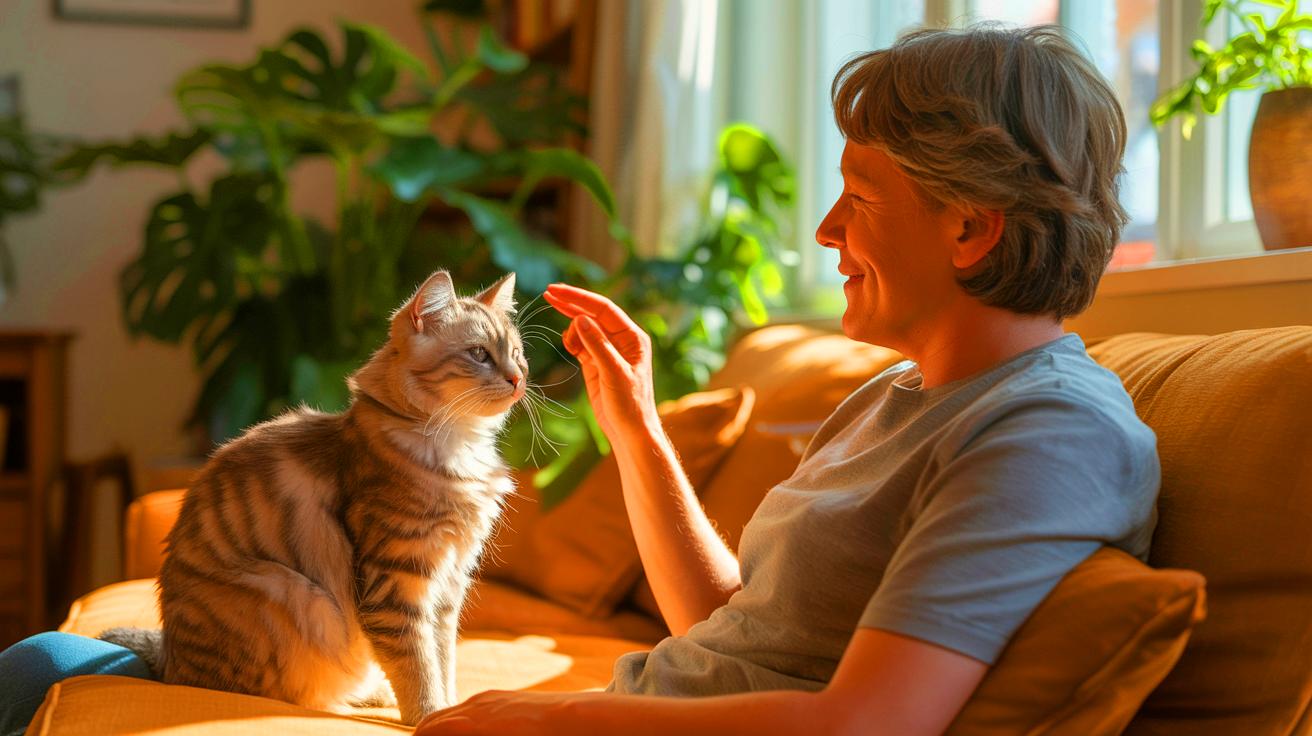
Cats have long been perceived as aloof creatures, often leaving their human companions frustrated when attempting to bond. However, recent research has unveiled a fascinating method to bridge the communication gap between humans and cats. By adopting a special kind of “cat smile,” humans can signal friendliness and approachability, enhancing interactions with their feline friends. This simple yet profound discovery has the potential to revolutionize our understanding of cat-human relationships, shedding light on how we can better connect with these enigmatic animals on their terms.
The Science Behind the Cat Smile
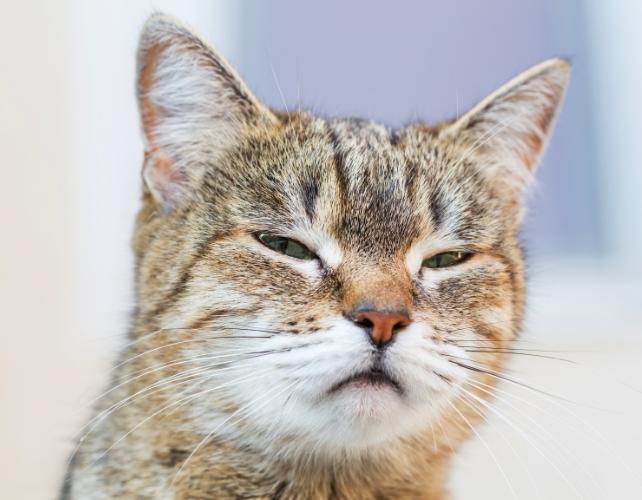
Understanding the feline communication system is crucial for building better relationships with our cats. The key lies in the slow blink, a subtle gesture that cats use to convey relaxation and trust. This expression involves narrowing the eyes and blinking slowly, similar to how humans smile with their eyes. Research led by psychologists at the University of Sussex demonstrated that cats are more likely to slow-blink back at humans who initiate this gesture. This groundbreaking study, conducted in 2020, provided empirical evidence that cats respond positively to such human gestures, suggesting that they perceive them as non-threatening.
The experiments involved two groups of cats. In the first group, cat owners slow-blinked at their pets, while in the second, researchers unfamiliar with the cats performed the same action. The results were astonishing: cats reciprocated the slow-blink gesture in both scenarios, indicating that this form of communication transcends familiarity. Furthermore, when humans extended a hand after slow-blinking, cats were more likely to approach, demonstrating increased receptivity. This newfound understanding of cat behavior affirms what many cat owners have long suspected—that cats do communicate through subtle gestures, and we can learn to speak their language.
Practical Applications for Cat Owners
For cat owners, the implications of this research are profound. By incorporating the slow-blink into daily interactions, humans can foster deeper connections with their feline companions. This simple technique can be employed to signal friendliness and establish trust, especially in situations where cats might feel anxious or threatened. Cat owners can initiate a slow-blink when their pet is relaxed, thereby reinforcing a sense of security and comfort. Such interactions can enhance the emotional well-being of cats, reducing stress and promoting positive behavior.
Moreover, this approach can be beneficial in various settings beyond the home. In veterinary clinics or animal shelters, where cats might experience elevated stress levels, staff can use the slow-blink to reassure and calm the animals. This method not only improves the cats’ welfare but also facilitates smoother handling and care. The slow-blink technique, therefore, offers a practical tool for enhancing feline welfare across diverse environments, making it an invaluable addition to any cat lover’s repertoire.
Feline Social Cognition: More Than Meets the Eye
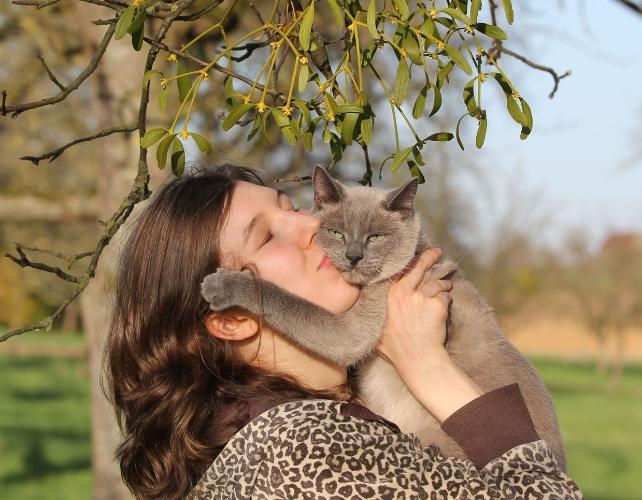
The discovery of the slow-blink’s significance in cat-human communication is part of a broader recognition of cats’ social cognition abilities. Contrary to the stereotype of cats as solitary and indifferent creatures, research shows that they are attuned to their human companions. Cats respond to human emotions and can mirror their owners’ personalities, suggesting a level of social awareness previously underestimated. This ability to pick up on human cues indicates that cats are far more perceptive than often assumed, challenging traditional comparisons to more overtly social animals like dogs.
Understanding these social dynamics sheds light on why cats choose to engage with certain humans over others. Cats are known to form strong bonds with humans who demonstrate receptivity and understanding of feline communication signals. As such, the slow-blink is not just a gesture of friendliness but a bridge to deeper, more meaningful interactions. By acknowledging and respecting these cues, humans can cultivate harmonious relationships with their feline friends, enriching both their lives and those of their pets.
Implications for Future Research and Feline Welfare
The implications of this research extend beyond individual cat-human relationships to broader applications in feline welfare. Understanding how cats communicate and respond to humans can inform practices that enhance their quality of life in various settings. For instance, shelters and veterinary practices can incorporate slow-blink interactions to assess and improve the emotional states of cats. This approach not only benefits the cats but also aids in public understanding of feline behavior, promoting more compassionate treatment of these animals.
Future studies could explore the nuances of cat communication further, examining how different gestures and vocalizations contribute to social interactions. Such research could unlock new strategies for improving cat welfare, providing insights into how environmental factors influence feline behavior. As we continue to unravel the complexities of cat-human communication, we open the door to a deeper appreciation of the rich social lives of our feline companions. How might these discoveries transform our understanding of other domesticated animals and their interactions with humans?




Finally, a way to let my cat know how much I love her! ❤️
What a fascinating read! I had no idea such a small gesture could have such a big impact.
I was about to leave a message questioning the need for an article to relate information that is nearly 5 years old. Then I read other comments indicating that people have somehow been unaware of this “news” even though there have been plenty of articles discussing g this.
How exactly do you perform a ‘slow-blink’? Any tips for beginners?
Watch your cat. When it us calm and content it will often look at you and blink slowly– slowly close your eyid al.ost all the way they slowly open it. Wait a few seconds a day repeat.
Next step: Telepathy with cats! 🧙♂️
This is amazing news for cat lovers everywhere!
I wish I could have read this article years ago. It makes so much sense now!
Are there any specific situations where the slow-blink is most effective?
As a cat owner, I can confirm that cats do respond to our gestures.
I’ve always known about the slow blink, since I was a kid. It’s why I’m the ‘cat whisperer ‘. Lol
Finally, a way to understand my cat’s judging looks! 😂
Do you think this discovery will change how we interact with other pets?
Now I just need my cat to understand when I need some space!
Does the slow-blink method work with all breeds of cats?
I’m going to try this with my neighbor’s cat and see if he finally likes me. 🤞
Slow-blinking sounds like a great idea. Has anyone tried it yet?
What a game-changer! Thank you for this enlightening article.
I’ve been slow-blinking at my cat for years, and I didn’t even know it! 😅
This is the most exciting cat news I’ve heard in a long time!
My cat is going to think I’m weird for staring at her and blinking slowly.
Can this technique help with aggressive cats too?
I’m convinced that cats have always understood us better than we understand them.
Slow-blinking: the universal language of cats! 🌎
Are there any risks associated with using the slow-blink technique?
I’ve been slow-blinking at my cat, and she’s been purring more than usual. Coincidence?
Finally, science has caught up with what cat owners have known all along!
Can this technique be used to calm cats during stressful situations like vet visits?
This method could really change the way we interact with our feline friends.
Do you think slow-blinking could help with stray cats too?
I’m excited to try this with my shy cat. Maybe it will help her feel more comfortable.
I’m not sure if my cat will appreciate my attempt at slow-blinking. 🤣
I’m skeptical. Cats have always been mysterious; can it really be this simple?
So, we just slow-blink and our cats will finally talk back? Sounds too good to be true!
This is a pawsome discovery! Thank you for sharing. 🐾
Thank you for sharing this! My cat and I are about to have some serious bonding time. 😊
What if my cat doesn’t respond to the slow-blink? 🤔
Can this method be used with other animals too?
I tried slow-blinking at my cat, and he just stared back. Maybe I’m doing it wrong?
This is the kind of scientific breakthrough we need more of!
Does this work on dogs too, or is it just a cat thing?
My cat already thinks she’s the boss; now she’s going to expect me to communicate on her terms too! 😂
I was about to leave a message questioning the need for an article to relate information that is nearly 5 years old. Then I read other comments indicating that people have somehow been unaware of this “news” even though there have been plenty of articles discussing g this.