




| IN A NUTSHELL |
|
In the ever-evolving landscape of military technology, the United States stands poised to enhance its prowess in anti-submarine warfare (ASW). By combining cutting-edge unmanned aerial systems with innovative sonobuoys, American firms are setting the stage for a new era of maritime defense. This strategic collaboration underscores the critical need for advanced, cost-effective solutions in an increasingly complex global security environment. As these technologies become integrated into defense frameworks, they promise to deliver unprecedented capabilities in tracking and neutralizing underwater threats, ensuring the U.S. maintains its strategic maritime dominance.
The Strategic Partnership: A Game Changer in Maritime Defense
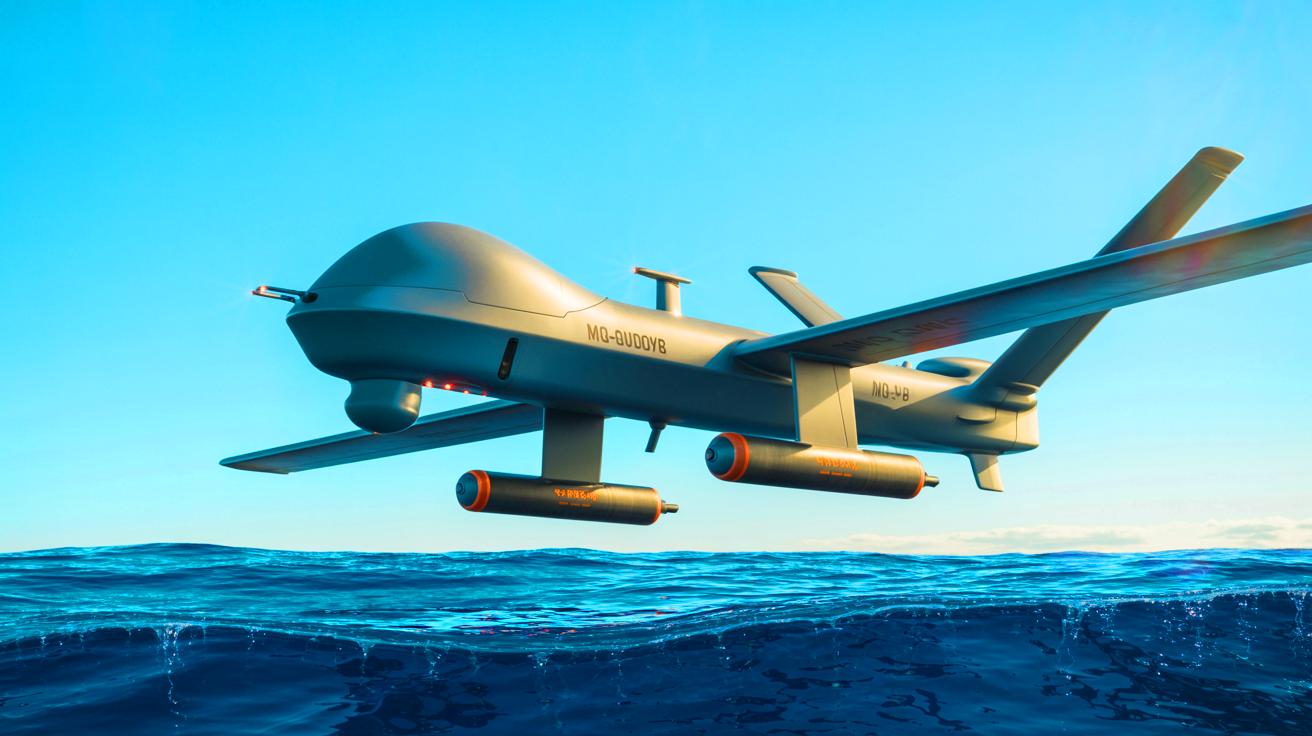
The collaboration between General Atomics Aeronautical Systems and Ultra Maritime marks a significant advancement in ASW technology. By integrating the MQ-9B SeaGuardian with Ultra Maritime’s exclusive small form factor sonobuoys, these companies are poised to revolutionize maritime warfare. This partnership is not just about technological advancement; it’s about providing a strategic edge in hostile environments. The SeaGuardian, a formidable unmanned aerial system, offers unmatched intelligence, surveillance, and reconnaissance capabilities. Combined with Ultra Maritime’s miniaturized, low-power sonobuoys, it promises to double unmanned aerial system (UAS) capacity.
What makes this partnership remarkable is its focus on GPS-denied environments, where traditional tracking methods falter. The new system will enable the U.S. and its allies to autonomously track submarines, leveraging sophisticated techniques that ensure operational effectiveness even when traditional GPS systems are compromised. This capability is set to be demonstrated in the Indo-Pacific region, a strategic area of interest, reinforcing the U.S.’s commitment to maintaining global maritime security.
Revolutionizing Anti-Submarine Warfare: The Role of Sonobuoys
Sonobuoys, the unsung heroes of anti-submarine warfare, are about to receive a significant upgrade. These small, expendable sonar buoys play a crucial role in underwater acoustic research and ASW. Deployed from aircraft or ships, sonobuoys detect and transmit sounds from submarines and ships, providing vital data for military operations. Ultra Maritime, a leader in this field, brings over 60 years of expertise to the table.
With the new partnership, sonobuoys will now be more effective and efficient. The integration of Multi-static Active (MSA) capabilities allows for unprecedented wide-area searches. Ultra Maritime’s new acoustic receivers, being half the traditional size, are ideal for UAS deployment. These advancements mean more effective monitoring and tracking of submarines, ensuring that the U.S. and its allies stay ahead in the underwater domain. As the demand for advanced ASW solutions grows, this technological leap ensures that sonobuoys remain at the forefront of underwater defense strategies.
Cost-Effective and Autonomous Solutions for Global Security
The need for affordable ASW solutions has never been more pressing. As submarines become stealthier and the threat of GPS jamming increases, traditional methods of underwater detection are proving inadequate. The integration of unmanned technologies offers a promising solution. By reducing the reliance on manned operations, the military can achieve significant cost savings while enhancing operational capabilities.
General Atomics and Ultra Maritime’s collaboration exemplifies this trend. By providing autonomous, low-cost ASW capabilities, they are addressing the critical need for efficient and reliable defense solutions. The internally funded research and development effort behind this technology underscores its potential for widespread adoption. As the integrated operational demonstration unfolds in various theaters, including the Indo-Pacific, the military will gain valuable insights into the system’s effectiveness and adaptability, paving the way for future innovations in ASW technology.
Commitment to Innovation and Global Maritime Security
At the heart of this partnership is a commitment to innovation and global security. Ultra Maritime’s extensive production experience and recent investments demonstrate a dedication to advancing the next generation of sonobuoys. With over 11 million sonobuoys produced, Ultra Maritime is well-equipped to meet the global demand for ASW technology. Their role as the only global provider of a full range of sonobuoys highlights their industry leadership.
As the U.S. and its allies continue to face evolving underwater threats, the importance of cutting-edge ASW technology cannot be overstated. This partnership is a testament to the power of collaboration and innovation in addressing complex security challenges. By leveraging the strengths of both companies, the U.S. is ensuring that it remains at the forefront of maritime defense. As these technologies are deployed, they will not only enhance strategic capabilities but also reinforce the U.S.’s commitment to maintaining peace and stability in international waters.
As we look towards a future where technology plays an increasingly pivotal role in defense, the question remains: How will these innovations shape the global balance of power, and what new challenges will they bring to the forefront of maritime security?



Wow, this sounds like something out of a sci-fi movie! Excited to see how it plays out in the real world. 🚀
Sounds expensive! Is this really cost-effective in the long run?
I can see this causing tension in the Indo-Pacific region. 😬
Does this mean more jobs in the tech industry? 🛠️
Can these sonobuoys detect dolphins and other marine life?
Are there any risks of this technology being hacked? 🖥️
Finally, a way to track submarines without relying on GPS!
Wait, didn’t Ultra Maritime have issues with their tech in the past?
This is a game-changer! Hats off to General Atomics and Ultra Maritime.
I wonder how this new system will affect relations with other countries. 🤔
Not sure how I feel about militarizing the ocean more. 🌐
What happens to these sonobuoys after they’re used? Do they biodegrade?
Will this tech be used for non-military purposes, like ocean research?
Fantastic to see innovation in defense. But at what cost? 🤨
Is this similar to what other countries are developing?
I’m skeptical. Will this actually work as planned?
How long before other countries catch up with similar tech?
Hope these advancements lead to better security and not more conflict.
Can the average person understand this tech, or is it all classified?
Does this mean more surveillance of our oceans? 🌊
Glad to see innovation, but I worry about an arms race. 😬
How does this system fare in extreme weather conditions?
Love the focus on cost-effectiveness. Defense shouldn’t bankrupt us!
It’s about time the U.S. stepped up its anti-submarine game!
I’m excited to see how this influences global maritime policy!
Will this technology be shared with U.S. allies, or is it exclusive?
How reliable are these sonobuoys in rough sea conditions?
This is a fantastic leap forward for military tech. Kudos to everyone involved! 🎉
Why do we need more military technology? Isn’t peace the ultimate goal?
I’m curious about the environmental impact of all these sonobuoys. 🌊
Great article, thanks for the insights!