




| IN A NUTSHELL |
|
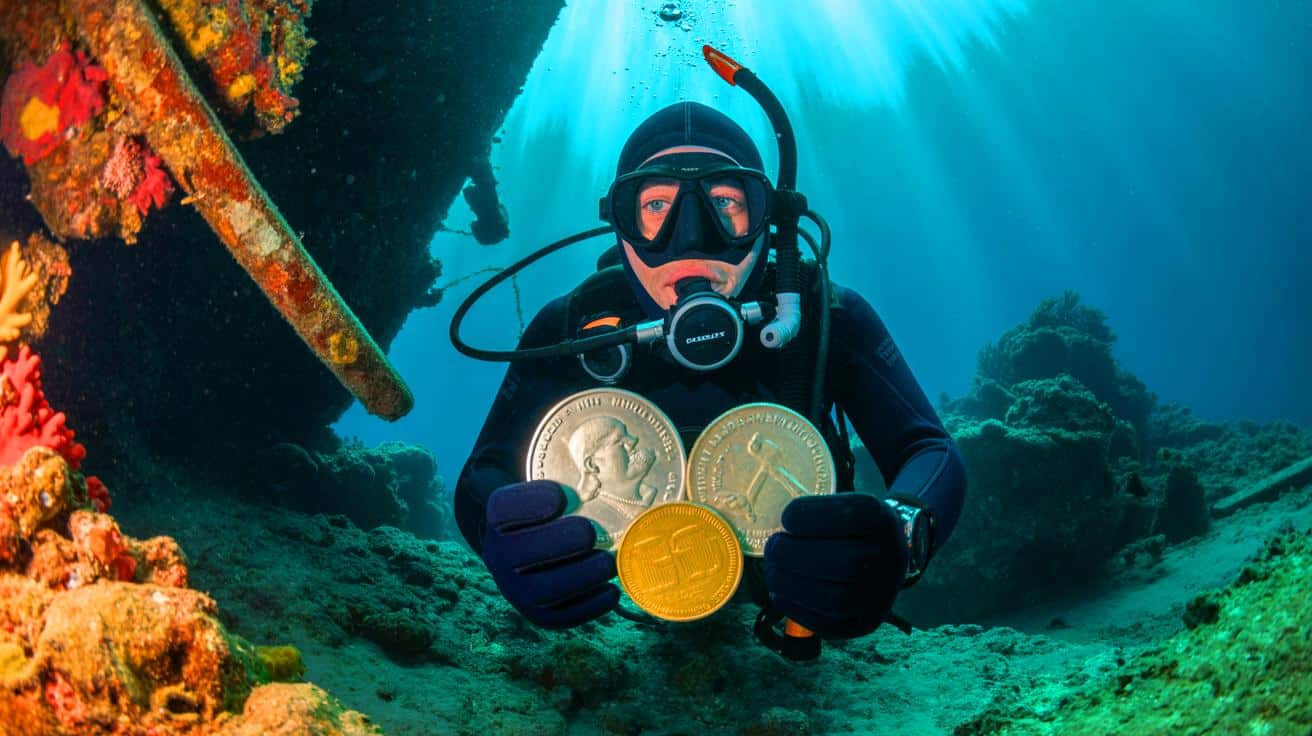
In the annals of maritime history, few events resonate with as much allure and mystery as the shipwreck of the 1715 Treasure Fleet. Recently, a team of divers made headlines by recovering over 1,000 silver and gold coins from this legendary Spanish galleon. Buried beneath the sands off Florida’s Treasure Coast, this trove offers not just a glimpse into the past but a tangible link to an era dominated by maritime exploration and wealth. The recovery effort, led by Queens Jewels, LLC, has unveiled a wealth of historical artifacts, each piece telling its own story of adventure, tragedy, and economic power.
The Historical Context of the 1715 Shipwreck
The 1715 Treasure Fleet represents one of the most significant maritime disasters and recoveries in history. Comprising 11 or 12 galleons, this fleet was returning to Europe laden with treasures from the New World when it encountered a catastrophic hurricane off Florida’s east coast. The hurricane’s immense power resulted in the sinking of the fleet, with its valuable cargo scattered along the coastline. Estimated to have carried treasures worth approximately $400 million, the fleet’s loss marked a significant blow to the Spanish Empire’s economic aspirations in the Americas.
Queens Jewels, LLC holds the exclusive rights to salvage operations in this area, which is rich in historical artifacts. Their recent recovery efforts have been fruitful, bringing to the surface coins and artifacts that had lain undisturbed for over three centuries. Each recovered item adds a layer of understanding to the narrative of the fleet and its ill-fated journey. The coins, minted in the Spanish colonies of Mexico, Peru, and Bolivia, offer insight into the economic networks and cultural exchanges of the time.
The Recent Recovery and Its Significance
The recovery of over 1,000 silver and gold coins by Queens Jewels, LLC is a significant archaeological achievement. Valued at approximately $1 million, these coins, known as Reales and Escudos, were part of a larger treasure trove that was believed to have been stored in a single chest. The chest was likely shattered by the force of the hurricane, scattering its contents across the ocean floor.
Sal Guttuso, the director of operations for Queens Jewels, LLC, emphasized the historical value of these finds. "This discovery is not only about the treasure itself, but the stories it tells," Guttuso stated. Each coin serves as a historical artifact, offering insights into the lives of those who lived during the Golden Age of the Spanish Empire. The recovery of these coins underscores the ongoing importance of maritime archaeology in uncovering and preserving our shared past.
Preservation and Future Plans
While the monetary value of the recovered coins is significant, Queens Jewels, LLC prioritizes their historical and educational importance. The company is committed to preserving and studying the artifacts to enrich our understanding of the 1715 fleet. According to Archaeology News, the coins' condition, with visible dates and mint marks, enhances their value to historians and collectors.
A portion of the recovered artifacts will be displayed in local museums, allowing the public to engage with this exciting chapter of maritime history. However, the U.S. District Court of Florida will retain 20% of the gold, with the remaining 80% owned by Queens Jewels, LLC. The continued exploration and recovery efforts promise to unearth more treasures, each adding new dimensions to the historical narrative of the Treasure Coast.
The Cultural and Educational Impact
The discovery of the 1715 Treasure Fleet coins has profound cultural and educational implications. Beyond their intrinsic value, the coins and artifacts serve as educational tools that bridge the past with the present. They offer a tangible connection to the era of Spanish colonial expansion and the complex economic and cultural exchanges of the time. By studying these artifacts, historians can piece together the broader story of the fleet and its impact on global trade and exploration.
The ongoing efforts by Queens Jewels, LLC to recover and preserve these artifacts highlight the importance of maritime archaeology in understanding history. As more artifacts are uncovered, they promise to enrich our knowledge of the past, providing valuable insights into the lives and economies of those who sailed the seas in search of fortune and adventure.
The recovery of the 1715 Treasure Fleet coins is a testament to the enduring allure of maritime exploration and the mysteries of the sea. As divers continue to uncover treasures from the depths, they add to the rich tapestry of history, offering new insights and stories waiting to be told. What other secrets might the ocean's depths still hold, waiting to be discovered by future generations?



Wow, a real-life treasure hunt! How do they ensure the coins aren’t damaged during recovery? 🏴☠️
Wow, over 1,000 coins! How long did it take to recover all of them? 🏴☠️
Why does the U.S. District Court of Florida get a portion of the gold? 🤔
This is an incredible find. Just imagine what else might be down there waiting to be discovered!
This is fascinating! How long did the recovery process take?
Why does the U.S. District Court of Florida get 20% of the gold? Seems a bit unfair!
What happens to the coins after they’re studied?
So, is there still a lot of treasure left to find? 💰👀
Awesome work by Queens Jewels, LLC! Can’t wait to see these in a museum. 🎉
This feels like a modern-day Pirates of the Caribbean! 🏴☠️
Does anyone else think this sounds like the plot of a movie? 🤔
Are the coins going to be displayed in any international museums?