




| IN A NUTSHELL |
|
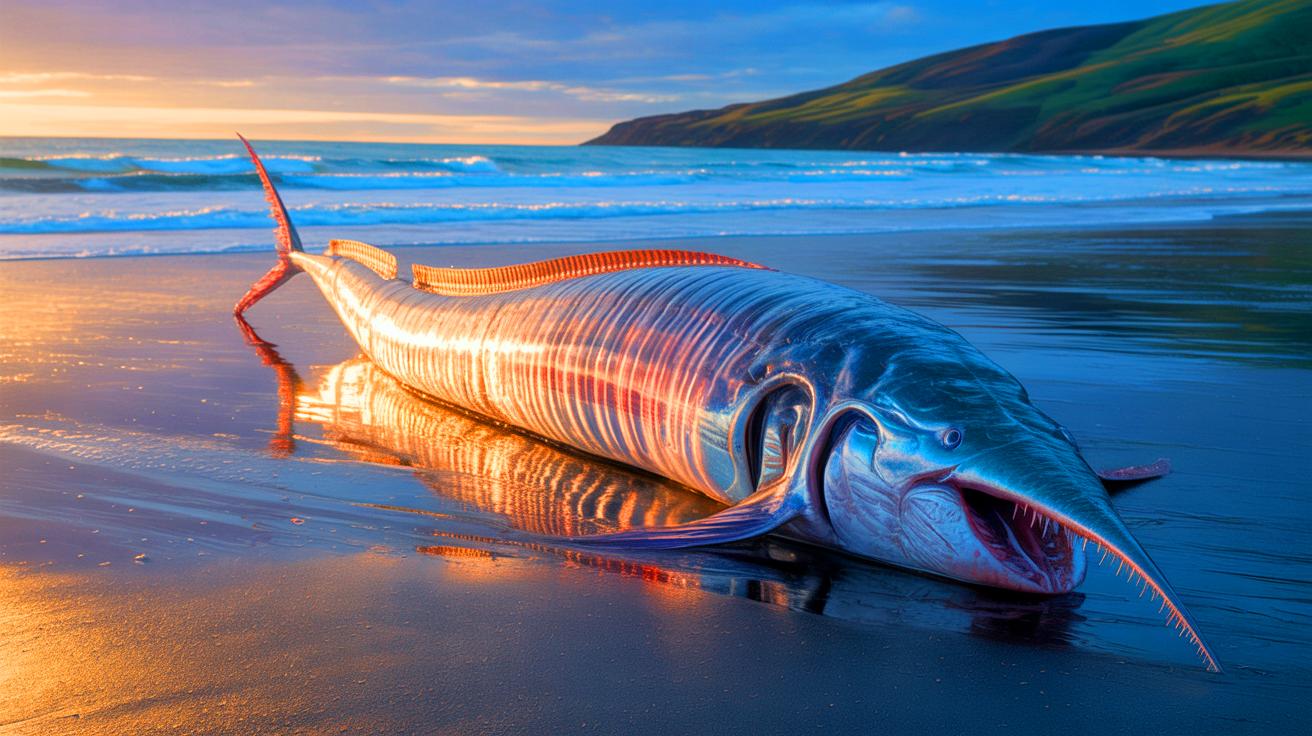
The recent discovery of several giant oarfish washed ashore on the beaches of Tasmania and New Zealand has reignited interest in these mysterious sea creatures. Often associated with ominous legends, oarfish are known for their elongated, shimmering bodies that can reach impressive lengths. Their rare appearances have historically sparked both intrigue and fear, being dubbed the “fish of the apocalypse.” Scientists, however, caution against jumping to supernatural conclusions, emphasizing that these deep-sea fish are not predictors of disaster. Instead, they offer a unique glimpse into the enigmatic world beneath the ocean’s surface.
The Unusual Surge of Oarfish Sightings
The recent oarfish sightings began with the discovery of a specimen on the west coast of Tasmania. Shortly after, two more were found on New Zealand’s South Island. Andrew Stewart, a curator at New Zealand’s Te Papa Tongarewa Museum, described these creatures as “magnificent and otherworldly,” noting their impressive 26-foot length. Despite their size, oarfish remain elusive, with only about twenty confirmed sightings in New Zealand.
Unfortunately, the museum’s hopes of studying these specimens were dashed when seagulls consumed vital parts of the fish. This loss highlights the challenges researchers face in studying these rare creatures. While sightings generate interest and speculation, they remain infrequent, adding to the oarfish’s mythical status. As scientists strive to learn more, each encounter offers a fleeting opportunity to unravel the secrets of these deep-sea inhabitants.
Jaya Anand Singh’s Research Path : A Journey from Curiosity to Contribution
Debunking Myths Around Oarfish and Natural Disasters
The appearance of oarfish has long been linked to natural disasters like earthquakes and tsunamis, particularly in Japan. Known as ryugu no tsukai, these fish are thought to herald impending calamities. However, scientific studies have found no evidence supporting this belief. Andrew Stewart advocates for a scientific approach, emphasizing the lack of correlation between oarfish sightings and seismic activity.
Oarfish inhabit the deep ocean, primarily in open waters, making encounters rare. This scarcity contributes to the myths surrounding them. Nick Ling, a fish ecologist, explains that their unique vertical swimming style, with undulating dorsal fins, adds to their mystique. These “truly beautiful fish” are difficult to study due to their deep-sea habitat. Yet, their allure persists, drawing both scientific and public fascination.
The Fascination with Abyssal Creatures
Oarfish captivate scientists and the public alike due to their enigmatic nature. Much about these deep-sea residents remains unknown, from their biology to their behavior. Their sudden appearances on shores provide rare study opportunities, though natural predators often thwart these chances. For researchers, examining these creatures up close can yield invaluable insights into deep-sea ecosystems.
Despite challenges in accessing intact specimens, oarfish continue to fascinate marine biologists and enthusiasts worldwide. Their allure lies not only in their size and appearance but also in the secrets they hold about Earth’s most uncharted frontiers. These deep-sea dwellers remain a symbol of the mysteries that the ocean still holds, sparking curiosity and exploration.
Chloé’s Passionate Journey from Sports to Wildlife Reporting
Chloé’s journalism career began in sports, focusing on women’s media and sports like rugby and tennis. However, her passion for wildlife and travel eventually led her to GEO.FR, where she writes about animals and their habitats. Her diverse experiences, from volunteering in a wildlife clinic to swimming with orcas, enrich her storytelling and provide readers with insights into the natural world.
Chloé’s work emphasizes the human connection to wildlife and the environments they inhabit. Her stories invite readers to consider the delicate balance of nature and our role in preserving it. As we marvel at the enigmatic oarfish, we are reminded of the vast unknowns that still exist in our oceans. What other secrets might the deep ocean hold, waiting to be uncovered by curious minds?
The intriguing nature of oarfish and their rare appearances continue to capture the imagination of many. While myths and legends abound, the scientific community urges a rational approach to understanding these deep-sea creatures. As researchers strive to learn more about oarfish, they remind us of the many mysteries our planet still holds. With much left to discover, what other wonders might the ocean reveal to those who seek to explore its depths?


Wow, glowing like burning knives? That’s quite a description! 🔪✨
The ocean is truly a mysterious place. Who knows what else is lurking down there?
This article was a bit long for my taste, but interesting nonetheless.
Is anyone else reminded of the movie “The Meg” when reading about these giant fish?
Do we know what causes oarfish to wash ashore in such numbers?
Thanks for the info! It’s fascinating how much we still don’t know about the ocean.
Oarfish sightings are rare, but are they becoming more common?
Could pollution be a factor in why these fish are appearing more frequently?
Are these oarfish really a sign of the apocalypse, or is this just a catchy headline? 🤔
I’m skeptical about the connection to natural disasters. Feels like an old wives’ tale to me.
Chloé’s articles always make me want to learn more about the ocean. 🌊
Does anyone know how they glow like that? It’s so intriguing!
I love the term “fish of the apocalypse”—it’s so dramatic! 😂
Why don’t scientists spend more resources on studying these creatures?
It’s a shame the specimens were lost to seagulls. Better luck next time!
Thank you for debunking the myths. Science for the win! 🔬
What other deep-sea creatures might we discover next?
Chloé’s diverse background really shines through in her writing.
Could these sightings be linked to undersea earthquakes or volcanic activity?
Great read, but I wish there were more pictures of these magnificent creatures.
Has anyone else seen an oarfish in real life? They’re massive!
Why do they call them “apocalypse fish”? Seems a bit much.
Is there a way to protect the specimens from predators next time?
Thanks to Chloé for another great article! Her transition from sports to wildlife reporting is really paying off.
Love the article! Can’t wait to see what Chloé writes about next.
So much we still don’t know about the deep sea. It’s mind-blowing! 🐠
The scientific approach is definitely the way to go. No more myths!
What are the chances we’ll see more oarfish wash ashore this year?
Chloé’s passion for wildlife is inspiring. Keep up the great work!
How accurate is the “glow like burning knives” description? Sounds intense!
Anyone else think these fish look like they’re straight out of a sci-fi movie? 👽
How can scientists be sure these fish don’t predict natural disasters?
I wonder why the seagulls only target the vital parts. Are they that smart?
These fish are truly magnificent. I’d love to see one in person!
Is it possible that climate change is affecting their behavior and causing them to wash ashore?
Great article! Can you provide more details on the scientific studies debunking the myths?
It’s always the seagulls, isn’t it? 😂
Chloé’s storytelling is always so engaging. Keep it up!
Why are these sightings so rare if the ocean is full of mysteries?