




| IN A NUTSHELL |
|
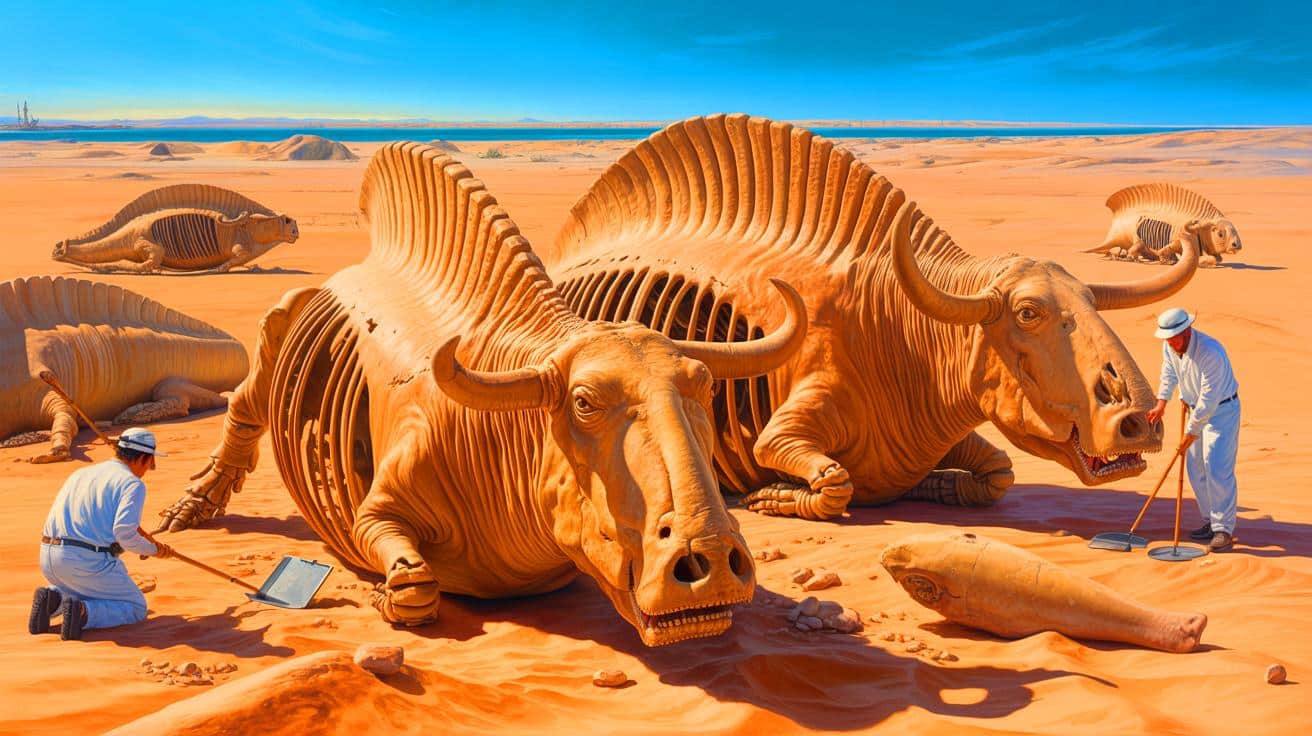
Recent discoveries in Qatar have unearthed ancient secrets about the Arabian Gulf’s marine past. Fossils of a previously unknown species of sea cow have been found, revealing that these creatures played a significant role in shaping their underwater environment over 20 million years ago. This discovery, a collaborative effort between scientists from the Smithsonian’s National Museum of Natural History and Qatar Museums, provides new insights into the region’s rich biodiversity and the evolutionary lineage of sea cows. These findings highlight the historical significance of the Gulf as a prime habitat for sea cows, shedding light on their ecological impact through the ages.
Modern Dugong Biology and Behavior
Dugongs, the close relatives of manatees, are fascinating marine mammals that inhabit shallow coastal waters. With their stout bodies and bristle-lined snouts, they have adapted uniquely to their environment. Unlike manatees, which possess a rounded, paddle-shaped tail, dugongs have a tail resembling that of a dolphin, complete with flukes. Despite their similarities to dolphins, dugongs are more closely related to elephants, highlighting their unique evolutionary path. Dugongs thrive in a variety of regions, including western Africa, the Indo-Pacific, and northern Australia. The Arabian Gulf hosts the largest single herd, where these herbivores graze on seagrass, stirring up sediment and releasing nutrients that benefit the ecosystem.
Their grazing habits make them crucial to their environment, as they help maintain the health of seagrass meadows. However, dugongs face several threats in the modern world. Accidental capture by local fishers and coastal development pose significant risks to their survival. Additionally, rising temperatures and increasing salinity challenge the seagrass meadows they depend on. Understanding dugong biology and behavior is essential for their conservation and sustaining the ecosystems they inhabit.
A Long Fossil History and Growing Modern Threats
The history of sea cows dates back approximately 50 million years, with their ancestors feeding on aquatic plants long before modern species evolved. Fossil evidence shows that these ancient creatures have long been integral to marine ecosystems. Yet, despite their enduring presence, modern dugongs face unprecedented challenges. Coastal development, accidental fishing captures, and climate change are among the threats that endanger their habitats, particularly in the Arabian Gulf.
Ferhan Sakal, a key researcher from Qatar Museums, emphasized the importance of studying past seagrass environments preserved in the region’s rock record. By understanding how these environments once thrived under different climatic conditions, scientists hope to develop strategies for future conservation. Fossilized bones are invaluable in this research, as they provide crucial insights into the ancient ecosystems where these sea cows once roamed. With this knowledge, researchers aim to inform conservation efforts and safeguard the future of the Arabian Gulf’s marine life.
Exploring the Al Maszhabiya Fossil Site
The Al Maszhabiya fossil site in southwestern Qatar has emerged as a treasure trove for paleontologists. Initially discovered in the 1970s, the site was thought to contain reptile bones. It wasn’t until the early 2000s that paleontologists identified the remains as belonging to ancient sea cows. This discovery, fueled by a collaborative effort between Smithsonian and Qatari researchers, has led to groundbreaking insights into the region’s prehistoric marine life.
Upon obtaining necessary permits in 2023, researchers embarked on a comprehensive survey of Al Maszhabiya. The site, dating back to the Early Miocene around 21 million years ago, was once a shallow sea teeming with diverse marine life, including sharks, prehistoric dolphins, and sea turtles. The richness of the fossil deposits makes Al Maszhabiya one of the world’s densest sea cow bonebeds. This abundance of fossils provides crucial evidence of the ancient sea cows’ role as ecosystem engineers, similar to modern dugongs. The site offers a unique glimpse into a time when the Gulf’s marine biodiversity was remarkably high.
Naming a New Species: Salwasiren qatarensis
The discovery of the ancient sea cow species, Salwasiren qatarensis, marks a significant milestone in paleontology. Named after the Bay of Salwa, a key habitat for modern dugongs, the species honors Qatar, where the fossils were found. Weighing around 250 pounds, Salwasiren was considerably smaller than some of today’s dugongs. This finding underscores the evolutionary changes that have occurred over millions of years.
The naming of Salwasiren qatarensis not only highlights the importance of the discovery but also acknowledges Qatar’s contribution to scientific research. The newfound species offers a window into the past, revealing how ancient sea cows influenced their ecosystems. Understanding these ancient creatures’ roles can inform current conservation efforts, offering valuable lessons in maintaining marine biodiversity. As researchers continue to study these fossils, they hope to uncover even more about the region’s rich prehistoric marine life and its implications for the present and future.
The discovery of Salwasiren qatarensis offers a glimpse into a distant past where sea cows played a vital role in marine ecosystems. As researchers continue to explore the Al Maszhabiya site, they aim to uncover more about these ancient creatures and their environments. The findings have significant implications for understanding the history and future of the Arabian Gulf’s marine life. How can the lessons from these ancient ecosystems guide modern conservation efforts to protect the delicate balance of marine biodiversity today?


Wow, a 21 million-year-old sea cow! 🐄 That’s udderly amazing!
Wow, a sea cow in Qatar! 🐄 How did they manage to stay hidden for 21 million years?
Why is it called a “sea cow”? Do they moo underwater? 😂
Fascinating read! Thanks for shedding light on the ancient marine life.
Thanks for the fascinating read! I had no idea Qatar had such rich fossil sites.
How did these fossils remain hidden for so long?
I wonder how many more undiscovered species are out there in the Gulf?
Is there a possibility of finding more such fossils in Qatar?
What role exactly did these ancient sea cows play in their ecosystems?
Great collaboration between Qatar Museums and the Smithsonian! 🏛️
Salwasiren qatarensis sounds like a magical creature from a fantasy novel!
21 million years is a long time! Imagine the stories these fossils could tell.
So, do we call them sea cows or mermaids’ cousins? 🧜♂️
How do scientists accurately date these fossils?
Good job to the Smithsonian and Qatar Museums for this incredible discovery!