


| IN A NUTSHELL |
|
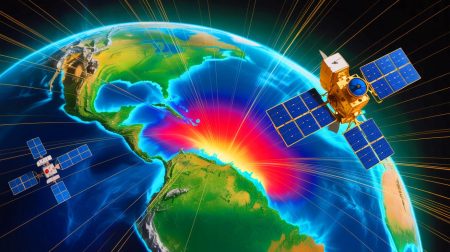
The South Atlantic Anomaly (SAA) is a compelling focus for scientific investigation due to its unique impact on Earth’s magnetic field. This region, characterized by a weakened magnetic field over South America, poses significant challenges for space technology. As the anomaly evolves, understanding its causes and effects is crucial for both safeguarding satellites and enhancing our knowledge of Earth’s magnetic environment. This article examines the SAA’s origins, its threat to space technology, its dynamic changes, and anticipates how scientists are preparing for its future developments.
Origins and Mechanisms Behind the Anomaly
The South Atlantic Anomaly represents a fascinating geomagnetic feature where the magnetic field’s intensity significantly decreases. This reduction allows high-energy solar particles to interact closely with the planet, essentially creating a gap in Earth’s magnetic protection. To comprehend the SAA, scientists delve into the geodynamo mechanism operating within Earth’s outer core. This process involves the movement of molten iron and nickel, generating the magnetic field that envelops our planet.
The formation of the SAA is influenced by Earth’s magnetic axis tilt and the presence of a dense structure known as the African Large Low Shear Velocity Province, located about 1,800 miles beneath Africa. These factors disrupt the usual magnetic field generation, causing a local polarity reversal and further decreasing magnetic field intensity in this region. This complexity makes the SAA a critical focal point for scientists examining the profound processes that shape Earth’s magnetic environment.
Impact on Space Technology
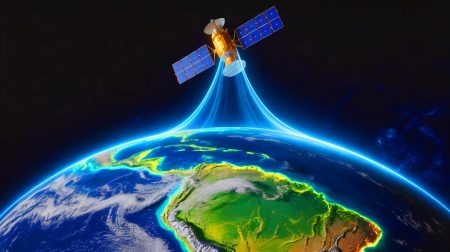
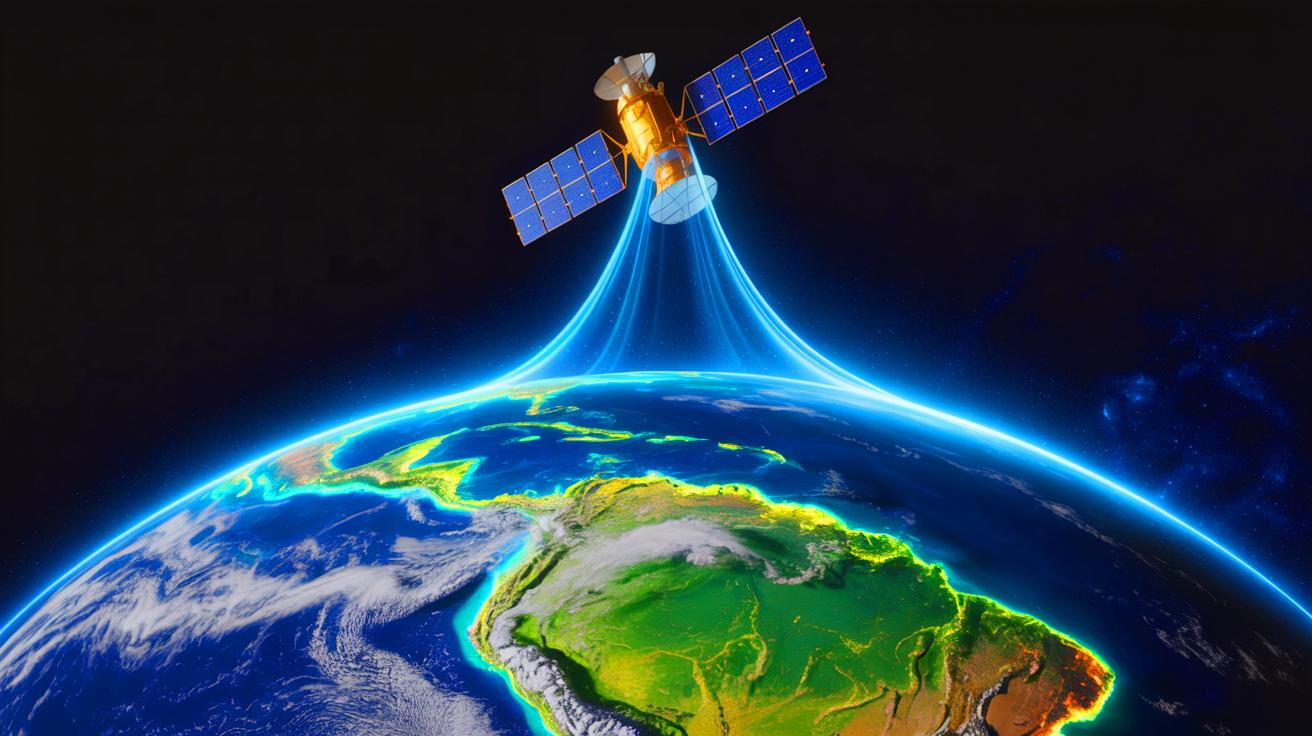
The SAA poses a significant threat to space technology, mainly affecting satellites that pass through the region. These satellites encounter high levels of energetic protons, which can lead to single event upsets (SEUs). Such events can cause temporary malfunctions, data corruption, or, in some cases, permanent damage to spacecraft systems. Satellite operators often mitigate these risks by shutting down non-essential systems when transiting the anomaly.
The International Space Station (ISS) also passes through the SAA during its orbits. Although the ISS’s shielding protects astronauts, its external instruments remain vulnerable. As noted by Bryan Blair, deputy principal investigator for the GEDI instrument on the ISS, occasional glitches and resets occur, leading to data loss. Other missions, like the Ionospheric Connection Explorer (ICON), adjust their operations to minimize disruptions, underscoring the SAA’s ongoing impact on space exploration.
The Anomaly’s Dynamic Evolution
The South Atlantic Anomaly is not static; recent observations indicate it is dynamically evolving. Data from the ESA’s Swarm constellation and NASA’s SAMPEX mission reveal that the anomaly is drifting northwest, expanding, and since 2020, splitting into two distinct lobes. This bifurcation creates dual centers of minimum magnetic intensity, increasing the number of hazardous zones for spacecraft.
This development complicates the creation of predictive models for geomagnetic conditions. Understanding the SAA’s changing morphology is essential for ensuring the safety of current and future satellites. Terry Sabaka from NASA highlights that these changes require continuous monitoring and adaptation in satellite operations to mitigate potential disruptions, emphasizing the challenges posed by the evolving anomaly.
Forecasting the Future
To better understand and predict the SAA’s changes, NASA integrates satellite data with simulations of Earth’s core dynamics. These inputs support global models like the International Geomagnetic Reference Field (IGRF), tracking the evolution of Earth’s magnetic field. Such models are crucial for planning space missions and gaining insights into Earth’s internal structure. This approach, similar to weather forecasting but on longer timescales, allows scientists to estimate secular variation—gradual changes in the magnetic field over years and decades.
Geological records suggest that similar anomalies are not uncommon over long timescales, despite the current SAA’s unprecedented nature in the space era. Notably, scientists assert that the SAA does not indicate an impending magnetic pole reversal, a rare event occurring over hundreds of thousands of years. Thus, studying the SAA remains vital for protecting orbiting technologies and deepening understanding of Earth’s magnetic dynamics.
As the South Atlantic Anomaly continues to change, the scientific community diligently works to understand and mitigate its impact. With its potential to disrupt satellite operations and influence our comprehension of Earth’s magnetic field, the SAA raises intriguing questions about our planet’s future magnetic dynamics. How will these ongoing changes shape our technological and scientific pursuits in the coming years?


Wow, this is both fascinating and frightening! Are we prepared for the consequences? 🤔
Thanks NASA for keeping an eye on these things. Hope the satellites are safe! 🚀