

| IN A NUTSHELL |
|
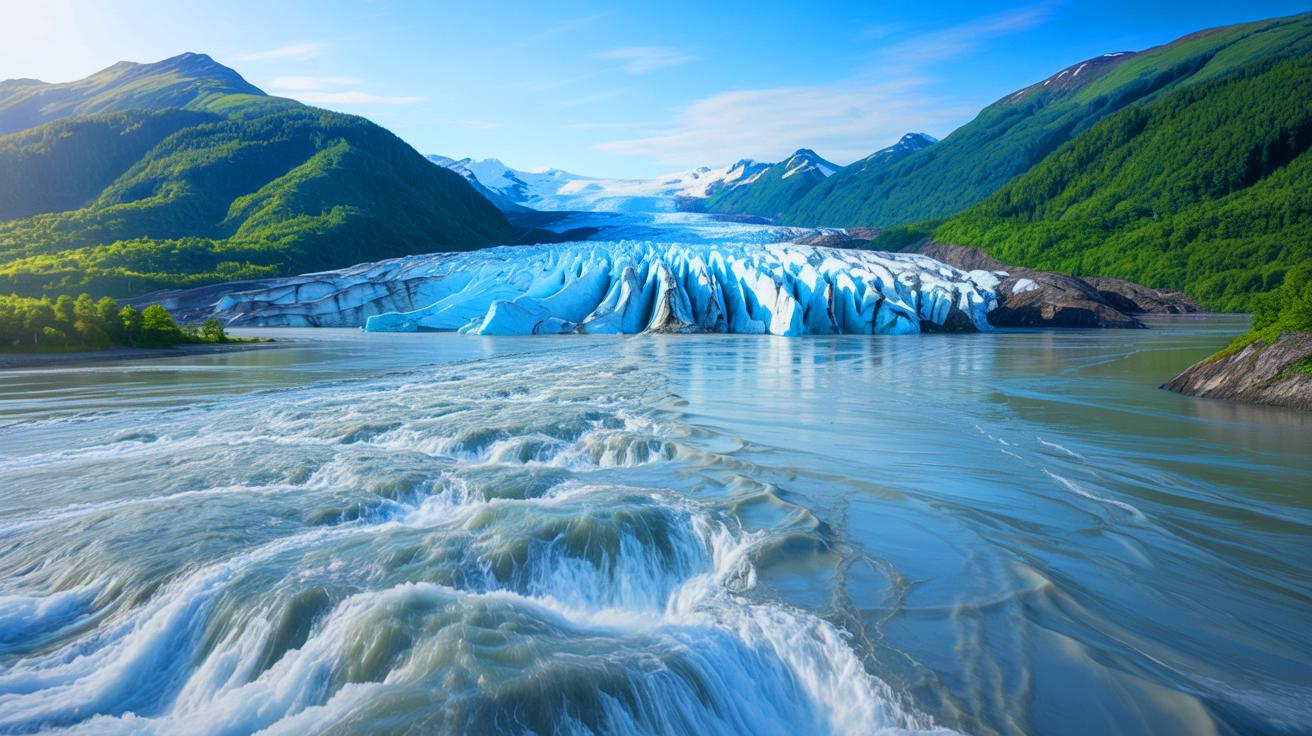
In the heart of Alaska’s capital, a dramatic battle against nature unfolds as authorities race to protect homes from a massive surge of meltwater. This surge, comprising an astonishing 15 billion gallons, threatens to flood the Mendenhall Valley due to an outburst from the Mendenhall Glacier. This significant event, fueled by climate change, represents not only an immediate threat to residents but also a broader commentary on the escalating impacts of global warming. As the city braces for potentially record-breaking water levels, hundreds of families find themselves at a critical juncture, forced to weigh the risks of staying against the challenges of evacuating.
Climate Change Drives Intensifying Floods
The phenomenon of glacial lake outburst floods (GLOFs) has become all too familiar for residents of Juneau, who have faced these events annually since 2011. As glaciers retreat due to rising temperatures, the frequency and intensity of these floods have increased. According to NOAA, Alaska has experienced a warming rate twice that of the rest of the United States, with average temperatures rising by 3.1°F over the past century. This rapid change in climate conditions has accelerated the melting of glaciers, contributing to the increased risk of flooding.
Rick Thoman, a climate specialist, emphasizes the role of climate change in these events, stating that without it, the current situation would likely not occur. The Mendenhall Glacier acts as a natural ice dam, releasing vast amounts of water that can equate to nearly 23,000 Olympic-sized swimming pools. Last year’s flood demonstrated the potential devastation, with river flows reaching half the volume of Niagara Falls and impacting nearly 300 homes.
Emergency Barriers in Place
Faced with the recurrent threat of flooding, city officials, in collaboration with state, federal, and tribal partners, have taken proactive measures to safeguard the community. This year, they installed 10,000 “Hesco” barriers along 2.5 miles of riverbank, aiming to protect over 460 properties from an 18-foot flood. These large, sand-filled containers serve as a temporary levee, designed to mitigate damage in the inundation area. Despite these efforts, residents remain anxious about the long-term solutions needed to address the persistent threat of GLOFs.
Ryan O’Shaughnessy, the emergency manager, highlights the importance of these barriers in preventing widespread damage. However, the U.S. Army Corps of Engineers has only recently embarked on a multi-year study to explore permanent solutions, such as constructing a permanent levee. This timeline is a point of contention for many residents, who are concerned about living under the constant threat of flooding for another 25 to 60 years.
The Impact on Juneau’s Community
The ongoing threat of flooding has profound implications for the residents of Juneau’s Mendenhall Valley. With the city urging residents to evacuate, many face the difficult decision of leaving their homes behind. The psychological strain of living in a high-risk flood zone is compounded by the logistical challenges of evacuation, particularly for the elderly and those with limited mobility. For those who choose to stay, the rising river levels pose a constant threat, and the effectiveness of the temporary barriers remains uncertain.
Community leaders and residents alike are calling for quicker action on permanent solutions. The uncertainty surrounding future floods has led to frustration and anxiety, as residents grapple with the reality of climate change’s impact on their lives. The need for comprehensive and timely measures to protect the community is evident, yet the path forward remains fraught with challenges.
Future Strategies and Long-Term Solutions
As Juneau continues to face the threat of glacial flooding, the search for long-term solutions becomes increasingly urgent. The multi-year study by the U.S. Army Corps of Engineers is a step in the right direction, but the timeline for implementing permanent measures remains a concern. While temporary barriers provide some level of protection, they are not a sustainable solution for the decades of potential flooding ahead.
Innovative strategies, such as creating controlled drainage systems or reinforcing natural barriers, could offer more reliable protection against future floods. However, these solutions require significant investment and coordination among various levels of government and the community. As climate change continues to reshape the environment, the need for adaptive strategies that prioritize both safety and sustainability is paramount.
As Juneau stands on the front lines of climate change’s impacts, the community’s resilience is tested by the persistent threat of glacial flooding. While temporary measures offer some relief, the demand for long-term solutions grows louder. How will Juneau and other communities facing similar challenges adapt to the realities of a changing climate, and what innovative solutions will emerge to protect lives and livelihoods in the years to come?

Wow, 15 billion gallons of water? That’s like a giant water balloon about to burst. 🎈
Are the temporary barriers strong enough to withstand such a massive flood?
Thank you for raising awareness about climate change impacts in Alaska.
Floods are becoming way too common. Is there any chance this will be prevented in the future?
Is there a plan to help residents who might lose their homes? 🏠
Climate change in action… scary stuff!
Good luck to everyone in Juneau. Hope the barriers hold up!
I read that the Army Corps of Engineers is working on a study. How long will that take?